How to Grow Butterhead Lettuce and Garlic Chives (Blanched Garlic Sprouts): Methods, Timing and Precautions
It is the busy spring season now, and farmer friends are all busy sowing all kinds of melons, fruits and vegetables in the fields. Today, the editor will introduce to you how butterhead lettuce and garlic chives (blanched garlic sprouts) are grown. When is the planting time? What are the precautions?
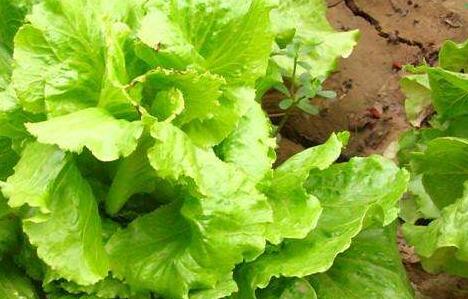
I. Butterhead Lettuce
1. Lettuce sowing time:
Lettuce likes a cool climate, so the sowing time is generally in spring and autumn. In spring, sowing usually starts from February to April, and harvest can be done from May to June. For autumn sowing, sowing can start at the end of August, and harvest can be done from September to October. Because different lettuce varieties have different characteristics, when choosing the sowing time, flower friends should first read the instructions for the lettuce seeds they bought, and then sow according to the sowing times above.
A little extra knowledge: Spring and summer are suitable for sowing loose-leaf lettuce (such as butterhead lettuce and colorful-leaf lettuce), which is more heat-tolerant. Autumn and winter are suitable for sowing head lettuce (also called iceberg lettuce), which is not heat-tolerant.
2. Lettuce sowing method:
① Sowing: Usually seedlings are raised first. Lettuce seeds are too small and too light, so they need to be mixed with fine sand, placed in a container and stirred evenly, then scattered onto the soil, covered with 0.5~1 cm of soil, a thin layer. At 15~20 degrees, they sprout in about 3~5 days. When the temperature is above 25 degrees, sprouting is difficult. When planting in summer, germination must be promoted: soak the seeds for 1 night, then wrap them in damp gauze, put them in the refrigerator's cold storage compartment (about 5 degrees), and sow when about half or more of the seeds have sprouted white.
② Seedling stage: Keep the soil moist, not dry, and keep the soil draining well. Thin the seedlings when there are 2~3 true leaves, with a plant spacing of 5~8 cm.
③ Transplanting: Transplant the seedlings when they grow to 5~6 true leaves. Before transplanting, water thoroughly first, and move them together with the soil on the roots into a large pot. For loose-leaf lettuce, the plant spacing is 15 cm, and 30 cm for head lettuce. Water thoroughly. In summer, first place them in a shady place to recover, and after about 1 week, when the roots have taken hold, give them normal sunlight.
④ Fertilizing: Fertilizing: Apply fertilizer once 1 week after transplanting (nitrogen fertilizer is main, and fully decomposed organic fertilizer is best). After 2 weeks and 4 weeks after transplanting, apply 1 more time each of organic fertilizer or a compound fertilizer mainly containing nitrogen, phosphorus and potassium. Stop fertilizing 2 weeks before harvest.
⑤ Watering: During high temperatures, water in the morning and evening. Small amounts and frequent watering are best, but waterlogging must be avoided. In the early growth stage, it is suitable to control water and just keep the soil moist.
II. Garlic Chives (Blanched Garlic Sprouts)
How is garlic cultivated into garlic chives (blanched garlic sprouts)?
Garlic chives (blanched garlic sprouts) are a vegetable widely planted and liked as food. They are the young seedlings of garlic, produced by using garlic bulbs for blanching cultivation under dark conditions. They are planted throughout China, and the price is relatively cheap. Below, Xiaogu will introduce in detail how these garlic chives (blanched garlic sprouts) are grown.
1. Preparation for cultivating garlic chives (blanched garlic sprouts)
① Variety selection: Garlic chives (blanched garlic sprouts) have a relatively high output value, so large-clove varieties should be selected to seek fast sprouting, thick growth and high yield. When selecting seeds, remove frozen, rotten, damaged and weak garlic cloves.
② Cultivation site: Garlic chives (blanched garlic sprouts) are mainly cultivated in the low-temperature seasons of winter and spring, and any place with certain temperature conditions can be used. Plastic greenhouses with relatively poor insulation performance, small arch sheds, windbreak beds, empty rooms, vegetable cellars, or riverside beaches with flowing water and spring-water sites are often used.
③ Land preparation and bed making: Dig a cultivation bed 30~40 cm deep in the protected area, with a bed width of 12~15 m. Indoors, bricks can be used to build a rectangular cultivation pool 0.5~0.6 m. At riversides or spring-water sites, a cultivation plot 1~1.5 m deep can be dug. Fine sand or sandy loam can be used for cultivating garlic chives (blanched garlic sprouts). Spread sand or soil 3~6 cm in the cultivation bed, then level it.
2. Sowing techniques for garlic chives (blanched garlic sprouts)
① Sowing time: Garlic chives (blanched garlic sprouts) can be sown and harvested continuously from early October to late March of the following year. Under suitable temperature conditions, it takes about 20~25 days from planting to harvest, and the sowing period can be determined according to the marketing period.
② Soaking the garlic seeds: On the day before sowing, soak the garlic packed in woven bags in a 20,000-fold gibberellin solution for 3~4 hours. Although the soaking step is simple to perform, it is indispensable; otherwise, after sowing and watering, the garlic seeds absorb water and swell, pressing into clumps on the cultivation bed, which is not good for the sprouting and growth of garlic chives (blanched garlic sprouts).
③ Sowing method: After the garlic seeds have absorbed enough water, arrange the garlic heads tightly one after another in the cultivation pool, trying not to leave gaps, and fill gaps tightly with scattered cloves as well. Generally, 10~20 kg of garlic seeds are used per square meter. After sowing, cover with 3~4 cm of fine sand, pat firmly and level with a wooden board, then water thoroughly. After the water seeps down, cover again with a 1~2 cm layer of fine sand.
3. Field management of garlic chives (blanched garlic sprouts)
① Covering with curtains for shade: When most garlic sprouts have emerged, cover the cultivation bed with reed curtains or straw mats to block light. Black plastic film can also be used to block light, so as to soften the garlic leaves and ensure the quality of the garlic chives (blanched garlic sprouts). If the curtains are covered too late or not tightly, the garlic seedlings will see light, which will make the leaves turn green and reduce quality. Covering with curtains also helps protect the temperature and humidity of the cultivation bed.
② Temperature management: From after sowing to before emergence, use the covering measures of the protected area to raise the cultivation bed temperature as much as possible. Keep it at 25~28°C during the day, and the nighttime temperature must not be lower than 18~20°C. If conditions permit, it is even better for the nighttime temperature to be slightly higher than the daytime temperature. After emergence until the seedlings are 10 cm tall, to make the seedlings sturdy, the daytime temperature can be lowered to 20~25°C, with a nighttime temperature of 16~18°C. When the seedlings are 20~25 cm tall, the ventilation volume should also be increased. Keep it at 18~20°C during the day and 14~16°C at night to promote sturdy, high-yielding garlic seedlings and improve quality.
③ Water management: In garlic chive (blanched garlic sprout) cultivation, the first watering should be sufficient and must submerge the garlic cloves. Afterward, water once every 2~4 days to keep the cultivation bed often moist. Water management should be determined according to the temperature in the protected area and the seedling stage. When the temperature is high, evaporation is large, and the seedlings are large, water frequently and with a larger amount; otherwise, water less. Water 2~3 days before harvest to keep the garlic seedlings tender.
④ Ventilation management: In the garlic chive (blanched garlic sprout) cultivation bed, large amounts of carbon dioxide sometimes accumulate, or harmful gases such as carbon monoxide are released when the protected area is heated. At noon when the temperature is high, ventilation should be provided to exchange the air. Due to the need for insulation, generally there is no need for too much ventilation. From 4~5 days before harvest, increase ventilation as much as possible, keeping it at 10~15°C during the day and 10~15°C at night, to prevent the seedlings from growing leggy and lodging.
⑤ Timely harvest: Garlic chives (blanched garlic sprouts) can be harvested when they are about 25~30 cm tall. When harvesting, the knife should be sharp, and the cut should not be too deep; it is best to cut close to the ground, and do not cut and injure the garlic cloves. Do not water immediately after cutting, to prevent infection of the cut. Water after 3~4 days to promote the growth of the second crop. After about 20 days, the second cut can be harvested. When harvesting the third main cut, pull up the cloves together with the roots. For the first cut, each kilogram of garlic seeds can produce 0.7~0.8 kg of garlic chives (blanched garlic sprouts), and the second cut about 0.4~0.5 kg. After harvesting, the garlic chives (blanched garlic sprouts) should be tied into bundles and sunned in the sunlight for a while, so that the garlic leaves change from yellow-white to golden yellow, which is called “sun-yellowing”. Do not sun them too long, and be careful to prevent freezing.