How long does it take for pumpkin seedlings to flower and bear fruit? Planting time, methods and edible recipes
Pumpkin is also known as wogua, fangua, fangua, fannangua and beigua. It is an annual trailing herb that was introduced to China during the Ming Dynasty and is now widely grown across the north and south. So when are pumpkin seedlings generally planted? How long until they flower and bear fruit? Are they edible? How do you cook them deliciously? What are the planting methods? Learn from grower He Xiangsheng: for spring planting, pumpkins are sown from January to March; for autumn planting, they are sown from July to August. Spring planting uses seedlings raised in a nursery and then transplanted, while autumn planting uses direct sowing.
How long after planting do pumpkin seedlings flower and bear fruit?
Flowering:
Pumpkins generally flower about one month after being planted out, mostly bearing male flowers first and then female flowers. If the pumpkin's vegetative growth is too vigorous, flowering will be delayed, so control the water a little.
Fruiting:
The pumpkin growing period is about 4-6 months, depending on the climate. From the opening of the first female flower to fruit maturity, stem and leaf growth proceeds at the same time as flowering and fruit set, and it takes 50-70 days for the fruit to reach physiological maturity. Early-maturing varieties produce their first female flower at the 5th-10th leaf node on the main vine, while late-maturing varieties are as late as around the 24th leaf node. After the first female flower appears, female flowers can appear every few nodes or on several consecutive nodes. Regardless of whether the variety is early- or late-maturing, the fruit set from the first female flower is small and has few seeds, which is especially obvious in early-maturing varieties.
Are pumpkin seedlings edible?
Pumpkin seedlings are edible.
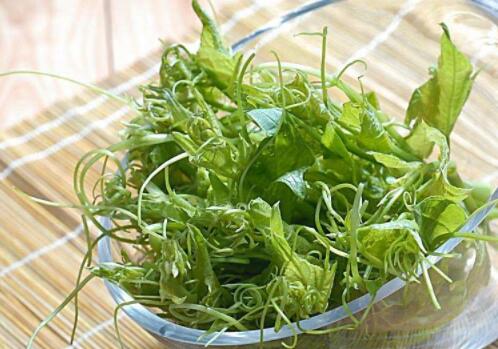
Pumpkin seedlings are rich in various mineral elements and cellulose, highly nutritious and with a distinctive flavor. The tender tips, tender stems and leaves, tender leaf blades, tender leaf stalks, as well as the flower stems and flower buds of pumpkin seedlings are all edible. Pumpkin seedlings are rich in vitamins, chlorophyll, minerals, cellulose, zinc, copper, magnesium and other trace elements! And they also have the following effects:
1. Treating asthma: eat steamed pumpkin mixed with honey, once in the morning and once in the evening, taken over the long term.
2. Treating chronic cough: cut off the head of a pumpkin vine and put it in a bottle, letting its sap flow in; after 24 hours take the sap and take it dissolved in boiled water. Treating edema, ascites and difficult urination: burn pumpkin stems until they are charred but retain their properties, grind them into powder, and take with warm boiled water, three times a day, 2 grams each time.
3. Treating habitual miscarriage: 3 pumpkin stems and 120 grams of coix seed, add water and decoct, take for several days in a row.
4. Treating burns and scalds: mash pumpkin and take the juice, apply it to the wound. Pumpkin vine juice can also be applied to the wound, three times a day. Treating bronchial asthma and chronic bronchitis in the elderly: 500 grams of fresh pumpkin, 20 red dates, an appropriate amount of yellow sugar, add water and cook into a soup to eat, twice a day. Treating dysentery: decoct pumpkin leaves in water and drink.
How do you cook pumpkin seedlings deliciously?
Pumpkin seedlings in superior broth
1. Pick and wash the pumpkin seedlings, blanch them in boiling water for two minutes, then scoop them out and put them in a container for later use;
2. Put oil in a wok; when the oil is hot, add garlic slices, ginger slices and pieces of century egg and stir-fry until fragrant and slightly golden on the surface;
3. Add one bowl of clear water, then add one Knorr pork bone broth cube (if you have stock, that is best), cook for about three minutes, and when the broth turns white pour it into the container holding the pumpkin seedlings.
Stir-fried pumpkin vine
1. Remove and discard the leaves and old stalks of the pumpkin vine; the small leaves on the tender tips of the vine can be kept, and the tendrils on the vine can also be kept. Then carefully tear off the fuzz from the outer skin of the pumpkin vine, tear the vine open by hand and snap it into small sections, tear off the excess fibers, and snap the tendrils into sections too; wash everything clean together, drain and set aside;
2. Slice the garlic cloves and shred the red chili;
3. Heat oil in a wok, add the garlic slices and shredded red chili over high heat and stir-fry until fragrant, quickly add the pumpkin vine and stir-fry together until just cooked, season with salt and sprinkle with chicken essence, mix well and serve.
Appendix: How to grow pumpkin seedlings
1. Choose the variety.
Choose local pumpkins that grow well both as seedlings and as fruit, with thick, large seedlings, such as pillow gourd, ban gua, niutui gua, dahongpao gua and huangban gua. Varieties with short seedlings are not suitable.
2. Soak the seeds to promote germination.
Sun-dry the pumpkin seeds for 2 days, put them in 50°C hot water, stir constantly, and when the water temperature drops to about 30°C soak the seeds for 15-20 minutes, then let them cool naturally and continue soaking for 7-12 hours. After soaking, promote germination, maintaining the germination temperature at about 30°C; they will sprout in two days.
3. Prepare the soil carefully.
Choose a plot with good drainage, a low water table and fertile soil for growing pumpkin seedlings. Divide into beds 1.5 m wide, cut the bed furrows well, with furrows 30 cm wide and 15-20 cm deep, and cut drainage ditches on all four sides.
4. Sow at the right time.
To bring the market period earlier and extend it, sowing generally starts in March, and after that sowing can be done in batches until August. Open sowing furrows at a row spacing of 20 cm, with a plant spacing of 10 cm, put two seeds in each hole, water thoroughly after sowing, and cover with 2 cm of nutrient soil.
5. Fertilize in time and apply enough base fertilizer.
Per mu, apply 2000-2500 kg of decomposed cow dung or 2500-3000 kg of farmyard manure, plus 20 kg of phosphate fertilizer. After sowing, drench thoroughly with decomposed manure water or biogas slurry water, then lay plastic film flat over the bed surface and press the edges down with soil to keep warm. After the seedlings emerge, let the young seedlings grow freely under the film. For topdressing, generally use decomposed human and livestock manure water, and topdress frequently to ensure a sufficient supply of manure water, so as to promote rapid growth of the pumpkin seedlings. After each harvest, promptly apply a heavy dose of quick-acting nitrogen fertilizer to the plants to encourage early development of axillary buds.
6. Harvest in time.
When the pumpkin seedlings grow to 40 cm tall and have 5-6 true leaves, they can be harvested in batches, cutting off the upper tender seedlings while leaving 1-2 true leaves at the base. Spray an 80 mg/kg "920" solution 5-7 days before each harvest, which can increase yield by more than 30% and also reduce the formation of coarse fiber at the base nodes.