Does Indocalamus have a market? Sapling prices, symbolism, and bonsai planting and care
Indocalamus is also known as Liaoye, Liaozhu, Liaozhu, Liaoyezhu, Meizhu, Meizhu, Zongbayе, and Ruozhu. It is a plant of the grass family (Poaceae) and the genus Indocalamus. Its culms can reach 2 m in height, its shoot period is April-May, and it flowers in June-July. So is there a market for growing Indocalamus now? How much does a sapling cost per plant? What does it symbolize? How do you plant and care for it as a bonsai? According to the Suqian nursery base, the current price for 50 cm culm height is about 3.5 yuan/plant; for 60 cm culm height it is about 10 yuan/plant; for 80 cm culm height it is about 12 yuan/plant; for 1000 cm culm height it is about 20 yuan/plant.
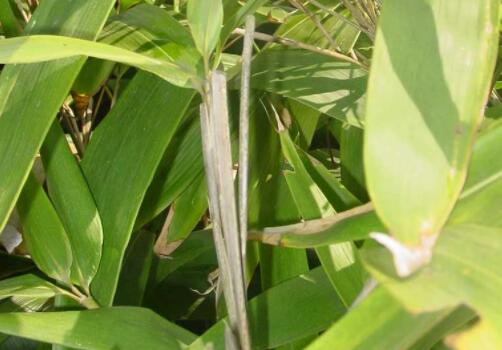
Is there a market for growing Indocalamus now?
Indocalamus grows fast, has large leaves, high yield, abundant resources, and wide uses. Its culms can be used for bamboo chopsticks, brush handles, broom handles, and so on; its leaves can be used as food packaging (the leaves are large and are often used to line tea baskets or made into various rainproof items, and can also wrap zongzi. [2]), for tea, bamboo hats, boat awning liners, and so on, and can also be used to process and make Indocalamus wine, feed, paper, and extract polysaccharides; its shoots can be used as a vegetable (dried shoots) or made into canned food; its plants can be used for landscaping. In addition to growing widely in the wild, Indocalamus has entered artificial high-yield cultivation.
Moreover, Indocalamus also has medicinal and ornamental uses, so there is still a market for it.
What does Indocalamus symbolize?
1. In China, bamboo, together with plum, orchid, and chrysanthemum, is collectively called the "Four Gentlemen" among flowers. Because of its hollow interior, nodes, and upright character, it has long been praised by the Chinese and has become a vivid portrayal of the virtues the Chinese admire, such as modesty, integrity, and uprightness.
2. In the Chinese nation, bamboo holds a very high place in our poetry. Bamboo does not have much fragrance. If you smell it, (that is) a clear, light scent; when you go to smell it, it still does not have much fragrance. But in the ideal world of Chinese literati, it was endowed with a very noble character. From the Book of Songs, we know that in the "Wei Feng" section there is a poem praising it, namely the "Qiao" (chapter). It praises a heroic figure, Duke Wu of Wei, who defended the Zhou dynasty, and it uses bamboo to begin the poem. 3. The entire growth process of bamboo is used to explain the entire (formation) process of a great character.
Among Chinese literati, during the Jin dynasty, when pure conversation was especially valued, there were seven remarkable writers called the "Seven Sages of the Bamboo Grove," because these seven sages were in a bamboo grove. The bamboo grove was used to reflect the character of the seven literati, and the literary talent of the seven people was used to endow bamboo, so that humanity and nature reflected each other.
How do you plant and care for Indocalamus bonsai?
1. Division propagation. In spring and autumn, dig up mother bamboo in clumps for division, prune the lower branches and leaves, do not damage the whip buds or whip roots, and transplant into pots with plenty of original soil, press firmly, and water to keep moist. After new shoots appear, pay attention to protecting them from damage; place in a shady, damp place, and only after the new buds sprout may they be moved to weak light to receive scattered light. The planting depth is generally 20 to 25 cm. If it is too deep, the bamboo shoots will have difficulty breaking through the soil; if it is too shallow, the bamboo shoots will be thin and weak after emerging.
2. Propagation with mother bamboo: Choose 1-2 year old mother bamboo that is robust, free of pests and diseases, with fresh yellow bamboo whips and plump whip buds. Before digging, determine the direction of the bamboo whip, then cut the bamboo whip 30 cm-80 cm from the mother bamboo. Leave 15 cm-25 cm toward the whip and 20 cm-30 cm away from the whip. Use a sharp knife to cut off its upper part, generally retaining 3-5 Indocalamus leaves, and then plant it in a pre-dug hole. The planting depth should be 3 cm-5 cm deeper than the part where the mother bamboo was originally buried. After planting, water promptly, cover with grass, and make drainage ditches.
3. Whip transplanting propagation: Select robust 2-4 year old bamboo whips, about 1 month before the bamboo whips produce shoots. After digging out the bamboo whips, cut them into sections 50 cm-80 cm long, keep plenty of original soil, protect the root buds well, and plant in holes. Lay the bamboo whip flat, cover with 10 cm-15 cm of soil, and cover with grass to prevent water evaporation. Generally, small new bamboo can grow in summer. To prevent the new bamboo from withering, cut off 1/3 of the bamboo sheath and retain 3-5 whorls of branches and leaves.