Satsuki Azalea Blooming Season, How Many Times It Blooms a Year, Nursery Stock Prices, and Differences from Spring Azalea
Satsuki azalea, also known as purple azalea, Western azalea and Satsuki rhododendron, is a type of azalea. Traditional cultivars include Changhua, Dahongpao, Wubao Luzhu, Zichendian and others. So when does Satsuki azalea generally bloom? How many times can it bloom in a year? How much does a nursery stock cost per plant? What is the difference from spring azalea? What are the cultivation methods? According to information from the Ericaceae, Satsuki azalea sends out branches first and blooms latest, generally from late May to June.
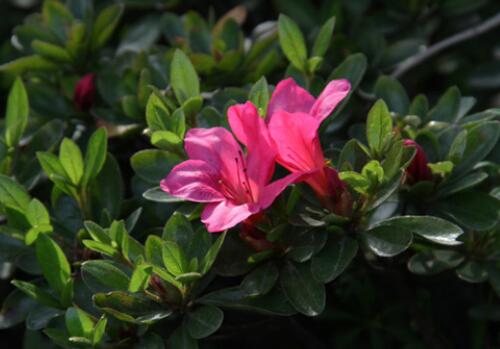
How many times can Satsuki azalea bloom in a year?
Ordinary azaleas bloom once a year; if it is a four-season azalea, it blooms in all four seasons.
Green in all four seasons, blooming in all four seasons, with the spectacular four colors of yellow, red, white and purple, cultivated year-round to beautify the environment. It can be grown in pots or planted in the ground in shaded conditions. Satsuki azalea trees grown on a balcony should be pruned and shaped into a spherical form. Their shape is elegant and beautiful. Satsuki azalea trees grown in a courtyard should be pruned and shaped into an umbrella form, and their shape adds pleasure and beauty to the scene. They are suitable for group planting in moist, shaded woodland and among rocks; in gardens they are best planted in tree clusters, under trees, beside streams, by ponds and along lawn edges; on the shady side of buildings they can be used as flowering hedges and flower clusters. Some species can be made into bonsai.
How much does a Satsuki azalea nursery stock cost per plant?
Nursery stock prices vary from place to place; the following is compiled information for reference only.
| Nursery stock name | Height (cm) | Unit price (yuan) |
| Satsuki azalea | 25 | 1.2~1.6 |
| Satsuki azalea | 35 | 1.4~1.8 |
| Satsuki azalea | 45 | 2.1~2.6 |
What is the difference between Satsuki azalea and spring azalea?
1. Shape: Mao azalea is tall and grows vigorously, with young branches densely covered in brown bristles; Satsuki azalea is small in stature, with slender branches and leaves, dense branching, and a full, neat crown.
2. Leaf shape: Mao azalea has large, long leaves that are rough and hairy; Satsuki azalea has narrow, small leaves arranged closely together.
3. Flowers: Mao azalea has large single-petaled flowers in a wide funnel shape, rarely double-petaled, with flower colors generally red, purple, pinkish-white and bicolor; Satsuki azalea produces branches first and then flowers, with a blooming period from mid-to-late May to mid-June.
4. Spring azalea is divided into two types: large-leaf large-flower and small-leaf small-flower; those that bloom in June are called Satsuki azalea; those whose blooming period falls between that of spring azalea and Satsuki azalea are called spring-summer azalea; and those introduced from the West are listed separately as a class called Western azalea, abbreviated as West azalea.
Appendix: Satsuki azalea cultivation methods
1. Placement location: Satsuki azalea likes a semi-shaded, warm and humid environment with scattered light. After potting, because the pot soil is limited, from the Dragon Boat Festival to the Mid-Autumn Festival it should be kept under a shade shed, ideally facing southeast; to the northwest it is best to have a building or trees, or a hanging curtain can be added to block the setting sun during the hot summer. For daily placement, put it on a stone stand 60--80 cm high, or on a wooden or cement slat stand, arranged in rows, which is both neat and attractive, reduces harm from earthworms and ants, and can better avoid the scorching caused by rising surface heat and humidity when the sun blazes after the plum rain season and summer thunderstorms.
2. Pot soil: The soil for cultivating Satsuki azalea bonsai must be able to reconcile the conflicts among water, air and nutrients, providing good growing conditions for the growth and development of Satsuki azalea, so that its root system is well developed, its leaves are dark green and its flowers are brilliant, thereby improving the ornamental effect of the Satsuki azalea bonsai. Ideal Satsuki azalea bonsai cultivation soil should have good granular structure, be loose, have good drainage and water retention, be nutrient-rich, and be a slightly acidic material with a pH of 4--6. In Japan and Taiwan, Kanuma soil is widely used to grow Satsuki azalea. In China, perlite substrate (A) can be used, followed in order by cinder, vermiculite, and mixed substrates such as perlite plus vermiculite. If the above substrates cannot be found, sandy soil and humus soil can be mixed at 3:7 or 1:1.
3. Planting: For Satsuki azalea bonsai material, transplant in spring, choosing healthy, vigorous plants, first wash the roots, and repot into cultivation soil as soon as possible. Washing the roots helps restore the plant's health, maintain its vitality, keep the roots clean, and prevent pests and diseases, and it also allows the roots to be trimmed to obtain a better root base. Especially when the original medium is field soil, root aeration is poor, which affects root extension and proliferation, so the roots should be washed and replaced with more breathable cultivation soil as soon as possible. Plants whose roots have been washed are best not allowed to bloom that year. If growth is not very healthy, or the transplant season misses spring, keep as much soil ball as possible to keep the root system intact and help the plant recover growth as soon as possible. It is best to loosen the soil clump around the intertwined roots slightly, then add granular cultivation soil and mound it up when planting, to facilitate root expansion.
4. Pests and diseases: Satsuki azalea is prone to various pests and diseases from the time it sprouts. After being affected, the tree's vigor weakens, affecting flower bud formation; after years of damage, growth is severely weakened, causing twigs to gradually wither until death. Therefore, starting from sprouting, sterilization, disinfection and insecticide work should be carried out 3--4 times a month according to actual conditions. Common pests and diseases include: red spider mite, lace bug, longhorn beetle, bagworm moth, leaf roller moth, ants, brown spot disease, black spot disease, gall disease, chlorosis and so on. General insecticides and fungicides can control them, but chlorosis is mainly caused by a lack of trace elements such as iron and manganese in the soil. The cultivation soil should be replaced in time, and a 0.1--0.2% ferrous sulfate solution can also be sprayed on the leaves and pot soil.
5. Watering: Satsuki azalea likes to grow in a semi-shaded environment, likes water, and cannot tolerate drought. Its requirement for soil dryness and moisture is moist but not wet (that is, soil moisture of about 30%), so watering becomes the most important task. If tap water is used for irrigation, it must first be stored for one or two days and exposed to sunlight before use. In midsummer, when temperatures are high, avoid watering at noon; morning or dusk is best, so as to avoid a large temperature difference that affects root water uptake and disturbs the plant's physiological balance. There is no fixed standard for frequency; it can be determined according to the placement environment and the soil used.
6. Blooming period management: During the blooming period of Satsuki azalea, which coincides with early summer when temperatures gradually rise, in order to maintain bright colors and long-lasting blooms, appropriate shading should be provided and no fertilizer should be applied. When watering, prevent water from splashing onto the flowers, and also protect them from rain. Remove withered flowers promptly so they do not fall onto the pot soil and breed pathogens. When the flowers are 70 to 80 percent open, the flowers should be picked and pruning done as soon as possible. According to the physiological habits of Satsuki azalea, its flower buds differentiate at the tips of new branches, and flower buds can only form in large numbers under conditions of daytime temperatures above 27°c and nighttime temperatures above 18°c, while 5--16 hours of long-day scattered sunlight per day is needed for the flower buds to develop. Therefore, July and August are exactly the period of flower bud differentiation and development for Satsuki azalea, so pruning must be completed before late June; too late will affect the next year's blooming.
7. Fertilizing: During the spring and autumn growing periods of Satsuki azalea, the fertilizing principle is light fertilizer applied frequently. Liquid fertilizer must be fully fermented and decomposed for about half a year. Fertilizing must be timely and appropriate, otherwise fertilizer damage will occur, causing the root system to gradually die until the whole plant withers. Fertilizing is best done in the evening, with a supplementary watering of clear water the next morning. Topdressing for Satsuki azalea is mainly after blooming, because the plant consumes a large amount of nutrients during the blooming period. As leaf buds sprout and new shoots elongate, a large supply of nutrients is needed, while the nutrients in the pot soil are limited; at this time, topdress about once every ten days to promote lush and sturdy new shoots and leaves and benefit flower bud differentiation. After October, the physiological activity of Satsuki azalea gradually weakens, and from the arrival of spring warmth until leaves appear, fertilizing is not advisable; fertilizing should also stop during the blooming period.
8. Shading: Satsuki azalea most fears direct sunlight and slanting sunset light during the hot summer. Once hot summer arrives with temperatures above 30°c, sustained high temperatures and dry air, it is best to shade during this period to prevent high temperatures from scorching the leaves. In autumn, when the temperature trends downward below 25°c, shading is no longer necessary.
9. Pruning and wiring: Pruning and branch shaping of Satsuki azalea bonsai is an important measure in daily maintenance and management work. It can regulate growth and development, thereby promoting vigorous growth and abundant flowers and leaves. It also makes the tree shape neat and the posture graceful. Pruning can be divided into hard pruning, pre-bloom pruning, post-bloom pruning and daily pruning, etc.