Sweet potato (Ipomoea batatas) in the Convolvulaceae family: seedling raising months, methods and planting time
Raising seedlings is the foundational work of sweet potato cultivation and plays a very important role in the future quality and yield of sweet potatoes. So, in which month are sweet potatoes generally raised as seedlings? What are the methods for raising sweet potato seedlings?
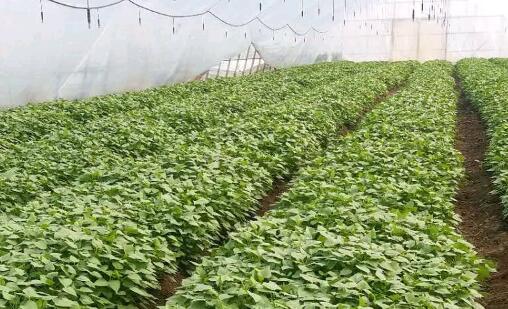
Sweet potato seedling raising time
All sweet potato seed stock should be fully raised into seedlings between mid-February and before mid-April.
Raising sweet potato seedlings is the first step in sweet potato production. Because spring temperatures are low in the sweet potato regions north of the Huang-Huai River basin in China, sweet potato growers everywhere have developed many seedling raising methods and seedbed forms suited to their local conditions. In a relatively short period, using fewer seed potatoes, they cultivate large numbers of seedlings for production use. Raising seedlings at the right time means the vines can be transplanted into the field without delay. Raising enough strong seedlings avoids "planting spring sweet potatoes in summer" and "planting summer sweet potatoes in autumn", achieving the goal of high yield. In the sweet potato regions south of the Yangtze River, thanks to superior climatic conditions, seedling raising methods and techniques are much simpler to apply.
The time when seedlings are ready must dovetail with the field transplanting time; too early or too late is not good. Sowing seed stock too early means cold weather, difficulty keeping warm, a drawn-out seedling raising period, wasted labour, wasted fuel, and, once the seedlings are ready, they cannot be planted in the field because of low temperatures, creating a situation of "seedlings waiting for the field", which not only lengthens the seedling age but also lowers seedling quality. Because the finished seedlings cannot be picked in time, the growth of the next batch of seedlings is inevitably affected. If sowing is too late, emergence is delayed, the seedlings raised cannot meet the need for timely transplanting, creating a situation of "field waiting for seedlings", and ultimately late planting reduces yield. In places using heated kang beds or hotbeds, sowing is generally done 25-30 days before the local suitable transplanting time. For example, spring sweet potatoes in Shandong Province are mostly planted from the end of April, so the suitable sowing and seedling raising time is the end of March or the beginning of April. Those with more seedling raising experience can delay appropriately by a few days, shortening the seedling raising time and saving investment. Summer sweet potatoes in the north have a transplanting period of mid-to-late June; when using a seedling picking nursery to propagate seedlings for summer sweet potatoes, the first and third batches of seedlings raised in heated kang beds or hotbeds are planted into the nursery. Spring in the Yangtze River basin is relatively warm; for hotbed seedling raising, sowing is done in early March, and open-field seedling raising generally begins in early April. In the southern summer-autumn sweet potato region and the autumn-winter sweet potato region, the sowing time for raising seedlings from tubers is mid-February.
Sweet potato seed tuber preparation
Although sweet potato seedling raising is carried out in spring, the preparatory work must be done early. First, the area to be planted with spring and summer sweet potatoes must be settled. The amount of seed used per mu varies with the seedling raising method and seedling raising time. When using heated seedling raising methods, the amount of seed used per mu is generally not less than 75 kg. Those not planting spring sweet potatoes but planting summer and autumn sweet potatoes should first establish a seedling picking nursery; 1 mu of seedling picking nursery can supply seedlings for more than 10 mu of summer sweet potatoes. Considering saving seed tubers and seedbed area as well as cultivating strong seedlings, each standard bed (5 m long, 1.7 m wide) is sown with about 150 kg, that is, about 17-18 kg of seed tubers per sq m. Open-field seedbeds can be sown more thinly. Based on the planting area, settle the quantity of seed tubers, the number of seedbeds or the land for seedling raising, and the materials needed to build the beds, such as plastic film, straw mats, fuel, fermentation materials and other utensils.
Second is choosing the land for the seedbed. Suitable conditions are shelter from wind and sun exposure, high terrain, good drainage, close to a water source, and easy management. For open-field seedling raising or seedling picking nurseries, choose fertile soil, free of salinity and alkalinity, where sweet potatoes have not been grown and seedbeds have not been made for at least two years; if the seedbed is permanent, it must be strictly disinfected and sterilised before use, and the bed soil renewed, to avoid the spread of disease.
Sweet potato seedling raising methods
Sweet potato production areas in China span north and south, natural conditions differ, and seedling raising methods and seedbed forms are varied. They can basically be divided into four categories.
1. Open-field type: uses local natural conditions and requires no special equipment or management. Commonly used forms include ground beds (sun-facing beds) and small high ridges.
2. Heated type: according to local conditions and using local materials, build heated seedbeds of a certain specification, using firewood, straw or coal as fuel for heating to raise the seedbed temperature, such as the return-dragon heated kang, three-channel bed, intermittent-fire heated kang, one fire for multiple beds, etc. There is also electric heating. Heated seedbeds are commonly used in the northern regions where early spring temperatures are low.
3. Fermentation-heated type: uses the heat produced during the piling and fermentation of plant stalks, fresh livestock manure, fallen leaves, etc., to raise the bed temperature for seedling raising; this method has wide adaptability and is fairly suitable everywhere as long as conditions and needs exist.
4. Film mulching: single or double film covering and plastic film mulching can all achieve the goal of speeding up seedling growth and saving energy. In addition, there are methods using geothermal heat, hot springs, solar energy, etc., for seedling raising, all of which are practical and effective good methods.
The advantages of raising sweet potato seedlings with plastic film are:
① Raising the seedbed temperature: generally the microclimate under the film is more than 15°C higher than the open-field air temperature. Under sunlight, it can raise the seedbed temperature to above 50°C. The 5-10 cm bed soil temperature is on average 5-7°C higher than in the open field. This can save large amounts of fermentation material or fuel. If the air temperature under the film is too high, it is harmful to sweet potato seedling growth, and ventilation, shading and watering should be used to regulate it. Increasing bed soil moisture can effectively maintain humidity and raise the soil's heat capacity and thermal conductivity, thereby raising soil temperature.
② Retaining moisture: plastic film is impermeable and water-repellent; the moisture in the soil continuously evaporates through high temperature and sunlight, causing moisture to condense on the film, producing moisture reflux that drips back onto the bed surface. According to measurements, the moisture returned per sq m in 1 day can reach 1.5 litres, which has an obvious effect on maintaining bed soil moisture and reducing evaporation. Observed after 35 days of covering, the moisture in the 2-5 cm soil layer below the bed surface increased somewhat, while the soil humidity in the 5-10 cm and 10-15 cm layers decreased by 2.6-3% respectively. In the same soil layers without film covering, they decreased by 13.2-23.5% and 14.6-35.5% respectively. The dew beads condensed on the film and the mist in the bed space can affect light transmittance. When the temperature in the bed is low, the film can be patted frequently to shake off the water droplets, increasing light transmittance and raising the bed temperature. If the temperature is too high, the dew on the film can weaken the intensity of sunlight; this can protect the sweet potato seedlings from being scorched.
③ Fast sprouting and a large number of seedlings: using film covering raises the bed temperature and maintains humidity, which is extremely favourable for tuber sprouting and seedling growth. In open-field seedling raising, film-covered beds emerge 12-16 days earlier than uncovered ones, the number of seedlings increases by 24-35%, and seedlings can be picked 13-23 days earlier.
Sweet potato planting time
The corresponding planting seasons and times for sweet potato seedlings:
Spring sweet potato: late March to early April.
Autumn sweet potato: around mid-to-late August.
Winter sweet potato: around early-to-mid October.
Mid-April is the suitable period for transplanting seedlings; at this time the early spring temperature has generally warmed up and stabilised, and the suitable transplanting period is when the 10 cm soil temperature reaches above 15°C after the last frost; transplanting can then begin. Plough and sun-bleach the soil early in the previous winter or early in the current year, then form ridges and prepare beds at planting. The bed strip is 50 cm wide; in early and mid-April, according to the seedling emergence speed in the seedbed, cut seedlings successively and transplant them, using the linear flat transplanting method to increase the number of nodes buried in the soil and thus increase the number of tubers set. Plant 3500-4000 plants per mu, with a plant spacing of about 33 cm.
Sweet potato growth periods
The growth period of spring sweet potatoes is 160-200 days, and that of summer sweet potatoes is about 110-120 days. According to the growth characteristics of sweet potatoes in the field and their relationship with climatic conditions, they are broadly divided into three growth periods:
(1) Early stage (from transplanting to canopy closure). Spring sweet potatoes last about 60-70 days, summer sweet potatoes about 40 days. In this period stems and leaves grow slowly and the root system develops quickly; it is the period dominated by the growth of fibrous roots.
(2) Middle stage (from canopy closure to the peak of stem and leaf growth). Spring sweet potatoes last about 50 days, summer sweet potatoes about 30 days. In this period tuberous roots swell slowly and stems and leaves grow quickly; it is the period dominated by stem and leaf growth.
(3) Late stage (from the beginning of stem and leaf decline to harvest). For spring sweet potatoes, after late August; for summer sweet potatoes, after early September. This period is the main period of tuberous root swelling.