What is the price of small golden-edged boxwood seedlings and what are the cutting, pruning and care techniques?
Golden-edged boxwood, also known as: golden-edged Japanese spindle, Masaki, large-leaf boxwood. It is an evergreen shrub or small tree, with slightly four-angled branchlets and densely growing branches and leaves. So how much does a small golden-edged boxwood seedling cost? What are the cutting techniques? How do you prune and care for it?
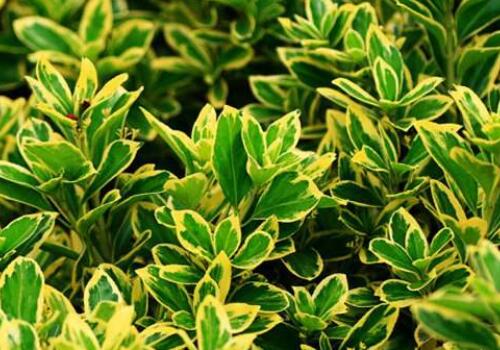
How much does a small golden-edged boxwood seedling cost?
The price of small golden-edged boxwood seedlings varies slightly from place to place. The following prices are for reference only:
| Seedling name | Height (cm) | Crown width (cm) | Price (yuan) |
| Golden-edged boxwood | 60 | 60 | 22~35 |
| Golden-edged boxwood | 70 | 80 | 35~60 |
| Golden-edged boxwood | 80 | 100 | 45~90 |
What are the cutting techniques for golden-edged boxwood?
1. Prepare a sand bed with good drainage, and disinfect the sand bed with potassium permanganate or carbendazim two days in advance.
2. Prepare alcohol and plant rooting powder, and mix the solution according to the instructions.
3. When cutting cuttings, do not choose branch tips that are too tender; those with a high degree of lignification root and sprout more easily.
4. When pruning, keep the main trunk and cut the side branches; after cutting, leave at least one bud of the "root" to facilitate the next cut.
5. Remove the lower leaves of the cuttings and keep 3 to 4 leaves on the upper part; after the cuttings are trimmed, soak them in rooting water.
6. Use a small shovel to make a furrow in the sand bed, place the cuttings at 5 to 10 cm intervals, then cover with soil and press firm, with a row spacing of 10 to 20 cm.
7. During the cutting process, maintain appropriate temperature and humidity; watering should be based on temperature and humidity, always keeping the leaves moist. Do not overwater, as this prolongs rooting time. 8. After the seedlings root, watering can be reduced appropriately. /9. After cutting, rooting generally occurs in about 30 days, and they can also be potted at the right time. The potting nutrient soil can be prepared with equal thirds of sand, soil and peat soil to facilitate aeration; do not fill the pots too full.
How do you prune and care for golden-edged boxwood?
1. Golden-edged boxwood likes an environment with sufficient light, and is also slightly tolerant of shade; it is cold-resistant and drought-resistant, and likes a warm climate with abundant rainfall and soil rich in organic matter. Its tillering ability and sprouting ability are both very strong, and it is very tolerant of pruning. It grows along stream banks, roadsides, under woods and on hillsides, at an altitude of 2781200 m.
2. Golden-edged boxwood is top-dressed twice each year. One is winter fertilizer, applied in late autumn or early spring by broadcasting pig, cattle and sheep manure; the other is during the growth period after flowering, when fertilizer is applied, mainly quick-acting fertilizer. To make the variety more beautiful, prune more often. The key point of pruning is to keep it neat and attractive and to cut off dead branches. Pruning on sunny days is best, as sunlight helps the cuts heal; pruning on rainy days is not conducive to seedling growth and can also lead to bacterial invasion, causing disease and other problems.
3. During the flowering and leaf-growing period, spraying foliar fertilizer can convert the variety's nutrient growth into growth nutrients, suppress excessive growth of the main shoot, promote flower and leaf differentiation, and produce more flowers. Golden-edged boxwood does not need advance preparation for overwintering; at a temperature of minus 35°C, it can overwinter safely.