How much do semi-evergreen Cotoneaster horizontalis seedlings cost? Can the fruit be eaten, and how to prune and grow them as bonsai
Cotoneaster horizontalis generally refers to Cotoneaster horizontalis, which grows on hillsides above 1000 m in altitude, in mountain ridge shrublands or in rock crevices. The flowering period is May-June, and the fruiting period is September-October. So how much does a Cotoneaster horizontalis seedling cost per plant? Can the fruit be eaten? How to prune? How to plant and care for it as a bonsai? According to Shuyang nursery companies, plants with a crown width of 40CM cost about 3.50 yuan/plant.
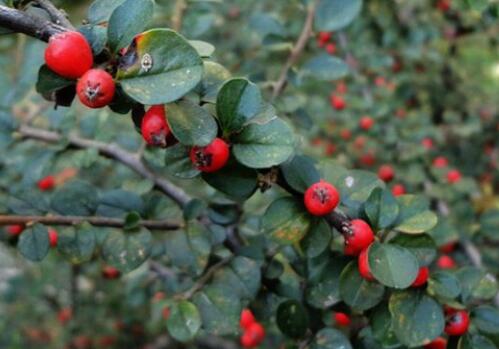
Can Cotoneaster horizontalis fruit be eaten?
Cotoneaster horizontalis root (Shuilian sand root) and whole plant (Shuilian sand): sour, astringent, cool. Clears heat and resolves dampness, stops bleeding and relieves pain. Used for diarrhea, abdominal pain, vomiting blood, dysmenorrhea, and leukorrheal diseases.
How to prune Cotoneaster horizontalis?
In winter, when the plant enters dormancy or semi-dormancy, cut off weak, diseased, pest-damaged, dead, and overly dense branches. Branch organization can also be combined with cuttings.
How to plant and care for Cotoneaster horizontalis bonsai?
1. Water and fertilizer management
Repot before bud break in early spring, once every 1—2 years. Use a potting soil mix of fertile, loose leaf mold or sandy soil. After planting, water thoroughly, cut off some old roots and branches and leaves, and place in a bright spot. In routine care, keep the potting soil moist, and apply cake fertilizer water once a month during the growing season. In summer, spray water on the leaves to increase humidity and provide shade. In winter, move it indoors for care.
2. Temperature and light
Cotoneaster horizontalis likes a warm climate environment and requires growth in a semi-shaded environment with dry soil. In summer, it needs a certain semi-shaded environment, while in spring, autumn, and winter, sunlight exposure can be increased. Cotoneaster horizontalis likes warmth, but can also tolerate cold. The average temperature of the coldest month is 1-2°C, the average temperature of the hottest month is 20-26°C, the annual average temperature is 15-18°C, the annual accumulated temperature is 4500-5000°C, and the frost-free period is 210-250 days. Under such temperature conditions, Cotoneaster horizontalis remains emerald green all year round (the leaves turn bright red in autumn) and has high ornamental value.
3. The main propagation methods are sowing and cuttings. After the fruit matures, harvest it, soak it, rub off the fruit skin, and sow immediately in autumn; sowing in the following spring has a low germination rate. Cuttings are taken during the plum rain season, and roots can form in about 40—60 days.