How much is Coptis chinensis per jin on the market? A detailed explanation of profit per mu and cultivation methods
Coptis chinensis, also known as Weilian, Chuanlian, and Jizhualian, is a relatively common perennial herbaceous plant in China, widely used medicinally for its effects of clearing heat and drying dampness, and purging fire and detoxifying. So how much is Coptis chinensis per jin on the market? How much can you earn from growing one mu? How do you grow it?
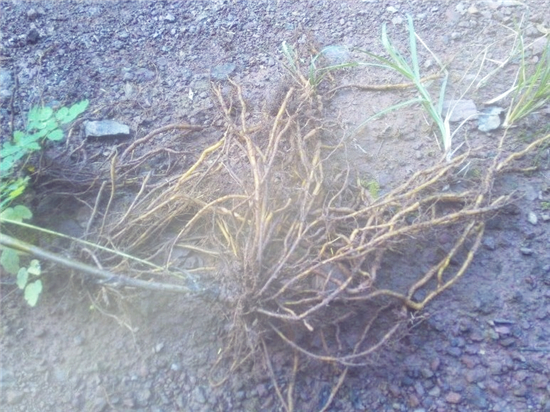
Latest price:
The market price of Coptis chinensis is about 60-90 yuan per jin, but prices vary greatly depending on variety, place of origin, quality, market conditions, and so on. So if you want to buy some, you can ask locally.
Analysis of Coptis chinensis cultivation benefits:
In the next 5 years, the future planted area of Coptis chinensis in its place of origin will be about 50,000 mu, with a total production capacity of about 9,000 tons, averaging about 1,800 tons per year, significantly lower than the annual demand of about 3,500 tons.
At current prices, the estimated output value is (calculated at a yield of 180 kg per unit, 50,000 mu, and a selling price of 100 yuan) 900 million yuan. However, with labor costs and cultivation risks remaining high, even at current market conditions, local enthusiasm for Coptis chinensis production in Shizhu has still not been fully aroused.
Although the current market trading volume of Coptis chinensis is rising, the inventory is still not small. This year many farmers dug up 4-, 5-, and 6-year-old Coptis chinensis, and it is expected that the amount coming to market next year will gradually shrink.
Cultivation techniques:
1. Choose a good forest plot
Be sure to choose a forest plot with relatively high shade density. For natural forest tree species, the most ideal is evergreen trees that do not shed leaves all year round, and low-growing trees about 3.3 m tall are suitable. For planted Chinese fir forest plots, the standard is continuous tree crowns and a tree height of about 3.3 m, with a slope between 200~25. It is best to choose soil with deep humus, rich organic matter, and a loose top with a firm subsoil.
2. Prepare the shade shed
For natural forest, all dead branches, small trees, and thatch in the forest plot should be cut down, while shrubs and small trees should be kept, and small branches below 2 m from the ground should be pruned. The shade density should be maintained at 70%-80%. For planted Chinese fir forest, young forest plots should be selected, basically achieving connected branches. If a gap appears in some places, it is enough to insert branches around the Coptis chinensis to provide shade.
3. Level the land and make beds
Before leveling the land, remove residual branches, fallen leaves, and stones from the topsoil outside the forest, and thoroughly remove bamboo roots, small tree roots, and thatch roots in the forest. Be sure not to dig deeply. For planted Chinese fir forest, just dig shallowly once, and where soil is lacking around the trees, add soil as well. Then open straight ditches from top to bottom, with a ditch width of 23 cm and a depth of 10 cm, and move the soil from the ditch bottom up to both sides onto the beds.
4. Transplanting
For Coptis chinensis seedlings planted under the forest, choose 2-year-old seedlings with more than 12 leaves. For transplanting time, if it is evergreen or coniferous forest land, planting can begin at Qingming Festival; for broadleaf forest land, plant after the trees have grown new leaves.
5. Field management
(1) Weeding and topdressing Keep the bed surface free of weeds at all times, and remove them early and while small. In the 1st and 2nd years after planting, mainly apply nitrogen fertilizer. In the later period, mainly apply phosphorus and potassium fertilizer.
(2) Earthing up and adding mud After the Coptis chinensis seedlings survive, apply 375 kg per hectare of cake fertilizer mixed with smoked fire soil and thinly scatter 1 layer on the bed surface. After autumn, combine it with applying cow and horse manure mixed with some fine soil and scatter it on the beds. In the following years, add 1 layer of mud and soil each year in summer and autumn as conditions require.
(3) Pick up dead branches and fallen leaves In every autumn and spring, rake the fallen leaves into the middle of the row spacing of Coptis chinensis, and scatter a little soil on top.
(4) Branch pruning and thinning In the 1st year after planting, only 20%-25% light penetration is needed; in the 2nd and 3rd years, 35%-40% light penetration is needed; in the 4th year, light penetration needs to increase to about 60%; in the 5th year, fully open the shed. In the first two or three years, cut off some branches; in the 4th year, pruning should increase. For natural forest, some leaves should be knocked off or branches and leaves should be tied up with vines to increase light inside the forest. For planted Chinese fir forest, appropriate thinning and branch pruning can be carried out. Thinning should be done when the forest trees stop growing and Coptis chinensis has not yet budded and sprouted, generally preferably in winter.