Artichoke (Globe Artichoke) Prices and the Best Planting, Harvesting Time and Growing Methods
The artichoke, also known as edible cardoon, cardoon, globe artichoke, French artichoke, and ball artichoke, is a plant of the genus Cynara in the Asteraceae family that grows along the Mediterranean coast. In Hong Kong, it is generally transliterated from the Italian as "artichoke" or "artichoke". So roughly how much does an artichoke cost per jin? When is the best time to plant and harvest it? Here is a summary below:
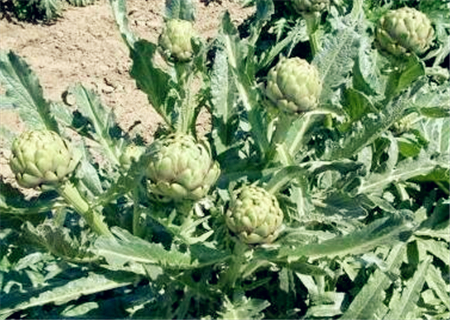
It is understood that artichokes are sold for about five Brazilian reais, which converts to twenty yuan.
Distribution Range
The artichoke originated in the western and central Mediterranean region and was introduced to the eastern Mediterranean in ancient times. At that time, its tender leaves were eaten rather than the immature flower heads. The type whose flower heads are used for food was first recorded in Italy around 1400. The artichoke is widely cultivated in California, France, Spain, Belgium, the countries around the Mediterranean, and other regions with fertile soil and a mild, humid climate. In mainland China, it is distributed in Shaanxi Province and Shandong Province.
Growing Techniques
Seedling Propagation
1. Division Propagation
Select robust adult plants, dig them up in early to mid-October, cut off the large tiller seedlings that have more than 5 leaves, and heel them in a 1.5 m deep trench, covering them with soil and straw curtains for insulation, keeping the temperature in the trench at 2--3°C, and plant them in the field in the spring of the following year. In warm areas south of the Yangtze River, they can be planted directly in the field in autumn; note that each plant should have a certain amount of roots. Small seedlings with fewer than 5 leaves should be cut and planted in a seedbed in a solar greenhouse, with plant and row spacing of 15 cm x 15 cm, promptly cultivated and watered with topdressing, keeping the room temperature at 15--20°C and about 10°C at night, and planting them in the field when they grow to more than 5 leaves the following spring.
2. Sowing and Raising Seedlings
Globe artichokes can be raised from seed in spring and autumn. Sow in mid-to-late March in spring and in mid-September in autumn, using 600--800 seeds per 667 sq m of field. Because the seed coat is thick and hard, first soak the seeds in 55°C warm water for 30 min (minutes), stirring the seeds constantly with a wooden stick, then soak for another 12--16 h (hours) after the water cools to room temperature, remove them, rinse with clean water, wrap them in a moist cotton cloth, and place them under conditions of about 20°C to germinate. Sow after the seeds show white sprouts. Raise seedlings in 72-cell plastic plug trays or 6 cm x 6 cm nutrient pots, using peat and vermiculite as the substrate. During the seedling stage, keep the temperature at 18--20°C, water as little as possible, and after 2 leaves appear, apply appropriate topdressing and foliar fertilizer. The seedling age is 40--45 d (days), and they can be planted in the field when they have 5--7 true leaves. Seedlings propagated from seed may differ in traits from the mother plant.
Land Preparation and Field Planting
Choose a plot with good drainage and irrigation conditions for planting, apply more than 3000 kg of thoroughly decomposed, finely crushed organic fertilizer per 667 sq m, plow to a depth of more than 25 m, and after leveling, make small raised beds 50 cm wide and 20 cm high at intervals of 1--1.5 m, covered with plastic film. Plant in the field only when the 10 cm soil temperature is stably above 12°C, planting 1 row per bed, with a plant spacing of 80--100 cm, planting 500--700 plants per 667 sq m, at a planting depth of about 20 cm, and water promptly after planting.
Harvest Period
For plants more than one year old, harvesting of the flower buds begins in early May in northern regions and continues until late June. It is best to harvest 1--2 d before the bracts open; harvesting too early gives low yields, while too late gives low commercial value. The best time is when the outer sepals of the flower bud are green or light purple, glossy, and the basal sepals are about to open but have not yet opened. Harvesting is best done in the morning, cutting from below the bud with scissors, and storing or selling them by grade. Small buds of 50--100 g are used for canning; buds of 100--350 g are sold fresh. Plants grown for 3 years give the highest yield, with 10--15 flower buds harvested per plant, and they can generally be harvested for 5--10 a (years).