How much does a kumquat tree cost in the north and as a small seedling at home, and when does it bloom and bear fruit?
The kumquat tree, also written as kumquat tree, is a plant under the Rutaceae family, Citrus genus, an evergreen small tree, native to China, widely distributed in the provinces south of the Yangtze River. So can kumquat trees be planted in the north and at home? How much does a small seedling cost? When does it bloom and bear fruit? How to prune? From the Jiujiang nursery base we learned that under 1 cm it is about 13 yuan. Prices differ from place to place, but once the kumquat grows to 15 cm you need to cut the tree flat down to 2/3, wait for the branches to grow out, then graft, otherwise the whole tree will be covered in thorns. There is also propagation by cuttings, but the current season is not suitable, you have to wait until spring. Stick the branch into nutrient soil and wait for it to take root, then transplant it into the ground.
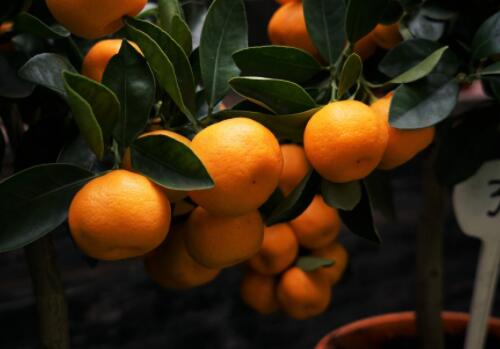
Can kumquat trees be planted in the north and at home?
1. Kumquat trees cannot be planted in the north.
The kumquat tolerates slight shade, prefers a warm and humid climate, and is not cold-tolerant. When the temperature drops below -7°C, frost damage occurs. It is suited to deep, fertile, neutral to slightly acidic sandy loam.
2. They can also be planted at home.
Planting a kumquat tree at a residence is quite good, because in folk belief the kumquat is considered an auspicious thing. However, if the courtyard is in the central position of the residence, it is best not to plant a large tree there, regardless of whether the plant is auspicious or not, because in feng shui planting a tree in the center of a residence is considered unlucky, with the implication of "trapped".
When does a planted kumquat tree bloom and bear fruit?
Flowering:
The kumquat flowering period is generally about: generally around 30 days.
Flowering is roughly from: April to early July.
Fruiting:
Kumquat tree fruit ripens from October to December. In addition, kumquat trees are generally transplanted from September to November after the autumn shoots mature, or from February to March before the spring shoots sprout.
How to prune a kumquat tree?
I. Pruning requirements for each growth stage:
1. Vegetative growth stage: On the basis of trunk establishment and shaping of the seedling, the main focus is on shaping and cultivating the canopy, continuing in the first and second years after planting to cultivate the main branches and select and retain secondary main branches, and arrange lateral branches, so that the tree shape is compact and the branches and leaves are lush. Cultivate 3 to 4 rounds of shoots each year to form the canopy as quickly as possible, and remove flower buds promptly.
2. Growth and fruiting stage: Continue to cultivate the canopy and bear a moderate amount of fruit. Promote 2 to 3 new rounds of shoots each year, with branches evenly spaced in density, to form a compact canopy as quickly as possible. The middle and upper parts of the plant should bear no or few fruits, and pruning is mainly by removing buds to control shoots.
3. Full fruiting stage: Tree height is generally controlled below 250 cm, the canopy is open, the outer periphery is uneven, the branches grow robustly, the green leaf layer thickness should be above 100 cm, with ventilation and light penetration, and three-dimensional fruiting. Control crossing between rows, canopy coverage rate 75%-85%. Prune according to the tree's condition, remove dense growth and keep sparse growth, remove weak growth and keep strong growth; prune the top and keep the bottom, prune the outside and keep the inside; prune heavily for trees with many flowers and lightly for trees with few flowers.
4. Aging stage: Carry out renewal pruning, using renewal or thinning of old fruiting branch groups, forcing out new fruiting branch groups in the inner canopy or lower part, maintaining sprouts, removing dense growth and keeping sparse growth, arranged evenly, prune more for many flowers and prune relatively heavily for weak trees.
II. Pruning periods: Early February to mid-March in spring; early July to mid-August in summer and autumn. In addition, from late April to early July, carry out auxiliary pruning such as bud removal to control shoots and cutting flower branches.
III. Pruning methods: Flexibly master according to the characteristics of each variety and the strength of the tree vigor.
1. Trees with many flowers should be pruned heavily, combining thinning with heading back; trees with few flowers should be pruned lightly, only thinning out some dense branches and thin, weak branches.
2. Dead branches and severely diseased or pest-infested branches should be cut off entirely from the base.
3. Aging branch groups should be headed back for renewal or thinned, and the length of renewal branches depends on the strength and position of the branch group.
4. Crossing branches and water sprouts should in principle be cut off from the base, but when the middle and lower part of the canopy is relatively empty, they can be appropriately headed back to serve as renewal branches or to fill the gaps; dense branches should be appropriately thinned, and overly long ones should be pinched.