Rose flower seeds: vivid colors, how much per jin, and sowing, blooming, sprouting and planting
Rose flowers are also called yueyuehong, yueyuehua, changchunhua, sijihua, and shengchun, and are ranked fifth among China's top ten famous flowers. There are many varieties, with nearly ten thousand in the world, and China also has more than a thousand. So how much do rose flower seeds cost per jin? When should they be sown to bloom? How to sprout them? How to plant them? According to Manager Li from a Suqian planting company, because varieties differ and producing areas differ, the prices of rose flower seeds are also different. Cheap ones cost three or four hundred per jin, while expensive ones cost several thousand per jin. Moreover, prices during the peak planting season are somewhat higher than usual.
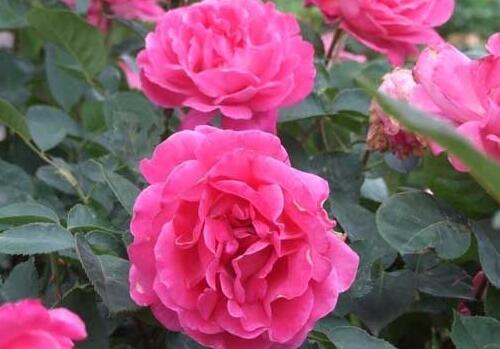
When are rose flower seeds sown to bloom?
Sowing:
The best time to sow rose flower seeds is from January to March each year. Seeds sown during this period have the highest germination rate, and the seedlings grow best. (For autumn sowing, the seeds must undergo sand storage before they will germinate.)
Methods to increase the germination rate of rose flower seeds
1. Select top-quality, plump rose flower seeds.
2. Choose land with sufficient sunlight and good drainage for sowing and raising seedlings.
3. Soak the seeds in warm water for 36 hours.
4. Prepare the soil in advance, remove weeds, apply fertilizer, and water.
5. Keep the sowing depth at about 2-3 cm.
Blooming:
The natural flowering period of rose flowers is from August to April of the following year. The flowers are large, spreading from the inside outward, and have a rich fragrance. They can be widely used for horticultural cultivation and cut flowers. Roses have strong adaptability and are cold-resistant and cold-resistant. Whether planted in the ground or in pots, they are suitable for beautifying courtyards, decorating gardens, arranging flower beds, and pairing with flower hedges and flower stands. Roses are easy to cultivate and can be used as cut flowers for bouquets and various flower baskets. Rose flowers can be used to extract essence and can also be used as medicine.
How to sprout rose flower seeds?
1. Generally around November, cut off the mature fruits whose peel color has turned yellow and red, and store them in moist sandy soil at 0-6 degrees. In January or February of the following year, select seeds for sprouting. Put the preselected plump seeds into a plastic bag containing moist sandy soil, fine wood shavings, or vermiculite, tie the bag tightly, and place it in a dark environment with freezing at night and thawing during the day and sharply changing temperatures. As the temperature rises, check once a week and carefully pick out the seeds that have cracked and turned white.
2. Because of the characteristics of rose seeds, newly harvested seeds cannot germinate. Before sowing, they must undergo "sand layering" treatment before they can germinate and emerge. That is, mix the seeds into wet sand, put them into a container, cover with 3-5 cm thick wet sand, and place them at 0-2°C for 60-90 days, then sow.
How to plant rose flower seeds?
1. Sowing should be carried out at 5-10°C. Spot sowing, broadcast sowing, drill sowing, or pot sowing can be used, with a spacing of 3 cm. After sowing, cover with a 1 cm thick layer of vermiculite or plain sand. Under normal circumstances, seedlings can emerge about 40 days after sowing.
2. Plant the sprouted seeds that have cracked carefully in the seedbed at a plant and row spacing of 3 cm * 5 cm. The lower part of the seedbed can use river sand or garden soil, with a thin layer of vermiculite (or fine wood shavings) spread on top. Place the germinated seeds on it, then carefully cover with a layer of sandy soil about 1 cm thick, and finally spray thoroughly with water using a watering can.
3. Note that the sowing soil must be disinfected and disinfested. The seedbed is best arranged in a greenhouse, and at the same time cover the arched shed with plastic film, often keep the seedbed moist, and maintain a suitable temperature of about 20 degrees for germination and seedling growth. After the seeds emerge and grow 3 to 5 leaves, promptly move them to small flower pots to promote seedling growth. To promote rapid growth of the seedlings, the potting soil should be kept loose, and it is appropriate to apply thin fertilizer frequently and provide more sunlight, but do not water too much, so as to avoid inducing diseases.