Cherry Tomato Annual Herb Latest Wholesale Market Prices and Cultivation Methods
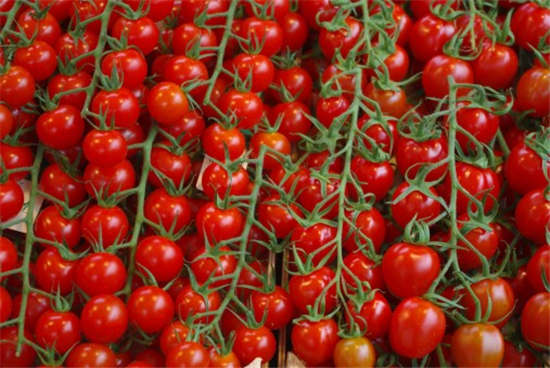
Cherry tomato, also known as small tomato, little persimmon, cherry tomato, or cherry tomato, is a relatively common annual herbaceous plant in China. It can be eaten as both a fruit and a vegetable, and regular consumption has the effects of strengthening the stomach and promoting digestion, as well as clearing heat and detoxifying. So how much is the wholesale price of cherry tomatoes per jin? What is the latest market situation? How do you grow them?
Latest wholesale prices:
Latest market situation:
Shenxian County, Liaocheng City, Shandong
Qianxi cherry tomatoes are coming onto the market in large quantities. The common price is 2.50-2.80 yuan/jin. Buyer enthusiasm is average, movement is stable, supply is increasing, and supply is concentrated in greenhouse cultivation, mainly spot goods. The price is expected to remain flat tomorrow.
Pingdu City, Qingdao City, Shandong
Busan 88 cherry tomatoes are gradually decreasing in volume. The common price is 4.00-7.50 yuan/jin. Buyer enthusiasm is high, movement is fast, supply is decreasing, and supply is concentrated in greenhouse cultivation, mainly spot goods. The price is expected to remain flat tomorrow.
Shouguang City, Weifang City, Shandong
Beibei No. 1 cherry tomatoes are coming onto the market in large quantities. The common price is 3.10-3.40 yuan/jin. Buyer enthusiasm is average, movement is stable, supply is unchanged, and supply is concentrated in greenhouse cultivation, mainly spot goods. The price is expected to rise tomorrow.
Hua County, Anyang City, Henan
Jinmijia small tomatoes are coming onto the market in large quantities. The common price is 2.00-2.60 yuan/jin. Buyer enthusiasm is high, movement is fast, supply is increasing, and supply is concentrated in greenhouse cultivation, mainly spot goods. The price is expected to remain flat tomorrow.
Shanghe County, Jinan City, Shandong
Beibei No. 2 cherry tomatoes are coming onto the market in large quantities. The common price is 1.00-3.00 yuan/jin. Supply is concentrated in greenhouse cultivation, mainly spot goods, supply is increasing, buyer enthusiasm is high, and movement is fast. The price is expected to fall tomorrow.
Cultivation techniques:
1. Reasonable fertilization: Cherry tomatoes have a well-developed root system and vigorous growth. Fertilizer should be mainly organic fertilizer, combined with compound fertilizer. Apply 2500 kg of decomposed manure or stable manure, or 2000 kg of human and livestock manure, or 100 kg of rapeseed cake, 30 kg of compound fertilizer, and 50 kg of superphosphate per mu as base fertilizer. Regulate growth through water management. Before harvest, for each 2-3 clusters of fruit harvested, apply liquid fertilizer 2-3 times as a top dressing according to the strength of growth, but appropriately increase potassium fertilizer.
2. Reasonable irrigation: Cherry tomatoes are a vegetable crop that flowers and fruits continuously. After entering the flowering period, watering should follow the principle of seeing moisture and seeing dryness (meaning water thoroughly at one time, then wait until the soil is nearly dry before watering the second time; the purpose is to prevent root rot and moisture-induced pests and diseases caused by excessive watering). Do not water too much, and do not let the plants suffer drought, otherwise it will cause flower and fruit drop and physiological fruit cracking.
3. Pruning and trimming: For determinate varieties of cherry tomatoes, try to promote their growth and always keep 2 strong side branches on the upper part to grow upward. Pay attention to the balance between leaf number and fruit number. If growth is too weak, some flower buds can be removed. For indeterminate types, if early maturity is not the goal, double-stem pruning can be used because seeds are relatively expensive, but single-stem pruning is mostly used in production. To improve quality, enhance light, promote ventilation, and prevent diseases, old leaves below the harvested fruit clusters can be removed.
4. Pest and disease control: For cherry tomato tobacco cutworm and cotton bollworm, trichlorfon or dichlorvos 600-800 times solution can be sprayed. For aphids, 10% imidacloprid 1000 times solution can be sprayed. Common diseases include damping-off, early blight, bacterial wilt, and viral disease. In the early stage of disease, 64% oxadixyl wettable powder 500 times solution, or 70% zineb wettable powder 400-500 times solution, or 50% thiophanate-methyl 500-600 times solution can be sprayed for control.
5. Harvesting and packaging: Because cherry tomatoes have high sugar content, they truly show their inherent flavor and quality only when harvested at full maturity. When harvesting, be careful to retain the calyx and pick by hand from the abscission layer of the fruit stalk. However, yellow fruits can be harvested at 80% maturity, and the flavor is actually better because the flesh is prone to deterioration after full ripening. Hard cardboard boxes are suitable for packaging to avoid crushing. Usually 500 grams is a small package, and 5000 grams is a large hard cardboard box or rigid plastic box. The box should have ventilation holes to prevent water droplets, so as not to affect transport and storage time.
6. Seedling raising: Because the seeds are relatively small, more attention should be paid to sowing rate and temperature and humidity management. Germination occurs at a soil temperature of about 27°C. After germination, the soil temperature should be lowered to 20°C. Pay attention to ventilation. When the first true leaf grows but has not yet reached the size of the cotyledons, it should be moved to a seedling pot to promote flower bud differentiation.
7. Planting: Choose soil with deep soil layers, convenient drainage, and fertile soil, and it is best to plant in plots that have not previously grown crops of the same family. After land preparation and fertilization, make high beds 30 cm high, with two rows per bed and a plant spacing of 30-45 cm, which is good for pruning. To reduce pests and diseases, control weed growth, prevent fruit rot, keep fruit clean, and improve commercial value, when planting, seedlings with the first flower cluster bearing buds are generally used as the standard for planting.