Planting, Marketing Time, Price and Cultivation of the Vine Plant Jicama (Yam Bean)
Jicama, also known as yam bean, earth gourd, luosha fruit, ground radish, chepi potato, kudzu potato, etc., is a relatively common herbaceous vine in China. Because it is nutritious and as high-yielding as sweet potato, it is widely cultivated. So when is the best time to plant jicama (yam bean)? When does it come to market? How much is it generally per jin? How do you grow it?
Planting time:
Generally, after sowing jicama, the fleshy roots can be harvested after 5-6 months. In the Yangtze River Basin, early and mid-season varieties are harvested in September, while mid-late maturing varieties are harvested from late October to early November.
In other words, it can be planted in April-May.
Marketing time:
Jicama matures at the end of autumn. Jicama has both early-maturing and late-maturing types, so its maturity period is very long. Fresh jicama is available almost from early September to mid-to-late November. Jicama generally begins to grow underground tubers 4 months after planting, but the longer it stays in the ground, the higher its water content and the sweeter its taste.
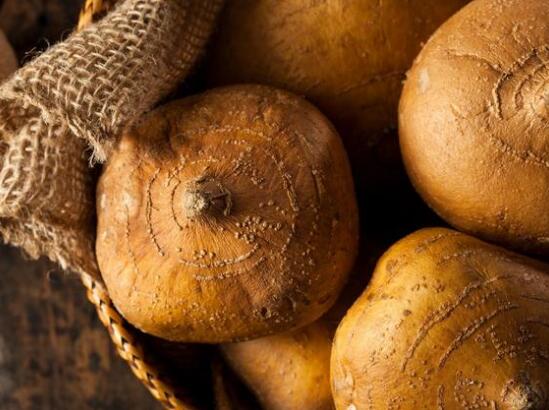
Jicama is also called yam bean. It is a herbaceous vine of the genus Pachyrhizus in the Fabaceae family. It produces a large tuber that is flattened spherical, about 20-30 cm in diameter. It is also known as jicama, earth gourd, shage, etc. Its flesh is crisp and tender, juicy and sweet, and it can be eaten as a fruit or vegetable.
Price:
At present, the market purchasing price of jicama is 1.2 yuan/kg, while the market price is roughly between 1.5-2.5 yuan/kg, so it is not very expensive. However, because market conditions vary from place to place, the specific price still needs to be checked locally.
Growth cycle:
Jicama has a long growth period and requires 5-7 months to harvest. The growth period is divided into four stages:
Germination stage: from sowing to the unfolding of the first pair of true leaves.
Seedling stage: from the unfolding of the first pair of true leaves to the appearance of 6-7 compound leaves and several lateral roots.
Vine growth stage: stems and leaves grow rapidly, and the tuberous roots begin to form.
Tuber formation stage: the tuberous roots expand rapidly, about 60 days or so.
It is cultivated relatively more in southern China, including Sichuan, Chongqing, Hubei and Hunan, and Guangdong and Guangxi.
Cultivation techniques:
1. Dig holes. Sweet potato needs more space than other garden vegetables. Space each hole 30-60 cm apart. The depth is from 3 cm above the base of the plant to the tuberous root.
2. Planting. Place the sweet potato seedlings one by one into the holes dug in advance, and cover the stems with about 1.5 cm of soil. The leafy part of the sweet potato will grow vines outward, while the roots will form tubers 15-30 cm deep in the soil.
3. Cover with plastic film. Protect your sweet potatoes in cold weather by covering them with plastic film. This will also help stop weeds from growing and prevent sweet potato vines from overgrowing and taking nutrients away from the tubers.
4. Watering. When sweet potatoes are first planted, they need a lot of water. Over time, you should reduce watering them until later when you water only about once a week. Start by watering every day, then reduce the number of waterings week by week.
5. Wait for the tubers to grow. Sweet potatoes need a relatively long growing period and will not mature for harvest until early autumn (coinciding exactly with Thanksgiving). Continue watering weekly and weeding to let the plants grow healthily.
6. Harvesting sweet potatoes. About 120 days after planting, the sweet potatoes should have reached full maturity. If possible, delay harvesting the sweet potatoes as long as you can (before frost), because this will produce larger and tastier tubers.
7. Post-harvest handling of sweet potatoes. After harvesting sweet potatoes, be sure to carry out post-treatment. This step is important. It can make the sweet potatoes more fragrant (when freshly dug, they have no fragrance) and their skin tougher. Place the sweet potatoes in a place with a temperature of 29-35°C and humidity of 80-90% for 5-10 days. After that, they are ready to cook and eat! You can place a heater and humidifier in a large wardrobe or small room to post-treat the harvested sweet potatoes.
8. Store your sweet potatoes. One of the benefits of these lovely tubers is that, if stored properly, they can stay fresh for many months and still taste very good. Store them in an open, dry place with a temperature of about 21°C (which means do not refrigerate!). Never store sweet potatoes in a plastic bag or sealed container.