What Is the Most Profitable Way to Process Bamboo? Best Planting Time Explained
Bamboo is the fastest-growing plant in the world, a perennial plant of the Bambusoideae subfamily within the grass family. Bamboo is deeply loved by Chinese people, and planting bamboo can bring farmers many sources of income. So what is the most profitable way to process it? When is the best time to plant?
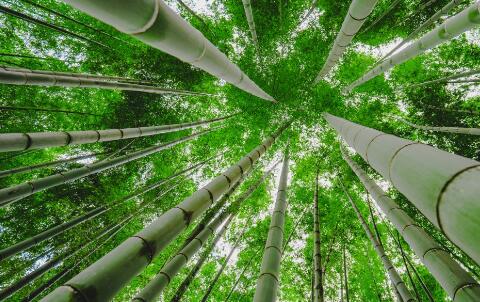
When to plant bamboo?
For running bamboo, shooting usually begins in March and May; by June, most running bamboo has already started its height growth; August and September is the season for rhizome growth; afterward, as temperatures keep dropping, growth slows down, until February of the following year, when growth resumes as temperatures warm up again.
The best planting time for running bamboo is from October to February of the following year, with the best being the "little Indian summer" of October. In November and December, because temperatures are low, bamboo physiological activity is easily weakened, so very few shoots emerge and grow.
Clumping bamboo sprouts in March and May and sends up shoots in June and August. It is not cold-tolerant, so it is best planted in February. Bamboo seedlings can also be used, with much better results than the former.
The development of mixed bamboo falls between the previous two types; it only sends up shoots and grows bamboo from May to July, so the best planting time is from October to December or from February to March of the following year.
Common Types of Bamboo
1. Arrow bamboo: Arrow bamboo is also called Hua bamboo, arrow bamboo shoot, etc. It is widely distributed from Foping on the southern slope of the Qinling Mountains, through Nanping, Pingwu, Beichuan, and Baoxing on the northern edge of the Sichuan Basin, and finally to Leibo in southern Sichuan, forming an arc-shaped distribution in the mountains on the western edge of the Sichuan Basin, at elevations of 2,000-2,800 m along the edges of coniferous forests. It is the main food source for giant pandas. Quite a few of its varieties have medium-sized culms and are valuable natural resources still awaiting development and utilization.
2. Ci bamboo: Ci bamboo is also called Ci bamboo, sweet Ci, wine-rice Ci, fishing Ci, clumping bamboo, hanging bamboo, mother-and-child bamboo, etc. The main culm is 5-10 m tall, slender at the top, curved, bending and drooping like a fishing line, and 3-6 cm thick. It is distributed in Shaanxi, Hubei, Hunan, Guangxi, Sichuan, Guizhou, Yunnan, and other places. It can be used to treat consumptive injury with blood ejection and to make bamboo weaving handicrafts, and it is also used to make bamboo weaving handicrafts.
3. Spotted bamboo: Spotted bamboo is also called Xiangfei bamboo. It is a form of Phyllostachys bambusoides, a plant in the genus Phyllostachys of the Bambusoideae subfamily within the grass family, and is produced in Hunan, Henan, Jiangxi, Zhejiang, and other places. The culm is covered with brown cloud-patterned purple spots. The culm is 7-13 m tall and 3-10 cm in diameter. The culm has purple-brown patches and spots, and the branches also have purple-brown spots. Its difference from the original variety is that the culm has purple-brown patches and spots, and the branches also have purple-brown spots. It is a famous ornamental bamboo, and the culm is used for making handicrafts and as timber.
4. Moso bamboo: Moso bamboo is also called Nan bamboo, Mao bamboo, southern bamboo, Jiangnan bamboo, cat bamboo, cat-head bamboo, Tang bamboo, Mengzong bamboo, etc. It is a monopodial running evergreen arborescent bamboo plant in the genus Phyllostachys of the grass family. The culm can reach more than 20 m tall and more than 20 cm thick. Old culms are hairless and gradually change from green to greenish yellow. The wall is about 1 cm thick. The culm nodes are not obvious. The final branchlets have 2-4 leaves. The leaf ears are not obvious. The ligule is raised. The leaf blade is relatively small and thin, lanceolate, with soft hairs on the lower surface along the base of the midrib. The flowering branches are spicate, without leaf ears. The spikelet has only 1 floret. The filaments are 4 cm long. The stigma is feathery. The caryopsis is long elliptical, with a persistent style base at the tip. The shoot period is April, and flowering is from May to August.
5. Water bamboo: Water bamboo is also called solid bamboo, wood bamboo, Lizi bamboo, etc. The culm can be about 6 m tall and up to 3 cm thick. Young culms have a white powder and sparsely grow short soft hairs. The internodes are up to 30 cm long. The wall is 3-5 mm thick. The culm ring is relatively flat in thicker culms and at the same height as the sheath ring, while in thinner culms it is obviously raised and higher than the sheath ring, so it has good ornamental value. Water bamboo material has good toughness. Cultivated water bamboo has thick, straight culms and relatively flat nodes, and is suitable for weaving various household and production tools. The famous Yiyang water bamboo mat of Hunan is woven using this species as material, and the shoots are used for food.
What Is the Most Profitable Way to Process Bamboo?
Bamboo can not only be made into daily necessities, but can also be made into relatively valuable handicrafts. So what is the most profitable way to process bamboo?
Bamboo charcoal, handicrafts, musical instruments, etc. Bamboo can be made into bamboo charcoal through baking. Bamboo charcoal is now used in many settings, including removing environmental odors and flavoring special foods, mainly because activated carbon made through crushing and activation has good adsorption and purification effects and is often used in automobiles, homes, and sewage treatment, etc. At the same time, making bamboo into handicrafts, musical instruments, etc. is also relatively profitable.
What Types of Bamboo Products Are There?
1. Processing bamboo into daily necessities: bamboo baskets, toothpicks, chopsticks, chopstick holders, cutting boards, cool mats, tea sets, lamps, charcoal products, bamboo blinds, etc. Bamboo does not accumulate dust, does not condense moisture, and is easy to clean, avoiding the breeding of mites and bacteria and eliminating the nuisance of insect damage. Bamboo products have the function of absorbing ultraviolet rays, making people's eyes feel comfortable when living indoors, and can prevent myopia and other eye diseases.
2. Processing bamboo into handicrafts: bamboo skewers, bamboo sticks, bamboo slips, bamboo weaving, bamboo root handicrafts, bamboo carving handicrafts, bamboo fans, xiao, flutes, etc. If there is space at home, some bamboo can also be planted at home. Some short bamboos are also very easy to grow as potted plants.
3. Processing bamboo into furniture: sofas, clothes racks, wardrobes, computer desks, bookshelves, shoe racks, shoe-changing stools, office furniture, etc. Bamboo products have the function of absorbing ultraviolet rays, making people's eyes feel comfortable when living indoors, and can prevent myopia and other eye diseases. Bamboo can automatically regulate environmental humidity and resist moisture, has low thermal conductivity, and has the characteristic of being warm in winter and cool in summer.
4. Processing bamboo into building materials: doors and windows, moldings, flooring, outdoor flooring, etc. Bamboo material is harder and denser than wood, has higher compressive and bending strength, and is more tough. Bamboo grain is clear, the board surface is beautiful, the color is natural, the bamboo fragrance is pleasant, and the texture is elegant and impressive. Bamboo absorbs sound and insulates sound, removes low tones, and suppresses residual reverberation, effectively eliminating noise and returning you to a tranquil state of mind.
Is Bamboo a Tree or a Grass?
Bamboo is a grass. Bamboo is a herbaceous plant, not a tree. The fundamental difference between woody plants and herbaceous plants is whether they have annual rings. Each year a tree adds a ring of concentric growth rings to its stem, so when a tree is cut down, ring after ring of annual rings can be seen, and the longer a tree grows, the more annual rings it has. But when bamboo is sawed open, the inside is hollow, and there are no rings of annual rings around it. Therefore, bamboo is a herbaceous plant and is not a tree at all.
Does Bamboo Flower?
Bamboo does flower. Bamboo does not flower and bear fruit every year like ordinary flowering plants, so some people mistakenly think bamboo does not flower. In fact, bamboo is a flowering plant, and when bamboo reaches a certain age it also flowers and sets seed. After flowering, bamboo dies because it does not have enough nutrients to continue growing. When flowering, white flocculent material generally appears, and in the flower spikes there are white filaments and a small grain-sized particle called bamboo rice in folk usage. The impact of bamboo flowering on ecology is enormous; for example, giant pandas die because of a lack of food.