Golden Cicada Flower Cordyceps: Complete Answers on Price, Effects, Contraindications, and Cultivation Methods
Golden Cicada Flower, commonly known as Large Cordyceps, belongs to the entomopathogenic fungi; among the 504 species of Cordyceps discovered worldwide, Golden Cicada Flower and Cordyceps sinensis are just two of them. So roughly how much does Golden Cicada Flower cost per jin? Who should not eat it? What are its main effects? How is it cultivated? The details are organized as follows:
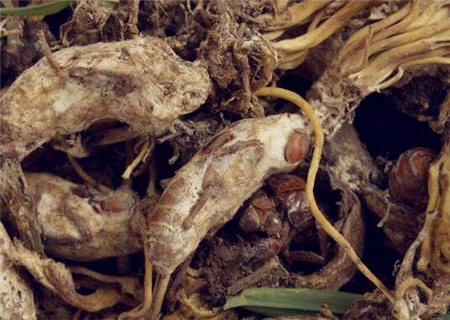
Roughly how much does Golden Cicada Flower cost per jin? Between a few dozen and a few hundred yuan. Quality determines price. Wild cicada flower / Golden Cicada Flower / cicada flower: 500 grams for 180 yuan - 210 yuan.
Effects and Functions of Golden Cicada Flower
Domestic and international research shows that cicada flower has multiple effects including boosting immunity, anti-fatigue, kidney protection, improving sleep, anti-tumor, liver protection, anti-radiation, and improving eyesight, making it a magical ancient Chinese medicine. Artificially cultivated cicada flower contains 2.18% mannitol, 21.73% polysaccharides, 19.76% amino acids, 0.005% cordycepin, and 0.05% adenosine, which is similar to natural Cordyceps sinensis, but toxic heavy metals such as arsenic, mercury, and lead were not detected, making it safer than natural Cordyceps sinensis. Therefore, cicada flower can serve as a substitute for Cordyceps sinensis and can similarly achieve a nourishing and health-preserving effect.
1. Nourishing: Chen Wanqun et al. reported that research results show the main amino acid types in cicada flower are similar to those in various Cordyceps species, with relatively consistent content. Scholars generally agree that various amino acids are one of the material bases for nourishment and strengthening, and pharmacological experiments prove that the amino acids in cicada flower and various Cordyceps species all have varying degrees of tonic effects.
2. Anti-fatigue: Cicada flower decoction can significantly prolong the swimming time of experimental mice and significantly increase survival time under normal-pressure hypoxia and high-temperature conditions, proving that cicada flower has anti-fatigue and anti-stress effects.
3. Hypnotic: In the cicada flower group, the number of spontaneous activities within 10 minutes measured 1h after administration was significantly less than that of the control group; cicada flower can also significantly prolong mouse sleep time and shorten the time for disappearance of the righting reflex induced by pentobarbital sodium; cicada flower can also increase the sleep-onset rate of mice per unit time. This proves that cicada flower has a relatively good sedative and hypnotic effect. At the same time, research proves that artificially cultivated products and natural cicada flower have nearly identical effects.
4. Analgesic: Cicada flower has a significant cooling effect on normal and artificially fevered rats within 2h after administration; results from the writhing method and hot plate method experiments show that cicada flower has a very significant inhibitory effect on chemically and thermally stimulated pain in mice. This proves that cicada flower has a very good antipyretic and analgesic effect. This experiment, together with experiments by Chen Zhu'an et al., both prove that artificially cultivated cicada flower products also have the same effect.
5. Immunity: Cicada flower strains were subjected to artificial fermentation to produce cicada flower mycelia, from which cicada flower polysaccharides were extracted, with Cordyceps sinensis polysaccharides as the positive control and Grifola frondosa polysaccharides as the reference test; lymphocyte transformation tests, Ea and E rosette tests, and specific immune rosette tests (macrophage phagocytosis test, anti-sheep red blood cell (SRBC) antibody titer test) were conducted on mice, and the results showed that cicada flower polysaccharides have a significant effect on improving immune function.
Suitable Groups for Golden Cicada Flower
1. Suitable groups for Cordyceps sinensis: people with breathing difficulties, pulmonary fibrosis, vascular sclerosis, various liver diseases, various kidney diseases, heart failure, impotence, coldness in women, dry skin, organ agitation, insomnia, tumors, metabolic syndrome, lupus erythematosus, vasculitis, prostatitis, susceptibility to colds and other low-immunity conditions, the elderly and frail with multiple illnesses, postpartum weak individuals, and those in a sub-health state; it is a rare and beneficial nutritional supplement food.
2. Unsuitable groups for Cordyceps sinensis: patients with rheumatoid arthritis should reduce the dosage; children, pregnant and breastfeeding women, people with colds and fever, and people with cerebral hemorrhage should not eat it; those with excess fire or dominant pathogenic factors should not use it.
Steamed Quail with Golden Cicada Flower
Effects: Tonifies qi and blood, benefits the lungs and kidneys, stops coughing. Used for women's health care.
Ingredients: 3-6 Golden Cicada Flowers, 8 quails, 10 grams ginger, 10 grams scallion white, 2 grams pepper powder, 5 grams salt, 300 grams chicken soup.
Instructions:
1. Wash the Golden Cicada Flowers, soak in wine, and wash clean; after slaughtering the quails, drain the blood, blanch thoroughly in warm water (70°C), remove feathers, internal organs and claws (open from the back and remove the internal organs), then place in boiling water for a brief blanch for 1 minute, remove and let cool; cut scallions into sections; slice ginger.
2. Place 3-6 Golden Cicada Flowers into the belly of each quail. Then wrap each one tightly with thread and place into a cup; season the chicken soup with salt and pepper powder, pour into the cups, seal the openings with wet tissue paper, and steam in a steamer for 40 minutes until done.
The cultivation methods for Golden Cicada Flower are as follows:
1. Breeding golden cicadas
Golden Cicada Flower is the larval body of the golden cicada, and it is a type of fungal organism that grows from these larval bodies, so if you want to cultivate Golden Cicada Flower, you must first breed golden cicadas. Golden cicadas like to live in some woodlands and survive by sucking tree sap; if you want to breed them, you can do so in some mountainous forest areas.
2. Formation of Golden Cicada Flower
The formation of Golden Cicada Flower is very unique; it is a surface manifestation of a diseased state of golden cicada larvae, a special symbiotic combination of insect and fungus. Every autumn it burrows into the soil, then slowly becomes a pupa, but before eclosion it is parasitized by Cordyceps sinensis, and when the external environment reaches certain conditions, mycelium is formed.
3. Growth of Golden Cicada Flower
After the mycelium is formed, it slowly absorbs nutrients from the golden cicada larva, and in the end the insect body is completely occupied by the mycelium, leaving only an empty shell. When spring arrives and all things revive, the mycelium begins to grow, enters the sexual stage, and branches appear at the top; gradually, flowers will open at the top, and this is Golden Cicada Flower. After harvesting, it can be dried in the sun and used as medicine.