How much does a citrus sapling cost per tree, plus planting, flowering and fruiting, and planting precautions
Citrus is a category of fruit trees, referring to mandarins, tangerines, pomelos, oranges, etc., also called loose-skin orange, honey orange, yellow orange, red orange, Dahongpao, and Dahong honey orange. So how much does a citrus sapling cost per tree at present? When should it be planted, and when does it flower and fruit? What should be noted when planting? What is the yield per mu? From Nanning grower Grandpa Hu, we learned that different varieties of citrus have different prices, ranging from two yuan to more than ten yuan.
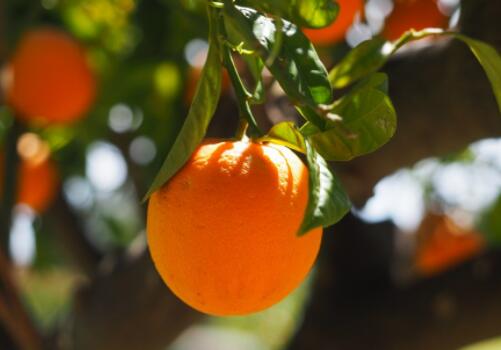
When are citrus trees planted, and when do they flower and fruit?
Planting:
Spring planting is preferable, generally from early March to early April, and it is best to plant before the orange buds sprout.
Flowering and fruiting:
Citrus flowers are solitary or in clusters of 2-3; the calyx is irregularly 5- to 3-lobed; the petals are usually within 1.5 cm long; there are 20-25 stamens, the style is slender, and the stigma is head-shaped. The flowering period is April to May, and the fruiting period is October to December.
What should be noted when planting citrus trees?
1. The seedlings should be treated, including removing seedlings with bent roots and substandard seedlings, and shortening overly long roots and damaged roots. For seedlings that have been transported over long distances, their roots should be placed in clean water for about 2 hours before transplanting, and then coated with mud slurry.
2. When transplanting, try to plant them in neat rows both lengthwise and crosswise, which helps orchard management as well as ventilation and light penetration.
3. Seedlings should not be planted too deep or too shallow; it is best to keep them at the same level as they were in the nursery, and generally the graft union should be about 3-5 cm above the ground surface.
4. When transplanting, arrange the root system neatly, and the roots must not come into direct contact with the base fertilizer applied.
5. When transplanting seedlings, firm the soil and water thoroughly to settle the roots; in arid areas, also cover with plastic film to preserve moisture.
6. After planting, the seedlings will only survive in about half a month. During this period, if the soil is dry, water once every 1-2 days. Only after they survive can fertilizer be applied; it is best to apply dilute liquid fertilizer frequently to promote root and new shoot growth.
7. The damage caused by the citrus red mite and the reasons for its rampant outbreaks:
Adult mites, nymphs, and larvae pierce and suck the sap of citrus leaves, green shoots, and fruit, destroying chloroplasts. The damaged areas show many grayish-white small spots, and in severe cases, the leaves and fruit surface turn grayish-white, the leaves fall early, and fruit drop occurs.
In a year, spring and autumn are the periods of severe occurrence. The rampant occurrence of pest mites is the result of multiple factors acting together. Mites themselves have strong reproductive capacity. The citrus red mite reproduces sexually and can also reproduce by parthenogenesis; the offspring of parthenogenesis are male. It has many generations per year and strong adaptability to the environment, which are the internal factors that easily lead to outbreaks. The rampant occurrence of mites is closely related to external conditions such as climate, food, and natural enemies. In addition, it is also affected by the side effects caused by pesticide control.
The influence of pesticides:
1. Some insecticides not only fail to kill pest mites, but instead stimulate their proliferation, speeding up mite development, increasing egg production, and killing large numbers of natural enemies. Example: after the 1950s, organosynthetic insecticides such as DDT and parathion were widely used.
2. Spraying broad-spectrum insecticides in large quantities kills most spider mites, but also severely harms natural enemies. Because the mites that are not killed lose natural enemy control, when the climate is suitable, their numbers quickly rebound in a short time, while natural enemy populations are difficult to restore.
3. Mites have developed resistance to certain pesticides. In particular, the large-scale continuous use of highly toxic organophosphorus pesticides, along with blindly increasing dosage, concentration, and the number of applications, not only fails to control the damage of pest mites, but also accelerates the development of resistance, so that at present it is very difficult to control pest mites by using these pesticides again.
Therefore, pest monitoring should be strengthened, and when occurrence is localized, treat only the localized area to reduce the number of whole-orchard sprays, rotate pesticides, avoid pesticide misuse, and prevent the development of resistance.
What is the yield of citrus trees per mu?
The yield of citrus per mu depends on variety, management, climate, and other human factors. For example, in practice, taking navel orange as an example, the yield per mu in Jiangxi has reached a record of over ten thousand jin, while in Chongqing navel orange yields top out at 6,000-7,000 jin, and the yields of other varieties are even lower. However, I think this is no longer an era of solving the problem of food and clothing (looking at yield); now it is about quality living (looking at quality). It depends on what variety you grow, and the actual benefits produced by different varieties are worlds apart, rather than relying on quantity.