How much is Chinese herbal medicine Stephania (Dibulong) per jin? Place of origin, bonsai lifespan, plus planting methods
Shanwugui, also known as Dibulong, belongs to the Menispermaceae family and the Stephania genus. It often grows on rocky mountains and is a famous traditional Chinese herbal medicine in Yunnan. There are about 50 species worldwide, 30 in China, and 18 in Yunnan. So how much is Shanwugui per jin? Where are the main places of origin? How many years can it be kept as a bonsai?
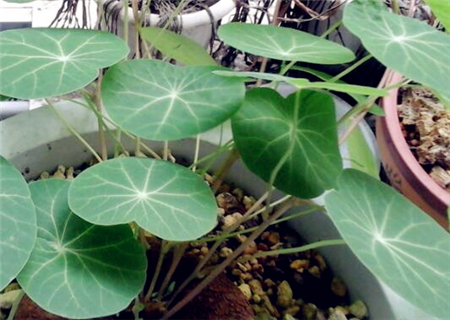
The price of Shanwugui is 28 yuan per kilogram, which is 14 per jin, and it also depends on size.
Main places of origin
In Yunnan, it is distributed in all areas except northeastern Yunnan and southwestern Yunnan.
Main categories
According to research, the medicinal material known as Shanwugui mainly comes from the following plants of the Stephania genus in the Menispermaceae family.
1. Stephania kwangsiensis: herbaceous vine.
The tuber is flat-spherical, with a grayish-brown, rough outer skin and scattered small lenticel-like protrusions. The leaves are triangular-rounded or round
Shanwugui
Shanwugui
, with length and width nearly equal, papery, entire or with angular coarse teeth, dark on the upper surface and pale white on the lower surface, densely covered with small papillae. The inflorescence is axillary, with male and female flowers on the same plant. The drupe is spherical and red when mature. The flowering period is April to May, and the fruiting period is May to July. The tuber is used as medicine. It is mainly produced in Guangxi, and is also known by the aliases Dibulong and Jinbuhuan.
2. Stephania cepharantha: also known as Jinqian diao wugui, a vine, with a thick and fleshy tuber, oblong, and dark brown outer skin. The base of the stem is woody and purplish. The leaves are alternate with slender petioles; the leaf blade is peltate, triangular-rounded, with length and width nearly equal, entire, dark green on the upper surface and grayish-white on the lower surface. The flowers are dioecious, in axillary capitate cymes. The drupe is spherical and purplish-red when mature. The root is used as medicine and is called Baiyaozi.
3. Stephania japonica: woody vine.
The tuber is cylindrical, with dark brown outer skin. The old stems are woody. The leaves are alternate, with peltate leaf blades, nearly ovate, entire, dark green on the upper surface and grayish-white on the lower surface. The flowers are dioecious, in axillary false umbels. The drupe is spherical and red when mature. The root or stem is used as medicine and is called Qianjinteng. It is mainly produced south of the Yangtze River. "Common Chinese Herbal Medicines of Sichuan" calls it Shanwugui. "Hangzhou Medicinal Plant Record" calls it Fenfangji. Jinqian diao wugui. "Hunan Materia Medica Record" calls it Gonglaoshu teng, Yetao cao, and Baozhu xiao. "Common Folk Herbal Medicines of Zhejiang" calls it Jinqian diao qingwa, Chaotian yaogao, Hebo cao, and Tufanshu.
4. Stephania delavayi: herbaceous vine.
The tuber is thick and large, flat-round, with a rough, grayish-brown outer skin. The leaves are alternate, with long petioles, peltately attached, and the leaf blade is nearly round, entire, with 7 to 9 palmate veins, hairless on both surfaces, and grayish-white beneath. The flowers are dioecious, dark red, in axillary compound umbels, and the flower stalks are nearly as long as the petioles. The drupe is round and red when mature. Mainly
distributed in Sichuan and Yunnan. The tuber is used as medicine and is called Dibulong. "National Compilation of Chinese Herbal Medicines" gives the aliases Shanwugui, Diwugui, Baididan, and Heyedanshao. "Yunnan Chinese Herbal Medicines" calls it Shanwugui, "Kunming Medicinal Plant Investigation Report" calls it Diwugui. "Selected Chinese Herbal Medicines of Yunnan" calls it Jinbuhuan. "Illustrated Materia Medica of Southern Yunnan" calls it Wuguisao. "An Illustrated Study of Plant Names and Reality" calls it Difurong. "Illustrated Materia Medica of Southern Yunnan" calls it Diburong, and "Tang Materia Medica" calls it Jieduzi.
5. Stephania sinica: woody vine.
The tuber is enlarged, oblong or irregularly block-shaped, with brown outer skin. The stem is hollow, striped, and grayish-white. The leaves are alternate,
Shanwugui
Shanwugui
the leaf blade is peltately attached, broadly triangular-rounded, with an abruptly pointed tip and a truncate base, palmate veins, green on the upper surface and powdery green on the lower surface. The flowers are dioecious, in axillary cymes, and the pedicels are shorter than the petioles. The drupe is flat-ovoid. It is mainly distributed in Zhejiang, Hubei, Guangxi, Guangdong, Sichuan, Yunnan and other provinces and regions. The tuber is used as medicine and is called Jinbuhuan. "National Compilation of Chinese Herbal Medicines" calls it Huaqianjinteng, with the aliases Shanwugui and Jinbuhuan. "Chinese Herbal Medicines of Guangxi" calls it Shanwugui, and Nanchuan's "Common Chinese Herbal Medicines" calls it Diwugui. "Chinese Herbal Medicines of Dashan" calls it Dibulong.
6. Stephania hernandifolia: also known as Tongye qianjinteng.
Herbaceous vine. The tuber is enlarged. The stem is slender and ridged. The leaves are alternate and peltately attached, and the leaf blade is triangular-rounded, entire, dark green on the upper surface and grayish-green on the lower surface. The flowers are dioecious, in axillary compound umbels, and the pedicels are shorter than the petioles. The drupe is nearly spherical. It is mainly distributed in Sichuan, Guizhou, Guangxi and other places. The tuber is used as medicine and is called Rulan. "Folk Medicines of Guizhou" calls it Shanwugui and Qianjinteng, and "Chinese Materia Medica of Sichuan" calls it Jinxian diao wugui.
Planting methods
Shanwugui is a tuberous succulent plant with yellow flowers. Its shape is unique and cute. It is named because its tuber resembles a turtle, and because the tuber is often exposed on the ground surface it is also called "Dibulong", with other aliases such as Jinbuhuan and Didan. Below is a description of its care methods.
1. Temperature and light
Shanwugui likes a growing environment with ample sunlight, warmth and dryness. It is shade-tolerant and afraid of direct sun exposure. Potted plants should be cared for in a bright place without direct sunlight, and proper shading is needed during high-temperature weather in summer. Except in summer, it can be grown in full sun.
2. Watering
During the growing season, Shanwugui only needs the potting soil kept moist; do not let water accumulate in the potting soil. Otherwise, it will cause the tuber to rot. Shanwugui is drought-tolerant, and even occasionally not watering is not a problem, but it cannot be dry for a long time, otherwise the leaves will turn yellow and fall off. When the temperature is too low in winter, just keep the potting soil dry. When the air is dry during high summer temperatures, you can spray water on the plant and the surrounding environment to increase air humidity.
3. Fertilizing
Shanwugui likes fertilizer. During its growing period, apply decomposed liquid fertilizer or compound fertilizer once about every 20 days.
4. Soil
Shanwugui is not very strict about soil requirements. The basic requirement is that it be loose and breathable. For potting, garden soil containing humus is best. You can also use a mixed soil of 3 parts garden soil, 2 parts leaf mold, and 3 parts furnace slag for planting.
5. Propagation
Shanwugui is generally propagated by sowing. Sowing is generally carried out in autumn.