A Detailed Guide to Baihua Tree Seedling Prices, Flowering Time and Planting Techniques
The Baihua tree, also known as Baiye Benzoin or Vietnamese Benzoin, is a tree reaching 5—12 m in height; it is distributed in Guizhou, Guangxi, Guangdong and Hunan. It is also found in northern Vietnam. So how much does a Baihua tree seedling cost? When does it bloom? What are its planting techniques? From a Jiangsu nursery base we learned that seedlings 35~50CM tall cost 1.8~3.5 yuan each; those 60~80CM tall cost 3~6 yuan each; and those 100CM tall cost 10~17 yuan each.
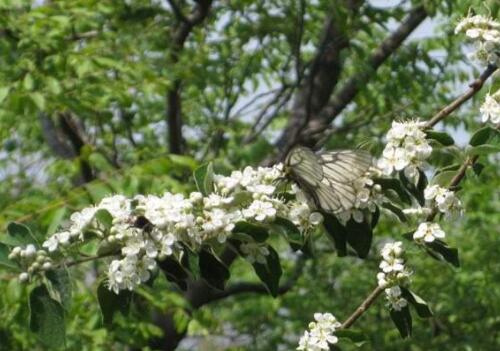
When does the Baihua tree bloom?
The Baihua tree generally blooms in spring and can be used as a shade tree or street tree. Its flowers are edible. The tree has a graceful shape, with drooping flowers that look like a mass of snow when in full bloom. In gardens it is used beside lakes and ponds or in shaded slopes and valleys, along streams, and planted in groups at the edge of evergreen groves, where the white flowers set against the green leaves create a charming effect. Its flowers, leaves and fruits can all be used medicinally.
What are the planting techniques for the Baihua tree?
Seed propagation:
1. Techniques for cultivating strong seedlings. (1) Propagation methods: both sexual (seed) propagation and asexual propagation can be used, with asexual propagation mainly carried out by grafting. (2) Seed collection and storage: in late October to early November, collect plump seeds from vigorous, mature mother trees; after collection, wash off the waxy coating, dry in the shade, place in plastic bags and store in a cool place.
(3) Sowing and seedling raising: ① Sand bed seedling cultivation: build a bed enclosed with bricks, 20—30 cm high, with the sunny side 25 cm lower; the bed should be 1.0-1.2 m wide, with length depending on circumstances. Spread fine sand about 10 cm thick on the bed surface, disinfect the sand bed with 1% copper sulfate (Bordeaux mixture), then level it for use. Sow between February and March, broadcasting evenly. After sowing, gently press the seeds with a wooden board so they fit snugly against the sand and are level, then cover with a layer of fine sand just enough to hide the seeds. Then add an arched plastic film cover. When 30-50% of the seeds have germinated, the film can be lifted off. ② Nursery site selection: the Baihua tree is light-loving, and young trees are slightly less cold-tolerant, so choose a nursery site with good drainage and irrigation, sheltered from wind and facing the sun, with loose, deep and fertile soil. ③ Land preparation and bed building: plow three times and harrow three times, apply 230 kg of quicklime or 10 kg of ferrous sulfate powder per mu to disinfect the soil, apply 3000-4000 kg of decomposed farmyard manure, or 100-140 kg of cake fertilizer and 23-30 kg of calcium magnesium phosphate fertilizer, harrow evenly and then build the beds. The beds should be 15-20 cm high and 1.0-1.2 m wide. Spread fine red-hearted soil about 2 cm thick on the bed surface. ④ Transplanting of sprouted seedlings: after the sand-bed seedlings develop 2-3 leaves, they can be lifted and transplanted; cut off the main root of the sprouted seedlings and plant them at a spacing of 6-8×25-30 cm. Water thoroughly immediately after planting, and afterwards keep the seedbed at a suitable moisture level.
(4) Grafting propagation: ① Rootstock cultivation: the method is the same as for sowing and seedling raising. Direct sowing in the field is possible, with the sowing rate controlled at about 200 seeds per square meter. Use vigorous, thick 1-year-old seedlings as rootstocks. ② Scion selection and collection: select vigorous, heavily fruiting plants as mother trees, and take vigorous branches beside fruit-bearing branches as scions; collect scions 2-3 weeks before grafting, wrap them in moisture-retaining material, place in plastic bags and keep in a cool place until use, taking care to keep the branches moist and prevent water loss. ③ Grafting: mainly use the cut grafting method or the side grafting method. It can be done indoors or directly in the field, in spring or summer. However, summer grafting gives a higher survival rate. ④ Transplanting of grafted seedlings: transplant at a spacing of 15×30 cm, taking care that the rootstock roots are spread out, firm the soil, fill soil up to the graft union, leave the scion buds above the soil layer, and water thoroughly to settle the roots.
(5) Seedling stage management: ① Timely shading: after transplanting sprouted seedlings and grafted seedlings, pay attention to moderate shading in the early stage. For grafted seedlings, also promptly remove buds and sprouts and prevent new shoots from breaking in the wind. ② Strengthen weeding and tending: weed promptly according to the principle of "weed early, weed small, weed thoroughly", and loosen the soil 2-3 times following the principle of "shallow first, deep later" to promote seedling growth. At the same time, regularly use low-concentration fungicides and insecticides for disinfection and pest control to prevent diseases and insect pests. ③ Appropriate fertilization: to promote seedling growth, apply 1-2 topdressings in combination with weeding and soil loosening, with the amount depending on seedling growth. ④ Graded lifting for outplanting: current-year seedlings generally reach over 0.8 m in height and over 1 cm in ground diameter, and can be graded and lifted for afforestation. The yield of bud-grafted seedlings can reach over 20,000 per mu; grafted seedlings can reach over 14,000 per mu.
Land preparation and hole digging:
Full reclamation, strip reclamation, block reclamation or hole reclamation can all be used for land preparation. The depth of preparation is 30-40 cm. Dig holes at a specification of 60×50×50 cm, apply sufficient decomposed farmyard manure or cake fertilizer and other base fertilizers in the holes, and mix evenly with the topsoil.
(3) Afforestation density and season: the initial planting density is 40-60 trees per mu, that is, a spacing of 4×4 m or 3×4 m. Afforestation can be carried out from late November to early March, after the seedlings shed their leaves and go dormant until before the buds sprout.
(4) Lifting and planting: choose overcast or light rainy days for afforestation. Seedlings can be lifted without native soil, but care should be taken to avoid water loss and drying of the seedlings. When planting, ensure the seedling is upright and the roots are spread out, firm the soil, and water thoroughly to settle the roots. In cold winter or low-temperature areas, straw should also be used to cover and protect against the cold.
3. Stand tending management and high-yield management techniques: (1) Intensive tending: during the young forest stage, weeding, fertilizing and tending must be done every year. After the stand bears fruit, the holes should be moderately expanded and the soil loosened and fertilized, with the amount depending on stand growth or fruit yield.
(2) Pruning and shaping: to increase fruit yield and facilitate harvesting, in the 3rd-4th year after planting, cut off the main branch 1.5 m above the ground, retain 4-5 vigorous sprouting branches, and thereafter promptly prune excessive water sprouts to promote the formation of a short, broad crown.
(3) Moderate intercropping: crops, tea, Chinese medicinal herbs, low-growing shade-tolerant flowers and trees and other economic plants can be intercropped in the stand to improve the economic returns of the forest land.
(4) Pest and disease control: the main pests and diseases include black bean disease, powdery mildew, leaf-tying cluster moth and camphor silkworm, etc. When they occur, spray Bordeaux mixture, zineb, trichlorfon or DEP for control.