When is the best time to plant potatoes? A detailed guide to potato growing methods
The potato (Solanum tuberosum), a perennial herbaceous plant of the Solanaceae family, is grown for its edible tubers and is the fourth most important food crop in the world, after wheat, rice and maize. So when is the best time to plant potatoes? What are its growing methods?
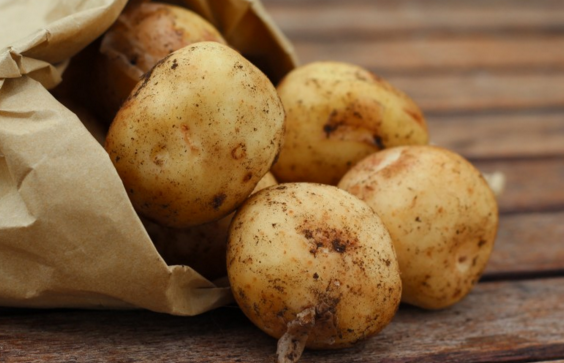
What month is the best time to plant potatoes, a Solanaceae plant?
1. In Northeast China and the northwestern regions such as Gansu and Qinghai, planting is generally done in spring (mid-to-late April to early May) and harvesting in autumn. Usually only one crop of potatoes can be grown per year, and this is called the northern and northwestern single-cropping region.
2. In provinces and regions such as Shandong, Hebei, Henan, Shanxi, Jiangsu, Hunan and Hubei, two crops of potatoes are grown each year. In the Central Plains area, including Shandong and Hebei, spring potatoes are sown in February and March and harvested in June and July; autumn potatoes are sown in August and harvested from late October to early November. In some central and southern provinces such as Jiangsu and Zhejiang, spring potatoes are sown in January and February and harvested in May and June; sowing is done in September and harvesting in December. These areas are called the Central Plains and central-southern double-cropping region.
3. In places such as Guangdong, Guangxi, Hainan, Yunnan and Guizhou, one crop of potatoes can be grown in the gap after the autumn rice harvest. Sowing is generally done from mid-to-late October to November, with harvesting in February and March of the following year. Because the growing period mostly falls in winter, these areas are usually called the southern winter cropping region.
How are potatoes generally grown?
Potato growing methods:
Sowing
Propagate with tubers: cut the potatoes into pieces, each with an eye, and plant them in ridges. Sow in March. When the average temperature exceeds 25°C, the underground tubers stop expanding. They mature in about three months.
Sow early at the right time: prepare the land, apply fertilizer and sow early at the right time, so that the entire growth period of the potatoes falls in a relatively cool season with lower temperatures, allowing tuber formation and expansion to avoid the high-temperature period.
Pay attention to the hilling depth: generally the hilling depth should be no less than 12 cm. If the soil covering at sowing is not thick enough, hill the soil 1 to 2 times as the seedlings grow. If the soil covering is too thin, the ground temperature fluctuates sharply and the stolons tend to emerge from the soil surface.
Field management
The potato plant has two parts, aboveground and underground. The aboveground part has stems, pinnately compound leaves, flower buds and fruits; the underground part has underground stems, roots, stolons and tubers. Whether the aboveground part sets fruit depends on the variety and external environmental conditions. The same variety, in different years or planted at different times in the same year, may or may not flower and set fruit.
Fertilization
For fertilizing potatoes, the general principle is “organic fertilizer as the main input, chemical fertilizer as a supplement, heavy application of base fertilizer, and early application of topdressing.” This is because organic fertilizer is rich in organic matter, which helps build and loosen the soil and improve soil fertility, and is more conducive to potato tuber expansion and root growth. During the potato growing period, the flowering stage requires the most water and fertilizer, and this is also the season when temperatures rise and rainfall increases, as well as the stage when organic fertilizer gradually matures, decomposes and releases nutrients.