Peanut (groundnut) cultivation methods, timing and nutritional value
The groundnut is a legume crop and one of the main oilseed varieties for high-quality edible oil; it is also known as the "peanut" or "long-life nut." The groundnut is an annual herbaceous plant. So, do you know the peanut's cultivation methods and planting time? What nutritional value does it have?
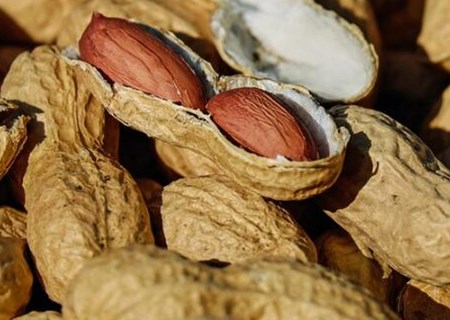
I. Peanut cultivation methods
1. Sowing methods. Peanut sowing methods are divided by cultivation method into open-field sowing and film-mulched sowing. By operation method, they are divided into manual spot sowing and mechanical sowing.
2. Sowing density. The principle of rational close planting should be followed. Peanut planting density is determined by plant height, fruiting range and leaf area size. The suitable planting density for peanuts depends on climate characteristics, soil fertility, the variety chosen and cultivation conditions.
According to the soil fertility conditions of peanut fields in various regions, use a plant-to-row spacing of 5×8 cun, with two seeds per hole; the basic seedling count per mu at sowing should be more than 23,000, and the number of plants at harvest about 20,000. For opening rows, as far as possible use a peanut-specific row opener and cultivator or a peanut hole-setting device, planting six rows per bed.
Peanut cultivation methods, the best sowing time for peanuts
3. Sowing depth. Generally, peanut sowing at about 5 cm is appropriate. Grasp the principles of "do not sow deep when dry, do not sow shallow when wet," and sow shallowly on clayey soil, and deeply on sandy soil or plots with a high sand content. For open-field cultivation, the deepest must not exceed 7 cm, and the shallowest must not be less than 3 cm.
4. Pressing after sowing. Pressing after sowing is a successful experience for drought-resistant peanut sowing to ensure a full stand. After pressing, it not only reduces soil moisture evaporation, but also brings the seeds into close contact with the soil, prompts moisture from the lower soil layer to rise, prevents the seeds from drying out, and facilitates seed germination and emergence.
II. The best planting time for peanuts
General peanut sowing period: when sowing peanuts, if the soil temperature at a depth of 10 cm remains stable above 15 degrees for 5 consecutive days, sowing can begin. Remember, never sow when the temperature is below 11 degrees, to prevent seed rot and dead seedlings; even if the peanuts can emerge, the peanut seedlings will not be robust, affecting yield. Generally, the best planting time for peanuts is mid-to-late April to early May, and with plastic film mulching, sowing can be advanced to mid-to-late March.
Two to three days before sowing, sun-dry the shelled peanuts kept for seed, then shell them after drying, and dress the seed with 50% imidacloprid suspension seed coating agent + Manshijin suspension seed coating agent, then sow after drying. Sow 2-3 seeds per hole, with a sowing depth of 1.5 cun as appropriate. For clayey soil with good moisture, it can be appropriately shallower; for sandy soil with poor moisture, it can be appropriately deeper. It is recommended that spring peanut planting areas use plastic film mulching, which allows appropriately earlier sowing and increases peanut yield.
Summer peanut planting areas can choose relay intercropping and sow earlier to increase yield. Generally, the best planting time for peanuts is mid-to-late May. In the Jiaodong region, the most suitable sowing time is late April to before May 1. When sowing peanuts, the soil temperature at a depth of 10 cm must reach 11.5 degrees to 13 degrees. Remember, never sow when the temperature is below 11 degrees, to prevent seed rot and dead seedlings; even if the peanuts can emerge, the peanut seedlings will not be robust, affecting yield.
Mastering peanut cultivation methods and the best planting time can not only prevent problems caused by sowing issues, but also effectively increase peanut yield. Here, the editor also reminds everyone that due to the recent capricious weather, everyone must handle sowing according to the climate as appropriate.
III. Nutritional value of peanuts
1. Improve intelligence and enhance memory
Peanut protein contains more than ten kinds of amino acids needed by the human body, among which lysine can improve children's intelligence, and glutamic acid and aspartic acid can promote cell development and enhance the brain's memory ability.
2. Promote human growth and development
Peanuts have a very high calcium content, and calcium is the main component of human bones, so eating peanuts can promote human growth and development.
3. Coagulation and stopping bleeding
The peanut skin contains oils and various vitamins, and contains substances that shorten clotting time; it can counteract the dissolution of fibrin, has the function of promoting the bone marrow to produce platelets, and for various hemorrhagic diseases not only has a hemostatic effect, but also has a certain therapeutic effect on the primary disease, and is beneficial to the human body's hematopoietic function.
4. Moisten the lungs and relieve cough
Peanuts are rich in fatty oil, which can moisten the lungs and relieve cough, and are often used for conditions such as chronic cough with asthma and coughing up phlegm with blood.
5. Nourish blood and promote lactation
Peanuts are rich in fatty oil and protein, and for those with insufficient milk after childbirth, they have the effect of nourishing qi and blood, nourishing blood and promoting lactation.
6. Anti-aging
The catechin contained in peanuts has a strong anti-aging effect on the human body, and lysine is also an important component in preventing premature aging. Regularly eating peanuts is beneficial for delaying human aging, so peanuts are also called the "long-life nut."
7. Prevent coronary heart disease
Peanut oil contains a large amount of linoleic acid, a substance that can cause cholesterol in the human body to be broken down into bile acids and excreted. It avoids cholesterol deposition in the body, reduces the chance of high cholesterol onset, and can prevent coronary heart disease and arteriosclerosis.
8. Prevent colon cancer
When the soluble fiber in peanut fibrous tissue is digested and absorbed by the human body, it absorbs liquids and other substances like a sponge, then swells into a gel-like body and is excreted with feces. When these substances pass through the intestinal tract, they come into contact with many harmful substances and absorb certain toxins, thereby reducing the accumulation of harmful substances in the body and the toxic effects they produce, and reducing the chance of colon cancer occurring.