Gardenia Seed Planting Methods, Yellowing Leaf Treatment, and Planting Prospects
Gardenia, also known as zhizi or yellow gardenia. It belongs to the Rubiaceae family, with lush branches and leaves, evergreen foliage throughout the four seasons, and fragrant flowers. Here we tell you about the gardenia seed planting methods, what to do when gardenia leaves turn yellow, and what the prospects are for growing gardenia. Besides ornamental use, its flowers, fruit, leaves, and roots can be used as medicine, with effects of clearing fire and relieving restlessness, clearing heat and promoting urination, cooling the blood, and detoxifying. The flowers can be used as a spice for tea, and the fruit can reduce inflammation and relieve fever. It is an excellent fragrant flowering plant.
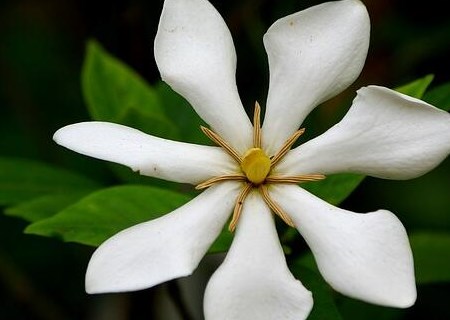
I. Gardenia Planting Methods
1. Seed collection
Choose mature, flawless ripe fruit. Generally, those that are dark red and look plump are ripe. Place the fruit with the shell still on in sunlight to dry, or put it in a shaded place to air-dry. After processing, it can be stored.
Before planting, cut open the fruit skin or use scissors to take out the seeds inside. Prepare a basin of warm water, put the seeds in, and rub and wash them with your hands until the impurities sticking to the seeds are all cleaned off. Let them sit for a while; some immature, shriveled seeds will float to the surface, and these can be poured out together with the impurities.
Only the seeds that sink to the bottom are truly mature seeds that can be used for sowing. Scoop them out, place them on a clean cloth or bamboo mat, and take them to a ventilated place to dry in the shade.
2. Sowing time
Generally sow in spring, when temperatures rise and the climate is more suitable.
3. Sowing method
① For the growing medium at sowing time, it is best to choose loose, fertile sandy loam, and a sunny location or one near the field edge is better. Turn and level the soil, and remove impurities and stones from the soil. Deep plow about 1.2 chi. If the soil quality is good, make beds about 5 chi wide and 6 cun high. Apply fertilizer at a ratio of 25 dan of human manure and urine per mu. After the soil dries, break up the clods and level the field surface. Mix the seeds with plant ash, stir evenly, and scatter them in the sowing furrows, using about 5 jin of seeds per mu. Cover with a layer of fine soil, cover with a straw mat, and then water.
② At this point sowing is basically complete. Water frequently to keep the soil moist, and seedlings will emerge in about 20 days.
IV. Later care
After the seedlings emerge, remove the straw mat. After caring for them for a period and seeing the seedlings grow five or six leaves, you can thin them. Pull out the small seedlings that are too dense at planting time, along with diseased and weak seedlings with poor growth. If weeds grow in the field, remove them as well.
II. Analysis and Solutions for Gardenia Leaves Turning Yellow
1. Overwatering causes gardenia leaves to turn yellow (water yellowing): If gardenia is overwatered during cultivation, the tender leaves will become dull and lusterless, while old leaves are unaffected, but the leaves will appear yellow-green, and new leaves will not grow.
Solution: Take the plant out of the pot and place it in a ventilated, shaded place until the soil ball dries, then put it back in the pot. When water is lacking, the leaf tips or edges wither and dry, old leaves turn yellow from the bottom upward and fall off, and new leaves grow relatively normally. At this time, water thoroughly and generously.
2. Long-term water shortage causes gardenia leaves to turn yellow (drought yellowing): Gardenia likes water and grows relatively easily in the south wind, but because the north is relatively dry and the air humidity is insufficient, it can cause leaves to wither and yellow.
Solution: Therefore, it is best to place the gardenia in a large tray with water poured all around the tray. At the same time, be sure to spray water on the leaf surface every day so the leaves are fully moistened.
3. Poor ventilation causes gardenia leaves to turn yellow (scorch yellowing): The growing environment for gardenia needs ventilation, moisture, and bright light. If windows are often not opened, yellowing at the leaf edges can also appear.
Solution: Remember to open the windows every day for ventilation.
4. Too-low temperature causes gardenia leaves to turn yellow: Too-low temperatures can also cause leaf yellowing.
Solution: Therefore, during gardenia cultivation, pay attention to freeze protection in winter, and also pay attention to keeping warm at night in early spring and early winter.
5. Overfertilizing gardenia causes leaves to turn yellow (fertilizer yellowing): Leaf veins lose green and turn yellow, while the surrounding areas remain green. Also, after fertilizing, leaves may suddenly lose green overall, become dry, and turn yellow. These are all fertilizer yellowing caused by excessive or concentrated fertilizer.
Solution: To deal with fertilizer yellowing, there are only 2 methods so far: heavy watering of the roots and taking the plant out of the pot to wash the roots.
6. Lack of fertilizer in gardenia causes leaves to turn yellow (fertilizer yellowing): Insufficient fertilizer can also cause plants to turn yellow. For example, with iron deficiency, leaves appear pale yellow or white while the veins remain green; at this time, spray 0.2{bf}-0.5{bf} ferrous sulfate water for control. With magnesium deficiency, old leaves turn yellow first, then new leaves turn yellow, while the veins remain green; at this time, spray 0.7{bf}-0.8{bf} boron-magnesium fertilizer for control.
7. Improper lighting causes gardenia leaves to turn yellow: If light is too strong, yellow spots appear on the sunny part of the leaves. At this time, simply move it to a shaded place for care and it can recover, and newly grown leaves will no longer have yellow spots. If sunlight is insufficient, the leaves will turn yellow and may even fall off.
Solution: Just put it under the sun to supplement sunlight.
III. Gardenia Planting Prospects
Taking 200 mu as an example, plant 160 gardenia plants per mu. If two-year-old large seedlings are purchased for planting (that is, trees already two years old), they begin bearing fruit in the first year from planting, with each plant producing about 1 kg of fresh fruit (calculated as 1 kg), for a total of 32,000 kg; in the second year, each plant produces 2 kg of fresh fruit, for a total of 64,000 kg; from the third year, each plant produces 5 kg, for a total of 160,000 kg; in the fourth year it enters the full production period, with each plant producing an average of 8 kg of fresh fruit per year, yielding gardenia fresh fruit annually: 200 mu × 160 plants/mu × 8 kg/plant = 256,000 kg.
Calculated at 3 yuan/kg (conservative average price), the annual output value in the fourth-year full production period is: 256,000 kg × 3 yuan/kg = 768,000 yuan.