Agarwood Plant Diamond Price Per Gram, Resin Formation Years, and How Many Years of Cultivation
Agarwood, a traditional Chinese medicine name. Its main producing areas are Guangdong, Hainan, Guangxi, Fujian, and other places. It is known as the “diamond among plants” and is highly valuable. So how much does agarwood cost per gram? How many years must it be grown before it forms resin? How many years of artificial cultivation are needed to make a profit?
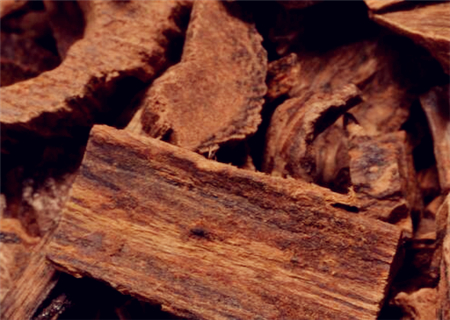
What is the current price of agarwood? How much is one gram worth?
The price of wild agarwood is at least 30,000 yuan/gram to 80,000 yuan/gram. If it has formed over a long time, the price will be even higher. If the agarwood is larger in size, it will have greater development value! Generally, larger agarwood pieces, after the woody parts are removed, are about 7-30 cm long and about 1.5-10 cm wide! If your agarwood, after the woody parts are removed, is larger than 1 cm, it can be called a rare treasure! Its value is extraordinary! In addition, if agarwood is sold by weight, the lowest price is 150 RMB/gram (generally calculated according to its medicinal properties). If it is carved into an art collectible, larger sizes will see prices climb, and the price can reach 10,000 yuan/gram! Agarwood also has grades based on its own density and purity characteristics. You need to have it appraised at a public testing center to easily estimate its true market price.
How Many Years of Cultivation Are Needed to Form Resin
After the agarwood tree is stimulated to form resin, lower-quality resin can take half a year to 2 years, high-quality resin takes 3—5 years, and in many cases 10—20 years to produce relatively good agarwood. When the agarwood tree shows abnormal signs such as leaves not growing luxuriantly, yellowing appearance, and localized dieback, most of them may already have the potential to form resin. The longer the time, the greater the quantity and the better the quality of the agarwood.
Agarwood resources have a long regeneration cycle, and artificial cultivation is limited. The shortage of agarwood on the market will be difficult to change for a long time, and market prices will remain firm and continue to rise. The prospects for cultivating agarwood are broad. Agarwood is considered best when it is oily, heavy, fragrant, and sinks in water. Domestic agarwood commodities are divided into four grades according to oil content.
First grade: dry goods, irregular lumps, with light floating dead wood dug out clean, oil color black and glossy, heavy and solid body, black oil patterns accounting for more than 80% of the whole piece, oil exuding when burned, strong fragrance, no impurities, no mildew.
Second grade: dry goods, black oil patterns accounting for more than 60% of the whole piece (the other requirements are the same as above).
Third grade: dry goods, black oil patterns accounting for more than 40% of the whole piece (the other requirements are the same as above).
Fourth grade: dry goods, black oil patterns accounting for more than 25% of the whole piece (the other requirements are the same as above).
How Many Years of Artificial Cultivation Are Needed to Make a Profit
Planting one agarwood tree (white wood agarwood) costs only a few dozen yuan, and later each tree can bring in thousands of yuan, or even tens of thousands of yuan in income. It is truly a good way for the general public to achieve prosperity with ease!
Broad market prospects. Agarwood has a wide range of uses and high economic value.
Due to the large-scale harvesting of precious agarwood, the primary forests of agarwood trees have been severely damaged. In addition, natural forest regeneration capacity is weak. Now only scattered remnant plants remain, and the country's wild resources are nearly exhausted. Agarwood trees have been listed by the state as rare and endangered second-class protected plants. Artificially planted forests are rare, domestic agarwood production is seriously insufficient, market demand continues to expand, and the contradiction between supply and demand is prominent. According to market surveys and comprehensive analysis, the current annual demand for agarwood nationwide is 500,000 kg, and it is increasing year by year, with about 80% relying on imports. As agarwood resources and output in Southeast Asia are decreasing day by day, imported agarwood is expensive, at 300,000-500,000 yuan per ton. The highest transaction price for high-quality domestic agarwood on the market can reach more than 30,000 yuan/kg. Agarwood resources have a long regeneration cycle, and artificial cultivation is limited. The shortage of agarwood on the market will be difficult to change for a long time, and market prices will remain firm and continue to rise. Therefore, the prospects for cultivating agarwood are broad.
Rich cultivation benefits. Planting agarwood offers excellent economic and ecological benefits.
High-quality improved seedlings have strong adaptability and a high survival rate, ensuring cultivation benefits. For one-year-old seedlings, the stem height is 50-70 cm. Generally, after 3 years of planting, they grow luxuriantly, and the leaves can be harvested to make health tea; after 4-5 years, they bloom and bear fruit, and the fruit can be used to extract refined oil, which is an important medicinal and chemical raw material; after 8-10 years, they grow faster and can be artificially stimulated to form resin. Agarwood is a scarce and precious Chinese medicinal material on the market, a top-grade spice, and can also be made into expensive handicrafts. The agarwood tree is an evergreen tree in all four seasons, with a tall and beautiful shape, and it can also bring good ecological benefits. Choosing to plant agarwood trees is better than planting fruit. Low investment, low risk, early returns, and rich rewards.
12