Mimosa Seed Planting Methods, Its Functions, and the Benefits of Its Roots for Human Health
The flowers, leaves and seed pods of the mimosa all have good ornamental value, making it suitable as a potted flower on balconies and indoors. It can also be grown in courtyards and other places. So do you know what the methods for planting mimosa seeds are? What functions does it have? What benefits do its roots have for human health? The mimosa differs from ordinary plants in that when it is touched by people, its leaf stalks droop and its small leaflets close up, so people interpret this as "shyness", which is why it is called the sensitive plant, hehu grass, mimosa, zhixiu grass and pa Chou grass (Cantonese).
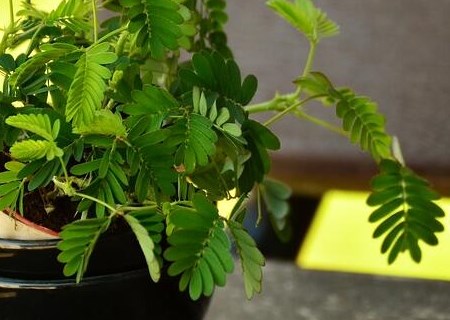
I. Mimosa Seed Planting Methods
1. Sowing time: generally sown indoors in early spring.
2. Site selection: it can be sown directly in small pots, or raised in shallow pots for seedlings to be divided and transplanted, or cultivated in fields.
3. Soil: mix 2 parts leaf mold, 3 parts garden soil and 5 parts fine yellow sand after sieving.
4. Before sowing: first fill the pot with an appropriate amount of culture soil, spread it flat and press it firm, sprinkle it thoroughly with water using a watering can, and sow immediately once the water has fully seeped in.
5. Sowing: for direct sowing, sow 1-2 seeds per pot. If using a shallow pot to raise seedlings, sow by dibbling at a spacing of 2 cm × 2 cm.
6. After sowing: cover with 3-5 cm of soil, just enough to cover the seeds. Cover the pot with glass or plastic film to retain moisture, and place the pot in a place with diffused light at around 20°C. Afterwards, when the pot soil looks dry, water it by the soaking method. After about 7-10 days, the seeds germinate and seedlings emerge.
III. What Benefits Do Mimosa Roots Have for Human Health
The whole plant can be used as medicine. The roots soaked in liquor and taken, or decocted together with liquor, can treat rheumatic pain, neurasthenia, insomnia, etc.; stewed with lean pork and eaten, it can treat hot, swollen and painful eyes, hepatitis and nephritis; the fresh leaves pounded into a paste can be applied to treat swelling and pain as well as shingles, and have quite a good pain-relieving and swelling-reducing effect.
III. The Functions of Mimosa
1. Ornamental: the mimosa has a loose plant form, with delicate and elegant pinnate leaves whose leaflets close as soon as they are touched; the mimosa has many, dainty flowers, charming and lovely, giving an impression of delicate elegance.
2. Weather prediction: the mimosa is a wonderful plant that can foretell changes between sunny and rainy weather. If you touch it with your hand, its leaves close up very quickly but open very slowly, this indicates the weather will turn clear; if when you touch the mimosa its leaves contract slowly and droop slowly, or even close slightly and then open again, this indicates the weather will turn from clear to overcast or that it is about to rain.
3. Medicine: whole plant (mimosa): sweet, astringent, cool. Calms the mind and soothes the nerves, clears heat and detoxifies. Used for vomiting and diarrhea, insomnia, infantile malnutrition, red swollen painful eyes, deep abscesses, shingles. Root (mimosa root): astringent, slightly bitter. Toxic. Relieves cough and resolves phlegm, drains dampness and unblocks collaterals, harmonizes the stomach, reduces food stagnation. Used for cough with phlegm and wheezing, rheumatic joint pain, infantile indigestion.