A Detailed Guide to Morning Glory Seed Planting Methods, Benefits and Effects, and Flowering Season
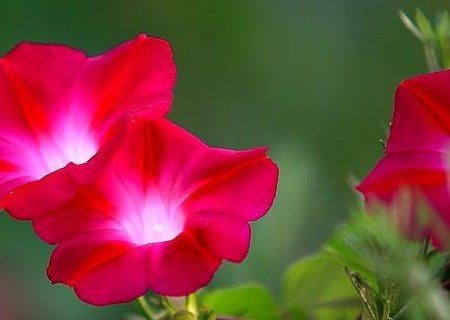
Morning glory, belonging to the genus Ipomoea in the family Convolvulaceae, is an annual twining herbaceous plant. The flowers of this plant closely resemble a trumpet shape, so in some places it is called trumpet flower. Do you know what the methods for planting morning glory seeds are? What benefits and effects does it have? In what season does it bloom? Morning glories are generally sown in spring and bloom in summer and autumn. The flower colors include blue, scarlet, peach red, purple and others, as well as mixed colors, and the petal edges vary considerably, making it a common ornamental plant. The fruit is egg-shaped and can be used as medicine.
I. Morning Glory Planting Methods
Potted large-flowered morning glories can also be kept from climbing and grown into a dwarfed, bushy, lush plant shape. When the seedlings grow 5 to 6 leaves, transplant them into a two-gallon pot (inner diameter 23 cm). Then pinch off the tips to encourage 2 to 3 side buds to develop, and remove the rest. When the side buds unfold leaves and extend vines, keep 2 to 3 leaves and pinch off the tips again. In this way, about 10 flowers can bloom at one time. After the flowers fade, pick them off immediately to encourage the side branches to send out new buds; keep a few as appropriate and remove the excess, still pinching the tips as before. In this way the plant cluster can remain full and the flowers continuous.
To grow morning glories scientifically, they must be potted. This makes scientific management easier, facilitates exhibition and judging, and also helps ensure seed collection from superior varieties.
1. Raising seedlings: The germination temperature for morning glory seeds is 20 to 30°C, and sowing is generally done in late April to early May (in the south it can be earlier). Sow in rows by variety in a fine sandy soil seedbed; when the moisture is moderate, they sprout in about 10 days. After about another 10 days, the cotyledons are fully open. As soon as the true leaves just begin to emerge, they should be transplanted into small pots; too early makes the seedlings weak, too late damages the roots, and neither is good for later development. The small pots should be marked with the variety name.
2. Planting out: After the seedlings in the small pots grow two or three true leaves, by which time the root system has developed well, they can be planted out into medium pots with base fertilizer added in advance. As Mr. Mei said, morning glories are not afraid of heavy fertilizer, and horse hooves, cooked hemp residue and the like can be used as base fertilizer. The development of the morning glory root system needs temperature, and according to Japanese researchers, black pots absorb heat better than red pots. The pots should be turned frequently so that sunlight is even and the root system develops fully.
3. Pinching: After the morning glory grows three or four true leaves, the center begins to produce vines, and at this point they should be removed. After the first pinching, branch vines grow again from the leaf axils; after the branch vines produce three or four leaves, pinch again, combining this with shaping. After each pinching, fertilizer should be applied, using fertilizer similar to that used for chrysanthemums. Be careful not to let fertilizer water and mud stain the leaves (including the cotyledons), so as to prevent the leaves from dropping. After the branch vines grow, they enter the flowering period (generally one month after planting out). Ideally, the first leaf of the branch vine produces axillary buds again, and the leaf axils of the second and third leaves send out flower buds. After the flower buds take shape, the stipules of the buds can be removed to facilitate bud development. To ensure sufficient nutrients are supplied to the buds so that large and brilliant flowers bloom, some buds can also be removed to cultivate single flowers, just
as with cultivating a named chrysanthemum variety. After flowering, the faded flowers should be picked off so they do not set seed, lest this affect the nutrition of the next batch of flowers. Of course, after three or four batches of flowers have bloomed, axillary buds grow in clusters and become difficult to control. Ordinary varieties can then be moved to the ground, while superior varieties are prepared for seed saving.
4. Saving seed: Good varieties must have their seeds saved well; after they mature in autumn, collect the seeds, classify and label them, and store them. If variations appear, they should be preserved with even greater care. For morning glory hybridization, after selecting the female and male parents, cut off the upper end of the flower bud at dusk the day before flowering, then remove the stamens and wrap it in a wax paper bag. The next morning, remove the wax paper bag, carry out artificial pollination using the stamens of the male parent, then wrap it again in the wax paper bag; after one or two weeks the wax paper bag can be removed, but the pollinated seed pod must be clearly marked and recorded. The following year, all the hybrid seeds should be planted well, and after flowering the results observed, from which the role of various genetic factors can be studied.
Experienced morning glory enthusiasts can distinguish good from poor seedlings by the shape of the cotyledons, so as to remove inferior ones early. They can also estimate the flower color from the color of the young stem, for example pale white-green for white flowers, deep purple for purple flowers, and so on. If the cotyledon shape is unusual, the true leaf shape is unusual, and the flower shape is unusual too.
II. Morning Glory Benefits and Effects
1. Ornamental
Morning glory is a very good ornamental flowering plant for courtyards, and can be used to beautify small courtyards, shade windows of living rooms, and cover fences and walls. Plant it in the courtyard and let its stems and vines climb and grow; with green branches and leaves and flowers winding around the vines, it is very beautiful. Whether for care or appreciation, morning glory is a good choice, and when various colors are planted together the colors are even more brilliant.
2. Medicinal
The part of the morning glory used as medicine is the seed. The black seeds are called "heichou" (black ugly) and the cream-colored ones are called "baichou" (white ugly). The seeds contain components such as pigments, fatty oils and organic acids, which are beneficial to human health. For medicinal use, "heichou" is mostly selected, and it has the effect of promoting water discharge and urination. Grind it into powder, apply it to the affected area before sleep, wash it off with clean water the next morning, and continue for one week; it has the effect of eliminating spots.
But it should be noted that every medicine has some toxicity; since morning glory seeds can treat illness, they must have a certain toxicity, so never take them orally directly.
3. Benefits of Morning Glory
① Diarrhea
It is unclear whether this effect is good or bad. Morning glory seeds contain a relatively large amount of pharbitin, which in the intestines encounters bile and intestinal juice and decomposes into pharbitin aglycone, thereby irritating the intestines, causing relatively rapid peristalsis and resulting in diarrhea.
② Diuresis and swelling reduction
Morning glory has a very good diuretic and swelling-reducing effect. If you have limb edema and nephritic edema, or even ascites due to cirrhosis, you can use morning glory to treat them, because morning glory is very effective in treating such conditions.
③ Treating insect bites
The leaves of morning glory can be used as medicine for insect bites. Morning glory can not only treat mosquito bites, but is also very effective for centipede and wasp stings. Take three or four morning glory leaves, rub them with both hands to produce a sticky juice, and rub the bitten area together with the morning glory leaves; the pain and itching stop immediately, and afterward no fluid will ooze out.