Pansy Seed Planting Methods, Timing, and Differences Between Pansy, Torenia, and Horned Violet
Pansy is a perennial herbaceous plant. Its flowers usually have three colors per bloom: purple, white, and yellow, hence the name pansy. Pansies are best grown outdoors and are suitable for flower beds, courtyards, and containers. Do you know the methods for planting pansy seeds? When to plant them? What are the differences between pansies, torenia, and horned violets? What are their properties and effects? The Chinese medicinal herb pansy can also sterilize and treat skin problems such as acne, pimples, and allergies. Pansy medicinal baths also have a good breast-enhancing effect.
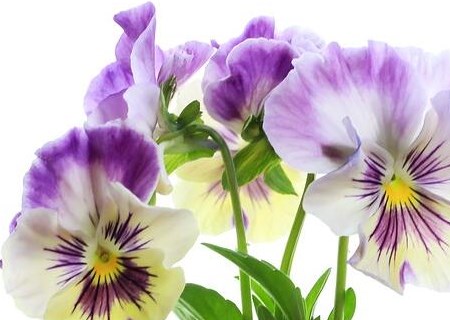
I. Pansy Seed Planting Methods
Pansies are generally sown by broadcasting in early September. The soil in the seedbed or sowing pot must have good drainage. After sowing, cover with soil to twice the depth of the seeds, water thoroughly with a fine watering can, and place in a location with ample light.
The optimum germination temperature for pansies is 18-21°C. Under dark conditions, they germinate in 7-10 days. The optimum growth temperature is 10-13°C. They bloom 14-15 weeks after sowing. If the temperature is too high during sowing, it will severely affect seed germination and seedling growth, resulting in an excessively low seedling survival rate. Two methods are usually used to lower the temperature: one is to use a germination chamber or artificial cooling to create suitable germination temperature and humidity, then move the seedlings after emergence to a seedling shed with cooling pads and good shade and ventilation conditions so the seedlings grow normally; the other is to use high mountains. In the Yangtze River basin, high-mountain seedling cultivation requires natural low-temperature climatic conditions at an altitude of over 700 m.
After sowing pansies, the seeds can be covered with vermiculite. Keep the soil temperature at 18-24°C and the medium moist. Light is not needed before the radicle emerges. Seedlings generally emerge in 7-14 days. During the seedling growth stage of pansies, the soil temperature should be 15-24°C. The lower the temperature, the slower the plant grows and the sturdier the plant. Before watering, let the soil dry out completely, but avoid permanent wilting of the plant. This is beneficial for pansy root growth. Keep the soil pH at 5.5-5.8 and alternately apply some N fertilizer or potassium nitrate fertilizer.
II. Differences Between Pansy, Torenia, and Horned Violet
Pansy
Pansy (scientific name: Violatricolor L.) is a biennial or perennial herbaceous plant in the order Violales, family Violaceae, genus Viola. The basal leaves are long ovate or lanceolate with long petioles. The stem leaves are ovate, oblong, or oblong-lanceolate, with rounded or obtuse tips and sparsely crenate or obtusely serrate margins.
Horned Violet
Horned violet (jǐn) (Viola cornuta) is a perennial herb in the family Violaceae, genus Viola, often cultivated as an annual. The plant height is 10-30 cm, the stems are relatively short and upright, and the flower diameter is 2.5-4 cm. There are about 500 species in the same genus, with many horticultural cultivars. The flowers are violet-purple, scarlet, orange-red, bright yellow, and bicolor, and nearly round. The flowering period varies depending on the cultivation time. The flower shape of the horned violet is the same as that of the pansy, but the flower diameter is smaller and the flowers are more densely borne.
Torenia
Torenia (pronunciation: jīn) is the whole plant of the Scrophulariaceae plant Torenia concolor. It is a light-loving plant that can tolerate shade but not cold. It can self-sow and prefers well-drained soil. It has the effect of clearing heat and detoxifying.
The plant height is 15—30 cm, and the plant form is neat and compact. The flowers are axillary or in terminal racemes. The flower colors include purple-blue, peach red, orchid purple, deep peach red, and purple, among others. The seeds are very small. The stems are square, much branched, and spreading. The leaves are opposite, ovate or ovate-lanceolate, with serrate margins. The petiole length is half the leaf length. The leaf color turns red in autumn. The flowers are terminal or axillary on the upper part of the stem (2-3 flowers, not forming an inflorescence), with a labiate corolla. The calyx is inflated, and the calyx tube has 5 ridged wings. The flowers are blue, and the corolla is variegated (the upper lip is pale lilac, the lower lip is violet-purple, and the throat is yellow).
III. Pansy's Effects and Functions
Effects: Clearing heat and detoxifying, relieving cough.
Indications: Used for sores and swellings, infantile eczema, infantile scrofula, and cough.
1. "Chinese Medicinal Plant Illustrated Guide": “Relieves cough. Treats infantile scrofula.” (Part 2 of "Chinese Medicinal Sea")
2. "Chinese Medicinal Plant Illustrated Guide": “As an antitussive, used in Soviet folk medicine to treat infantile scrofula.”
3. "Hunan Materia Medica": “Detoxifies and purifies the blood.”
4. "Taiwan, China Medicinal Plant Gazette": “The whole plant is used for pediatric skin disease patients as a blood-purifying medicine; formerly used as a diuretic and diaphoretic, or as a mild laxative. Treats skin diseases (eczema) and scrofulous constitution.”