Clover Seeds: Planting Methods, Prospects, and Whether It Is Edible
Clover: a general term for a variety of herbaceous plants with trifoliate palmate compound leaves, mainly including three categories: certain species in the Trifolium genus and Medicago genus of the Fabaceae family, and the Oxalis genus of the Oxalidaceae family. Do you know what the planting methods for clover seeds are? How are the prospects for growing clover? Can it be eaten?
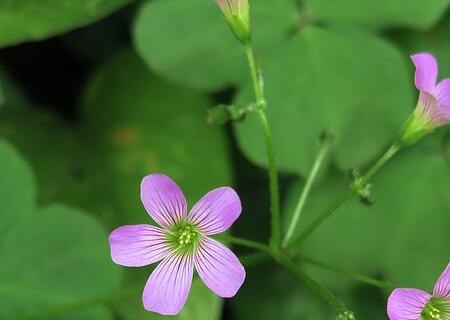
I. Clover Planting Methods
1. Soil and Tillage
Clover seeds are tiny, the seedlings are slender with weak emergence ability, and growth during the seedling stage is extremely slow. To ensure a full stand of seedlings, land preparation must be meticulous. Whether sowing in spring or autumn, the land should be prepared in advance: first shallow plow to remove stubble, clear debris, and store water to preserve soil moisture. After 10-15 days, deep plow and harrow again, level the ground, and make the soil clods fine and the seedbed soil loose, ready for sowing.
2. Fertilization
Clover belongs to the Fabaceae family and has its own nitrogen-fixing ability, but during the seedling stage the rhizobia have not yet formed, so a small amount of nitrogen fertilizer should be added to promote strong seedlings. Adding phosphorus and potassium fertilizer has a very good yield-increasing effect. After the turf is established, only phosphorus and potassium fertilizer need to be added. Before sowing, apply 1500-2000 kg of organic fertilizer per 667 sq m, mixed with 15-20 kg of superphosphate as base fertilizer. If the plants are short and the leaves are yellow at emergence, apply a small amount of nitrogen fertilizer. Generally, 15 days after emergence, apply 2.5 kg of urea, 5 kg of potassium fertilizer, and 5 kg of calcium magnesium phosphate fertilizer to promote strong seedlings and increase grass yield.
3. Sowing and Seed Treatment
The best sowing time is spring and autumn, and the optimum growth temperature is 19-24°C. Spring sowing can be done from the end of March to the end of April, once the temperature is stable above 15°C. Autumn sowing generally starts from mid-to-late September. Before sowing, the seeds should be soaked. For every 1 kg of seeds, add 1.5 kg of water, plus 1 g of ammonium molybdate, and soak for 12 hours. Then mix evenly with 5-10 kg of calcium magnesium phosphate fertilizer plus 5-10 kg of fine soil or yellow sand before sowing. For artificial grassland, sow 0.4-0.5 kg per 667 sq m. The sowing rate should be smaller in humid areas and larger in arid areas. The sowing depth is 1-2 cm. Sowing too deep makes emergence difficult, so it should be controlled appropriately according to soil texture and moisture conditions. There are various sowing methods: it can be sown alone or mixed, in drills or broadcast.
4. Field Management
After sowing and before emergence, if the soil becomes crusted, harrow and rake in time to break the crust layer and facilitate emergence. Clover grows slowly during the seedling stage and is easily invaded by weeds, so during the seedling stage, cultivate, loosen the soil, and weed 1-2 times; if pests are found, control them in time. When sown in September, it buds and flowers in April of the following year, reaches full bloom in mid-May, and the grass layer height at flowering is 15-20 cm, which is the suitable period for mowing and utilization. After cutting, the regrowth ability is strong, and it can quickly form a second grass layer covering the grassland. In high-temperature seasons, clover stops growing. In the 2-3 years after forming grass cover, large weeds should be removed promptly. If missing plants occur due to high temperature and drought in summer, reseeding can be done in autumn to restore grassland productivity. If planted on a large scale as grazing land, light grazing can be carried out 1-2 months after sowing, when weeds are 20-25 cm tall, to inhibit weed growth. Clover has few diseases, but if harvesting is not timely, brown spot and powdery mildew sometimes occur. It can be cut and utilized first, then controlled with Bordeaux mixture, lime sulfur mixture, or carbendazim.
For grassland growing for more than 2 years, the soil layer becomes compacted and aeration is poor. Before green-up in spring and autumn and before regrowth after grazing or mowing, harrow and loosen the soil, and combine loosening with topdressing. Apply 20-25 kg of superphosphate per 667 sq m to facilitate the growth and development of new buds and roots. Clover has a relatively high demand for soil moisture. Where irrigation conditions are available, irrigate when the soil is dry or combine irrigation with topdressing.
II. Analysis of Clover Planting Prospects
1. Medicinal Value of Clover
There are mainly two kinds of clover. One is Trifolium, whose Chinese medicinal name is "Sanxiao Cao"; its flowers can be white or red, and it has the effects of clearing heat and cooling blood. The other is Oxalis, which includes wild yellow-flowered types as well as purple-leaved or red-flowered types; it also has the effects of clearing heat, cooling blood, and calming the nerves. Clover has certain therapeutic effects on diseases such as jaundice and gastric ulcer bleeding, and also has a relieving effect on symptoms such as stomach heat pain and weak spleen and stomach. So the value of clover should not be underestimated; its small body has great value.
2. Decorative Role of Clover
As a fresh-looking plant, clover can be used as a potted green plant for home decoration, which can both make the home environment comfortable and beautify the household atmosphere. It can also be planted together with other plants as a foil to enhance beauty, appreciated from another perspective.
3. Greening and Planting Value of Clover
Clover is widely distributed and highly adaptable. Among them, white clover is an excellent forage grass rich in protein and minerals, and can adapt to both acidic and alkaline soils, with great prospects for promotion in China. At the same time, because it also plays a huge role in soil and water conservation, it can be used as a green plant. In addition to its decorative role, it can also be planted on a large scale, with good economic and ecological benefits.
III. Whether Clover Can Be Eaten
Clover can be eaten. There are two kinds of clover. One is Trifolium used in green lawns, with the Chinese medicinal name Sanxiao Cao, and the flowers are mostly white, sometimes red. It is neutral in nature and slightly sweet in taste. It has the effects of clearing heat and cooling blood. The other is Oxalis, including yellow-flowered (wild), red-flowered, and purple-leaved types, mostly used for greening. It is cool in nature and sour in taste. It has the effects of clearing heat, cooling blood, and calming the nerves. It is used for colds with fever, enteritis and diarrhea, urinary tract infections, and venomous snake bites.
Clover is an excellent forage grass. People can occasionally taste it, but eating too much can cause indigestion. Since clover can be used as medicine, and every medicine has some toxicity, eating it indiscriminately can lead to adverse consequences.