The chrysanthemum is a herbaceous perennial. What are its seed planting methods, timing and prospects?
In plant taxonomy, the chrysanthemum is a perennial herbaceous plant of the Asteraceae family and the genus Chrysanthemum. The chrysanthemum is a precious ornamental flower developed through long-term artificial selection and breeding. Do you know what the seed planting methods for chrysanthemums are? When to plant? What are the planting prospects? The chrysanthemum ranks third among China's top ten famous flowers and is one of the Four Gentlemen of Flowers (plum blossom, orchid, bamboo and chrysanthemum).
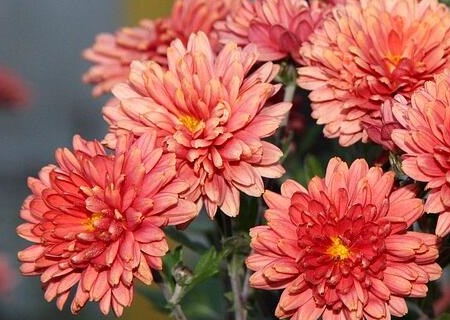
I. Chrysanthemum seed planting methods
1. Potting soil: For chrysanthemum cultivation, fertile sandy soil should be chosen. Start with a small pot and then move to a larger one, repotting 2 to 3 times, and the pot can be finalized in July. For the final potting, a mixed soil can be made from 6 parts leaf mold, 3 parts sandy soil and 1 part cake fertilizer residue. After watering thoroughly, place it in a shady spot, and once the plant is growing normally, move it to a sunny spot.
2. Watering: In spring the chrysanthemum seedlings are small, so watering should be light. In summer, as the chrysanthemum seedlings grow larger, water once in the early morning and top up once more in the evening, and use a spray bottle to mist the chrysanthemum leaves, branches and the surrounding ground to increase environmental humidity. Before the Start of Autumn, water and fertilizer should be appropriately controlled to prevent the plant from shooting up and growing excessively. After the Start of Autumn and before flowering, increase the amount of watering and begin fertilizing, gradually making the fertilizer solution stronger. In winter, the flowering branches basically stop growing, the plant's water consumption drops noticeably, and evaporation is also low, so watering must be strictly controlled.
3. Fertilizing: When the chrysanthemum plants are being established, sufficient base fertilizer should be applied in the pot. Afterward, a nitrogen fertilizer can be applied every 10 days. After the Start of Autumn, from bud initiation to visible buds, apply a slightly stronger fertilizer solution once a week; when the buds are ready to open, apply one more strong fertilizer solution and then pause fertilizing. If at this point you can give the chrysanthemums one application of superphosphate or a 0.1% potassium dihydrogen phosphate solution, the flowers will bloom more brightly.
4. Pinching: When the chrysanthemum plant grows to more than 10 cm tall, begin pinching. When pinching, keep only 4 to 5 leaves at the base of the plant and remove all the upper leaves. When 5 to 6 new leaves have grown, pinch out the growing tip again, leaving the plant with 4 to 7 main branches; branches and buds that grow later should be removed promptly. Pinching causes the plant to branch and effectively controls plant height and shape. At the final pinching, carry out shaping pruning on the chrysanthemum plant, removing excess branches and overly vigorous or overly weak branches, keeping just 3 to 5 branches.
5. Bud thinning: When the chrysanthemums show buds in September, remove the buds at the lower part of the plant, leaving only one bud at the tip of each branch.
II. When to plant
Chrysanthemums can be propagated in two ways: vegetative propagation and seed propagation. Vegetative propagation includes cuttings, division, grafting, layering and tissue culture, and is usually done mainly by cuttings. If you choose to sow chrysanthemum seeds, it is best to do so in spring; chrysanthemum cuttings are taken in spring and summer or in late autumn after flowering; division is best done in late autumn after flowering; and chrysanthemum root division and transplanting should be done before May 15, while chrysanthemum cutting and transplanting should be done before June 16.
III. What are the chrysanthemum planting prospects like
Taking white chrysanthemum as an example, the cost is about 2,000 yuan per mu: 2,500 chrysanthemum seedlings per mu are needed, and the current market price of seedlings ranges from 0.12 to 0.45 yuan per plant; calculated at 0.2 yuan, the seedling cost is about 500 yuan; during the growing process, applying farmyard manure and other fertilizers costs 100 yuan per mu, irrigation water 150 yuan per mu, mulching film 30 yuan per mu, the labor cost for producing each jin of fresh flowers is 0.8 to 1 yuan, and land rent is 100 to 200 yuan per mu.
Income is about 7,000 yuan per mu: the yield is 2,500 to 2,800 jin of fresh flowers per mu, and the current purchase price of fresh flowers (taiju) is 2.8 yuan per jin, while that of golden silk imperial chrysanthemum (a high-end variety) is 3.2 yuan per jin, so income can reach nearly 9,000 yuan at most (golden silk imperial chrysanthemum).
Therefore, under scientific planting and calculated at current market prices, the profit should be 5,000 yuan per mu.
Additional income: from the second year of planting, seedlings can be propagated by division, cuttings and other methods; 1 mu of old seedlings can plant 15 to 20 mu of new fields, that is, 2,500 plants of 1 mu of old seedlings can produce at most 50,000 new seedlings; at the current market price of seedlings calculated at 0.2 yuan per plant, selling seedlings externally can bring in an income of 10,000 yuan per mu.