Platycodon (Balloon Flower) Seed Planting Methods, Per-Mu Income, and Medicinal Benefits Explained in Detail
Platycodon grandiflorus, also known as balloon flower, bellflower, or monk's hat flower, is a perennial herbaceous plant with dark blue or dark purple-white flowers that can be grown as an ornamental; its root can be used as medicine, with effects such as relieving cough and phlegm, dispersing lung qi, and expelling pus. So do you know what the seed planting methods for platycodon are? How much income per mu? What are its benefits and effects?
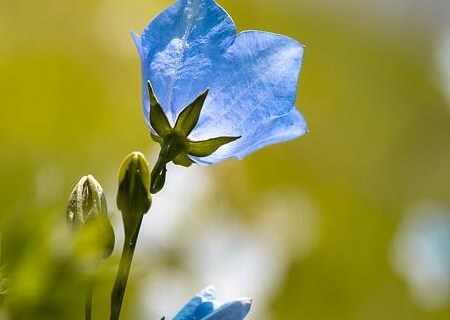
I. Platycodon Planting Methods
1. Propagation Techniques
For platycodon propagation, high-yielding plants should be selected for seed production. In late August, the inflorescences on the lateral branches of the seed plants should be removed so that nutrients are concentrated on the development of the upper and middle fruits, promoting full seeds and improving seed quality. When the capsules turn yellow, cut the whole plant, place it in a ventilated and dry place to after-ripen, then sun-dry and thresh for later use. Direct sowing is usually adopted, though seedling transplanting can also be used. Direct sowing yields higher than transplanting, with fewer forked roots and better quality. It can be sown in autumn, winter, or spring, with autumn sowing being the best.
2. Seed Selection
For platycodon seeds, choose seeds from plants at least 2 years old and not stale (seeds stored for one year lose more than 70% of their germination rate). Before planting, conduct a germination test to ensure the germination rate is above 70%.
The specific method for the germination test is: take a small amount of seeds, soak them in warm water at 40-50°C for 8-12 hours, remove the seeds, drain the water, place them on cloth, mix with wet sand, and germinate at a temperature of about 25°C. Remember to stir and spray water promptly; they will germinate in 4-6 days.
3. Sowing
Platycodon can be sown in spring or summer. For spring sowing, warm-water soaking of seeds is advisable to promote earlier emergence: place the seeds in warm water, stir until the water cools, then soak for another 8 hours. Wrap the seeds in wet cloth, cover with wet burlap, and rinse with warm water once every morning and evening for about 5 days, until the seeds begin to sprout, then sow. Sow the seeds evenly in the furrows. Because the seeds are tiny, they can be mixed with fine sand before sowing. After sowing, cover with soil or plant ash. In arid areas, water after sowing to retain moisture. Use 500-750 grams of seed per mu. During emergence, pay attention to loosening the soil and weeding. When the seedlings are about 2 cm tall, thin them, keeping strong seedlings at the specified plant spacing. In spots where seedlings are sparse or missing, transplant seedlings on cloudy days with soil attached. Then apply dilute human and animal manure water, cover after application, then apply another topdressing and earth up to prevent lodging. Cover after application. In addition, frequently loosen the soil and weed, and water promptly in dry weather. Generally, harvest in late autumn after sowing or before sprouting in early spring.
Preventing forked roots in platycodon: Platycodon is best when the roots are straight and elongated, firm, and with few forked roots. Cultivated platycodon often has many forked roots, some bifurcated and some trifurcated, and some main roots are short and thick with lateral roots. This greatly affects quality. If one plant has multiple shoots, it will have forked roots; the more vigorous the shoots, the more the main root's growth is affected. Conversely, one plant with one shoot has no forked or lateral roots. It seems the solution to the forked-root problem in platycodon is simple. As long as cultivated platycodon is kept to one plant with one shoot, there will be no forked or lateral roots. Therefore, excess shoots should be removed at any time, especially in the second spring when regrowth occurs and multiple shoots are most likely to appear. At this time, pay special attention and remove the excess shoots to maintain one plant with one shoot. At the same time, apply more phosphorus fertilizer and less nitrogen and potassium fertilizer to prevent excessive aboveground growth. If necessary, pinch off the growing tips to reduce nutrient consumption and promote normal root growth.
Dry-sown seeds need about 25 days to emerge, and pre-germinated seeds need about 10 days to emerge. After the seedlings emerge, remove weeds promptly. If seedlings are too dense, thin them in time, ideally at 10-12 plants per 100 sq cm, keeping one plant every 5 cm (about 60,000 plants per mu), along with loosening the soil. Weeding should also be done in a timely manner later. In addition, platycodon has a long flowering period, which consumes a large amount of nutrients and affects root growth. Except for seed-production fields, remove flowers and fruits promptly to improve root yield and quality.
4. Site Selection
Platycodon grows best in relatively loose soil, and especially prefers slopes and mountainous land, with semi-shaded, semi-sunny terrain being optimal. Flatland cultivation requires good drainage conditions. Platycodon is not suitable for continuous cropping.
5. Land Preparation
Platycodon has relatively long fleshy roots, so ridge cultivation is best. In early spring (mid-to-late April), spread farmyard manure and plow, harrow, and level the land (deep plowing 30 cm). When making ridges, first mark grid lines on the ground at 2 m intervals, open furrows, then spread the soil from the furrows to both sides to make ridge beds about 1.7 m wide with furrows about 30 cm wide. In case of drought, irrigate along the furrows in preparation for sowing.
6. Fertilization
Before sowing platycodon in the field, apply 2000-3000 kg of farmyard manure per mu, 40 kg of compound fertilizer, and 30 kg of superphosphate. To control white grubs, when turning the farmyard manure, add 1 kg of Jiadifen powder per ton and mix evenly with the farmyard manure before applying before plowing. Later topdressing mainly uses clear manure water or urea. In July of the current year and July-August of the second year, use 25 kg of urea or clear manure water for topdressing to promote seedling growth. Clear manure water can be applied at about 2 tons per mu each time, with a concentration of about 10%. If the concentration is too high after topdressing, wash the seedlings promptly with clean water.
II. How Much Income Per Mu from Planting Platycodon
Planting platycodon requires an investment per mu of 10,000 jin of barnyard manure or 100 jin of compound fertilizer, valued at 120 yuan; 2 kg of seeds, priced at 160 yuan; and about 300 yuan for labor, totaling 580 yuan. The average annual yield is above 1000 kg, with high yields reaching 1500 kg. At an export-grade rate of 70%, that is 700 kg. At the current purchase price of 4 yuan/kg, the income per mu is 2800 yuan. Add 300 kg of substandard product, processed into medicinal material (drying ratio 3:1) to make 100 kg, at the current purchase price of 10 yuan/kg, totaling 1000 yuan. There is also seed income: 20 kg of seeds per mu in the current year, at 40 yuan/kg, another 800 yuan. Total income per mu is 4600 yuan. After deducting costs, the income per mu is at least 3600 yuan or more.
III. What Are the Benefits and Effects of Platycodon
Disperses lung qi, eliminates phlegm, benefits the throat, and expels pus. Platycodon is bitter and pungent in taste, neutral in nature. It enters the lung meridian. Its effects are dispersing lung qi, benefiting the throat, eliminating phlegm, and expelling pus. After reviewing the literature, the author believes that platycodon also has the effects of regulating qi, activating blood, promoting digestion, and calming the mind.
Effects of platycodon: 1. Cough with profuse phlegm, chest tightness and poor breathing. This herb is pungent and dispersing, bitter and draining, opens up lung qi, and eliminates phlegm, and can be used regardless of cold or heat. For wind-cold, combine with perilla leaf and apricot seed, as in Xingsu San (Systematic Differentiation of Warm Diseases); for wind-heat, combine with mulberry leaf, chrysanthemum, and apricot seed, as in Sangju Yin (Systematic Differentiation of Warm Diseases); to treat phlegm stagnation with chest distension, often combine with bitter orange.
2. Sore, swollen throat, and loss of voice. This herb can disperse lung qi and release pathogens to benefit the throat and open the voice. Whenever external pathogens invade the lungs and cause sore throat and loss of voice, it is often combined with licorice and burdock seed, as in Jiegeng Tang (Synopsis of the Golden Chamber) and Jiawei Ganjie Tang (Medical Insights). To treat sore, swollen throat with excessive heat toxin, it can be combined with belamcanda rhizome, puffball, and isatis root to clear heat, resolve toxin, and benefit the throat.
3. Lung abscess with pus expectoration. This herb is dispersing and upward-moving in nature, and can free lung qi to expel the congested pus and phlegm in the lungs. To treat lung abscess with cough, chest pain, and foul-smelling phlegm, it can be combined with licorice, as in Jiegeng Tang (Synopsis of the Golden Chamber); clinically, it can also be combined with houttuynia and winter melon seed to strengthen the effects of clearing the lungs and expelling pus.
Pharmacological effects:
The platycodin it contains directly stimulates the oral cavity, throat, and gastric mucosa, reflexively increasing bronchial mucosal secretion so that phlegm is diluted and easier to expel; platycodon has an antitussive effect and enhances anti-inflammatory and immune effects, with anti-inflammatory strength similar to aspirin; the water extract can enhance macrophage phagocytosis, strengthen the bactericidal capacity of neutrophils, and increase lysozyme activity; it has a preventive effect on stress ulcers. Crude platycodin has sedative, analgesic, and antipyretic effects, and can also lower blood sugar and cholesterol and relax smooth muscle. Platycodin has a strong hemolytic effect, but when taken orally it is decomposed and destroyed in the digestive tract and loses its hemolytic effect.