How to plant jasmine seeds of the Oleaceae family? Analysis of the effects, benefits and prospects of jasmine tea
Jasmine (Jasminum sambac), an erect or climbing shrub of the genus Jasminum in the Oleaceae family, has extremely fragrant flowers and is a famous raw material for scented tea and an important raw material for essence; its flowers and leaves are used medicinally to treat red, swollen and painful eyes, and also have the effect of relieving cough and reducing phlegm. Do you know the methods for planting jasmine seeds? What are the effects and benefits of jasmine tea? What are its prospects?
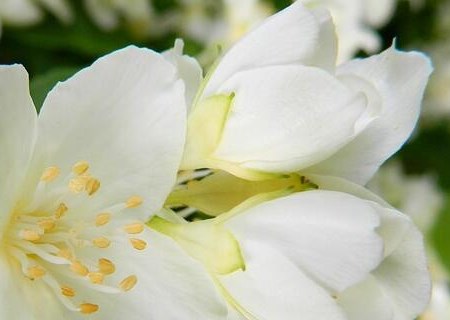
I. Jasmine seed planting methods and pest and disease control
1. Sowing: In the north, greenhouses or geothermal seedling beds can be used for raising seedlings. Broadcast the seeds on the seedling bed, keep the ground temperature at around 20°C, and stop heating the ground once the seedlings emerge. Sow about 300 grams per square meter of seedling bed. When there is 1 pair of true leaves, transplant the seedlings once, with a single plant forming each seedling. 5-7 days before planting out, lower the temperature and increase ventilation to harden the seedlings, then plant out after the last frost. You can also dibble the seeds in a small arched shed without transplanting, raising the seedlings in one go, dibbling at a spacing of 7 cm x 7 cm.
2. Soil: To help jasmine grow well, it is recommended that the soil for home potted jasmine be fertile sandy or semi-sandy soil. When planted in slightly acidic soil with a pH of 6 to 6.5, the root system is dense and growth is vigorous. If the soil is heavy clay, lacks organic matter, has low fertility and poor aeration, then the root system will be sparse, the plant short, the stems and leaves slender, and the flowers few and small.
3. Watering: Jasmine is not drought-tolerant, but it also dislikes waterlogging. During the rainy season, promptly pour out any accumulated water in the pot, otherwise the leaves tend to turn yellow. On hot sunny days in summer, water twice a day, once in the morning and once in the evening. If the leaves are found to curl and droop, spray water on the leaves to promote growth. In the rainy season, loosen the soil often so that no water accumulates in the pot. In spring and autumn, water thoroughly once every few days. In winter, just keep the potting soil moist; too much watering will cause the roots to turn black and rot, and the leaves to turn yellow and drop.
4. Light: Jasmine likes hot, humid, ventilated environments and needs sufficient light. Jasmine is sensitive to cold; in the south, potted jasmine can be grown outdoors to overwinter, while in the north, warmth must be provided in autumn and winter, moving it indoors to a south-facing spot. With strong light, the branches and trunk are robust, the leaves dark green, and the flowers numerous and fragrant; with insufficient sunlight, the nodes are sparse, the flowers few and not fragrant. The stronger the light, the more developed the jasmine's root system, the more robust the plant's growth, and the greater its resistance to stress.
5. Temperature: Jasmine is quite sensitive to temperature and requires a warm, humid climate, and can adapt to higher temperatures; but it is not tolerant of low temperatures and has poor cold resistance. At temperatures below 10°C, jasmine grows extremely slowly, or even stops growing. At around 19°C it can sprout, and only above 25°C does it develop flower buds; at 30-40°C, flower buds form and develop better. If the room temperature is kept at around 20°C in an air-conditioned room, the time for the buds to open can be delayed by about 10 hours; after removing the low temperature and raising the room temperature to the suitable temperature for bud opening, the jasmine flowers will open quickly, with a rich and pure fragrance.
6. Fertilizing: The hot summer season is the peak growth period for jasmine. Apply more organic fertilizer and phosphorus-potassium fertilizer, such as peanut cake powder, bone meal, superphosphate and multi-element flower fertilizer, twice a month. During the summer growing period, jasmine often shows luxuriant branches and leaves but no flowers; the main reason is too much nitrogen fertilizer, causing excessive vegetative growth. In such cases, control the fertilizer and water, increase phosphorus-potassium fertilizer to promote flower bud formation, and at the same time move the jasmine to a spot with ample sunlight and good ventilation.
7. Pest and disease control: Jasmine is often harmed by moth larvae, scale insects and red spider mites, most seriously from July to September, often boring into and eating the flower buds. You can spray with all-purpose powder or fenvalerate diluted 200 times with water, once every half month. Spray even if no pests or diseases have occurred, so as to prevent them beforehand. The best times to spray are 9 a.m. and 4 p.m. on sunny days; do not spray under the strong midday sun to prevent chemical damage.
II. The effects and benefits of jasmine tea
Jasmine has the effect of "regulating qi and relieving depression, warding off foulness and harmonizing the middle," and has a very good anti-inflammatory and detoxifying effect on dysentery, abdominal pain, conjunctivitis and sores and toxins. Jasmine clears the liver and improves eyesight, promotes body fluid and quenches thirst, eliminates phlegm and treats dysentery, relieves constipation and promotes urination, dispels wind and releases the exterior, treats fistula, strengthens teeth, boosts energy, lowers blood pressure, strengthens the heart, and prevents dental caries and radiation damage. Jasmine has anti-cancer and anti-aging effects, helping people live longer and enjoy physical and mental health.
1. Promoting qi flow and relieving stagnation. The volatile oily substances contained in jasmine have the effect of promoting qi and relieving pain, and relieving depression and dissipating nodules. They can alleviate symptoms such as chest and abdominal distension and pain, and tenesmus in dysentery, making it an excellent dietary remedy for pain relief.
2. Antibacterial and anti-inflammatory. Jasmine has an inhibitory effect on many kinds of bacteria. Taken internally or applied externally, it can treat inflammatory conditions such as red eyes, sores and ulcers, and skin ulceration.
III. What are the prospects for growing jasmine?
According to a farmer who has grown jasmine for many years, his income from growing jasmine is decent, because jasmine can be harvested every day, only the quantity harvested varies.
To grow jasmine, as long as the land is fertile, it is easy to plant and harvest. Growing jasmine from seed takes about 3 to 4 months before it can be harvested, and then it can be harvested every day, but if the weather is relatively cold, it does not easily produce flowers.
He continued, saying that jasmine now sells on the market for 10,000 riel per kilogram (about 2.50 US dollars), but during festivals it can sell for more, up to 12,000 or 13,000.
He said that growing jasmine requires only very little pesticide, just to prevent insects, and that growing jasmine requires little time to care for them, and they are relatively hardy and easy to harvest, and are the source of his family's daily livelihood.