Five-needle pine: suitability for courtyard planting, prices, care, and bonsai making
Five-needle pine, also known as Japanese five-needle pine, five-leaf pine, and Japanese white pine, gets its name from its five needles growing in clusters. There are many varieties of five-needle pine. It is native to Japan and has a long history of introduction and cultivation in China, where it is widely grown in many places. So is it suitable to plant five-needle pine in a home courtyard? How much does a sapling cost? What are the key care points? What are the bonsai-making methods? According to the Jiangsu Linyuan Nursery Stock Base, for height 120-150 cm and ground diameter 5-7 cm, the price is 270-650 yuan/tree; for height 150-180 cm and ground diameter 6-8 cm, the price is 650-950 yuan/tree; for height 200-250 cm and ground diameter 7-10 cm, the price is 900-1300 yuan/tree.
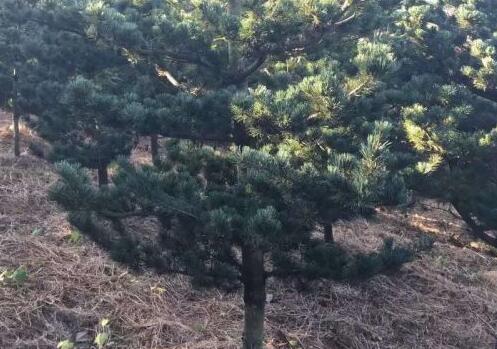
Is it suitable to plant five-needle pine in a home courtyard?
Pines and cypresses are both evergreen trees that live for ten thousand years, but both carry commemorative meaning and suggest remembrance. It is recommended that if there is a rockery and a water fountain in a factory area, they can be planted on the rockery; if planted alone, the meaning is not significant. But if it is a bonsai, it is suitable for planting in a home courtyard.
What are the key care points for five-needle pine?
1. Five-needle pine prefers a sunny, dry, and well-ventilated environment. It dislikes waterlogging, heavy raw soil, or alkaline soil, and prefers loose, fertile, well-drained acidic soil. Five-needle pine enters dormancy from December to January of the following year, begins to sprout and revive in February, grows leaves and new shoots from March to May, enters a growth stagnation period during the high temperatures of July-August, begins bud break again in late August, and thickens its branches and trunk from September to November.
2. Cultivation measures
(1) Prepare a slightly acidic growing medium suitable for five-needle pine growth by mixing mountain soil and leaf mold.
(2) Master the timing for changing soil and repotting. Choose the winter dormancy period, preferably before buds sprout in December.
(3) Control plant height and promptly remove buds after spring sprouting.
(4) During the plum rain season in June, prevent the potting soil from becoming too wet, avoid water accumulation in the pot, promptly clear drainage, and place it in a dry and ventilated location for care.
(5) During the midsummer high-temperature season in July-August, avoid letting the potting soil become too dry. Water thoroughly and also spray water on the leaves.
(6) In autumn from September to November, apply compound fertilizer as a top dressing to promote thick branches and a strong, healthy growth.
(7) From December to January of the following spring, during the plant's dormancy period, reduce watering, keep it slightly dry, and protect it from severe freezing. Pruning and shaping should preferably be carried out during the plant's dormancy period.
Appendix: How to make a five-needle pine bonsai
1. Choosing a pot: The first step in making a five-needle pine bonsai is to choose a good pot. Five-needle pine has an antique, elegant posture and lush green leaves in all four seasons, so it is suitable to use a purple clay pottery pot with an antique form and deep color. For large five-needle pine bonsai, carved stone pots such as white alum stone or marble can also be used, but care must be taken to chisel holes in the bottom of the pot and fill them with sand to facilitate drainage.
2. Choosing soil: The potting soil for five-needle pine should be loose, fertile, slightly acidic sandy loam. Mountain soil or leaf mold is best, mixed with 40% sand and a small amount of bone meal. With sufficient nutrients and good drainage and aeration, it is beneficial for root growth and development.
3. Potting: Planting five-needle pine is most suitable before sprouting in February-March, which helps new roots emerge. Planting after autumn is also possible. When transplanting, it is best to keep the original soil ball to help it survive.
4. When potting five-needle pine, attention should be paid to pruning damaged and rotten roots, appropriately shortening thick roots that affect potting, and applying wax or paint to the cut surfaces to prevent pine resin from flowing out. The bottom of the pot must be padded with several pieces of broken tile or charcoal to create space; tall cylinder pots and deep pots especially need to be padded so they are open and permeable, to facilitate aeration and water flow.