How do you eat goji berries, how do you grow them, and who should not eat them?
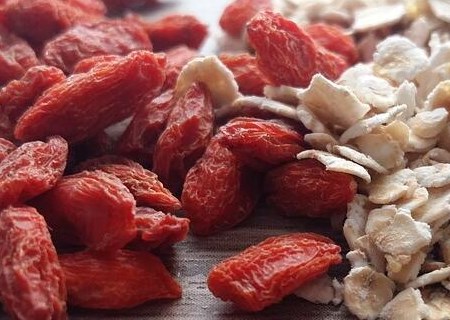
Goji berry is the ripe fruit of the goji plant (Lycium barbarum) in the nightshade family. The fruit is picked when ripe in summer and autumn, the fruit stalk is removed, and the fruit is placed in a cool, shaded spot until the skin wrinkles, then sun-dried until the outer skin is dry and hard and the flesh is soft. Here we tell you who should not eat goji berries, how to eat them, and how to grow them.
I. Who should not eat goji berries
In summer, people with a yin-deficient constitution should pay attention to the amount of goji berries they consume, because goji berries are sweet in nature and mild, and excessive amounts can cause internal heat, especially when eaten raw, so the amount should be reduced even more.
Although goji berries have excellent nourishing and therapeutic effects, not everyone is suited to taking them. Because their effect of warming the body is quite strong, people who are currently suffering from a cold with fever, inflammation in the body, or diarrhea had best not eat them. Goji berries are most suitable for people with a weak constitution and poor resistance. Moreover, you must persist over the long term, eating a little every day, for the effects to show.
II. How should goji berries be eaten
1. Add a handful when stir-frying vegetables or making porridge. Soaking goji berries in water to drink is the most common method, but most of the vitamins contained in goji berries are water-soluble and are easily destroyed by heat. It is recommended to soak dried goji berries briefly, then simply add a little as an ingredient when stir-frying vegetables, making porridge, steaming buns, or boiling dumplings.
2. Eat them like ordinary food. A fairly good way to eat goji berries is to add them to porridge, rice, soups, and dishes like ordinary food; this is not only nourishing but also will not cause internal heat.
3. Add some when making soy milk. Many people soak goji berries in water to drink, but with only a simple soak, the vitamins, carotene, and other nutrients in goji berries are hard to absorb completely. You can choose to add a small handful of goji berries when using a soy milk maker to make soy milk, so that the various nutrients and trace elements contained in goji berries can be fully utilized.
4. Chewing goji berries dry is more kidney-nourishing than making soup. Goji polysaccharide is a proteoglycan; if it is extracted by boiling in water, it will be denatured and its medicinal effect reduced. Therefore, in terms of eating method, chewing goji berries directly allows for more complete absorption of the nutrients and is more conducive to exerting their health benefits. Generally, a healthy adult eating about 20 grams of goji berries per day is appropriate. If chewing goji berries dry, the amount eaten should be halved, otherwise it is easy to over-nourish.
III. Growing environment
Goji berries like sunlight and require strong light. They have low soil requirements and are a drought-tolerant, barren-tolerant, and saline-alkali-tolerant plant. Generally, areas with an average annual temperature between 5-20°C can cultivate them.
IV. Planting method
1. Choosing the nursery site
The goji nursery site should be chosen on flat sandy loam. There must be a good drainage and irrigation system to make it convenient to divert water for irrigation during dry, rain-scarce periods.
2. Applying base fertilizer
How well goji seedlings grow in the seedling stage is directly related to the base fertilizer. Mainly use organic fertilizer, with chemical fertilizer as a supplement. Apply fertilizer before plowing; you can apply more fertilizer, because goji is a highly fertilizer-tolerant plant.
3. Land preparation and deep plowing
After applying enough base fertilizer, first carry out deep plowing and leveling. The depth of turning the soil is between 20-25 cm. After turning, do not level it immediately; sun it for 2 days, then after sunning use a rake to break up the clods and level the soil, and clear away weeds and stones.
Planting goji berries
4. Opening furrows
Seedling raising from seed is generally carried out each spring. On the prepared nursery land, open a straight shallow furrow every half meter to prepare for sowing.
5. Taking pest control measures
Before sowing, first take pest control measures. Pour a virus-and-pest broad-spectrum pesticide into 1 kg of water and stir evenly, then mix with fine sand, cover with plastic film, and after letting it sit for a day and a night, take it out for later use.
6. Sowing
Before sowing, add the prepared fine sand (6-7 times the amount of seed) to mix with the seed. When sowing, you can hold the basin with one hand and scatter the seeds with the other, sowing the seeds into the shallow furrow. Try to scatter the seeds evenly; after sowing, scatter the treated fine sand into the shallow furrow.
7. Pushing soil and covering with film
Push the soil from both sides of the shallow furrow into the furrow; when pushing, move away large clods, trying as much as possible to avoid large clods hindering seed development. After pushing the soil, just cover with film; in places with suitable temperatures, film covering may also be omitted.