When to plant blue-flowered radish? Planting methods and precautions
The radish root is eaten as a vegetable; the seeds, fresh roots, dried roots and leaves are all used in medicine. The seeds aid digestion and resolve phlegm, the fresh roots quench thirst and help digestion, the dried roots promote both urination and bowel movements, and the leaves treat early-stage dysentery and help prevent dysentery. So what are the planting time and methods for blue-flowered radish? What should be noted? Radish planting time: in areas with suitable climatic conditions, radish can be planted in all four seasons. In most areas, autumn cultivation is the main one, making it one of the main vegetables of autumn and winter.
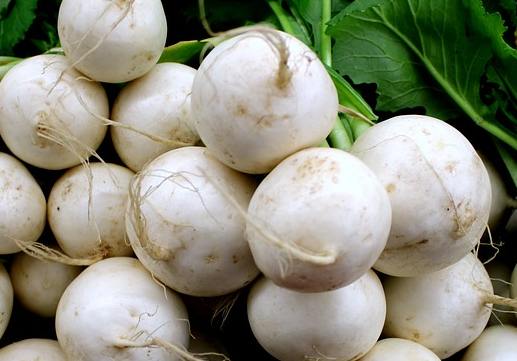
What are the planting methods for radish?
1. After the previous crop is harvested, plow deeply as early as possible, allow the soil to freeze and thaw and be sunned thoroughly, break up clods and rake level, and apply plenty of base fertilizer. Choose the radish variety according to soil conditions; for deep soil, large varieties with deep root penetration can be arranged, and the plowing depth should be over 33 cm; for shallow soil, medium and small varieties with shallow root penetration can be chosen, with a plowing depth of about 25 cm for medium varieties and about 15 cm for small varieties. The method of making beds varies with variety, soil texture, topography and local climatic conditions. Medium and small radishes are mostly grown on flat beds in places with little rain and good drainage; large radishes with deep roots and large leaves must be grown on raised beds. In the Yangtze River basin, whether large or small radishes, deep-furrow raised beds are mostly used to facilitate drainage and irrigation. Generally the bed height is 20-27 cm, the bed width is 1-2 m, and the furrow width is 40 cm.
2. Radish has a well-developed root system and needs plenty of base fertilizer. Before land preparation, apply 100 loads of decomposed farmyard manure such as pig and cattle manure, 25 kg of superphosphate, and 50 kg of compound fertilizer; plow them into the soil, then rake level and make beds, so that the soil is loose, fine and uniform, and the bed surface is level.
Points to note:
1. Viral disease: after onset, mosaic symptoms appear. Leaves become wrinkled and deformed, plants are stunted, root development is poor, causing severe gaps in the stand and reduced yield. This disease is spread by aphids, and high temperature (above 28°C) and drought favor its occurrence. It can be controlled by the following measures: control aphids early; in hot and dry seasons strengthen fertilizer and water management to enhance the plants' disease resistance; sow at the proper time; practice rational crop rotation.
2. Black rot: after infection, the vascular bundles of the root turn black, and the interior of the fleshy root turns black and rots, causing a black heart and hollow heart, with a particularly foul odor. For control, rotate with cruciferous vegetables; promptly control pests such as cabbage caterpillars and striped flea beetles; spray with a streptomycin sulfate solution at 200 mg/kg (equivalent to 0.02%).
3. Aphids mainly harm radish leaves. They gather in groups on the underside of leaves and in the heart leaves to suck sap, causing the affected leaf margins to curl backward, the leaves to wrinkle, and gradually lose water and turn yellow, making the plants stunted and poorly developed until they die. In addition, they can transmit viral diseases. Spray 10% imidacloprid wettable powder at 1000-2000 times dilution or 50% pirimicarb wettable powder at 3000-4000 times dilution for control.
4. Cabbage caterpillar adults lay eggs on the underside of leaves, shaped like upright wheat grains; after hatching they damage the leaves, eating out many notches. As the larvae age, the damage gradually worsens, sometimes leaving only the leaf veins, affecting plant growth and development. Their feces also contaminate the leaf surface and spread soft rot. Apply pesticide when the 1st-3rd instar larvae are numerous: spray high-efficiency B.t. emulsifiable concentrate (8000 IU/microliter) at 1500 times dilution, adding 0.1% laundry powder when preparing the solution, and apply on cloudy or partly cloudy days when the temperature is above 15°C, or after 4 p.m. on sunny days; or spray 5% chlorfluazuron emulsifiable concentrate at 2000 times dilution.
5. Cabbage webworm adults lay eggs on young leaves such as the heart leaves; after hatching they first mine the leaves, and after the 2nd instar they emerge through the leaf surface, spin silk and tie leaves together to cause damage, killing the heart leaves. In the 4th-5th instar they bore from the heart leaves or leaf stalks into the root, and the affected plants die. Seize the period of peak egg hatching and the first signs of heart leaf damage to apply pesticide: spray 2.5% cyhalothrin emulsifiable concentrate at 2500 times dilution; or spray 50% phoxim emulsifiable concentrate at 1000 times dilution.
6. Diamondback moth young larvae feed on the leaf mesophyll, leaving the epidermis, so the affected leaves show transparent spots; after the 3rd instar they eat the leaves into holes and notches, and in severe cases the whole leaf is eaten into a net-like skeleton. During the seedling stage the larvae tend to gather in the heart leaves to cause damage, seriously affecting plant growth. High-efficiency B.t. emulsifiable concentrate (8000 IU/microliter) at 1500 times dilution, 5% chlorfluazuron emulsifiable concentrate at 2000 times dilution, and 2.5% deltamethrin emulsifiable concentrate at 2000 times dilution can be sprayed alternately for control.
7. Striped flea beetle adults bite and eat the leaves, forming many small holes; when the damage is severe, the whole seedling dies. The adults also bite and eat the flower buds and tender pods of seed radishes, as well as fruit stalks and tender shoots, causing reduced yield. The larvae bore into and eat the root skin and bite the fibrous roots, affecting plant growth and the marketability of the fleshy root. Control methods: after the previous crop is harvested, pay attention to cleaning the field, and promptly plow and sun the soil and let it freeze and thaw to reduce the source of insects; spray 50% phoxim emulsifiable concentrate at 1000 times dilution; or spray 2.5% deltamethrin emulsifiable concentrate at 4000 times dilution.