What are the planting time, methods and precautions for corn?
Corn is an annual monoecious cross-pollinated plant with a tall plant and strong stalk. It is an important food crop and feed crop, and also the crop with the highest total yield in the world. So what are the planting time and methods for the herbaceous plant corn? What should be noted? The planting time of corn generally goes from south to north, from mid-February to early May there are areas for sowing spring corn, and it is generally suitable to sow when the temperature of the 10cm soil layer is stable above 10°C. The harvest period also goes from south to north, from late July to mid-September, with a difference of more than 50 days.
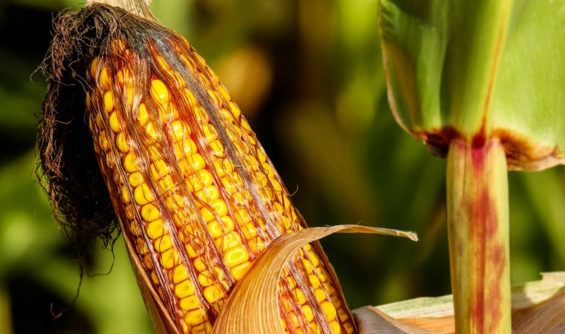
What are the corn planting methods?
1. Apply sufficient base fertilizer and finely prepare the land. When preparing the land, apply 2000 kg of organic fertilizer per mu, and use 30% of the total nitrogen fertilizer and all phosphorus and potassium fertilizers as base fertilizer. When preparing the land, it should meet the six-character standard of “deep, loose, broken, level, clean, and moist”. This lays a good foundation for full emergence in one sowing.
2. Select varieties. At present, the main varieties suitable for spring corn production in our city are: for grain use, Jinhai No. 5, Nongda 108, Danyu 86, Weiyu 308, Qingnong 105, etc. For processing and fresh eating, there are Xixing Black Glutinous No. 1, Xixing White Glutinous No. 2, Yannuo No. 6, Yannuo No. 7, White Horse Prince, etc.
3. Seed treatment. 5.4% pyraclostrobin-fipronil corn seed coating agent can be used for coating to control Laodelphax striatellus, aphids, maize rough dwarf disease, etc. during the seedling stage; for seed dressing with chemicals, dressing seeds with tebuconazole, thiram, huanongling, etc. can reduce the occurrence of corn head smut; dressing seeds with phoxim can prevent and control underground pests such as cutworms and wireworms.
4. Sow early at the right time and improve sowing quality. 1. Sow early at the right time by grabbing soil moisture: combined with current climatic conditions, once conditions are suitable, strive to sow early by grabbing soil moisture. In order to avoid the peak damage of the first generation of Laodelphax striatellus, strive to finish sowing before the end of April. 2. Sow an appropriate amount: the sowing rate is generally 2—2.5 kg/mu, increased or decreased as appropriate according to variety characteristics. 3. Sowing specifications: corn sowing should be consistent in depth, with a sowing depth of 3—5 cm; row spacing of 60—70 cm.
5. Balanced fertilization. Determine the fertilization amount according to the yield target and soil fertility foundation. Generally, the fertilizer requirement is calculated as 3 kg of nitrogen (N), 1 kg of phosphorus (P2O5), and 2 kg of potassium (k2O) for every 100 kg of grain produced. In zinc-deficient plots, apply an additional 1 kg of zinc sulfate per mu. Topdressing can be carried out in two applications, namely heavy application of ear fertilizer and supplementary application of flower-grain fertilizer.
6. Reasonable close planting. Implement reasonable close planting according to variety characteristics and yield targets. For example, the seedling density of Danyu 86 is generally controlled at 3500-4000 plants per mu, the seedling density of Qingnong 105 is controlled at 3500-3700 plants per mu, the seedling density of Weiyu 308 is controlled at 4000-4500 plants per mu, and the seedling density of Jinhai No. 5 is controlled at 4200-4500 plants per mu. For plots with better soil fertility, take the upper limit; otherwise, take the lower limit.
Note:
1. In selecting corn varieties, be sure to choose varieties with strong sprouting vigor and strong stress resistance. Especially for new varieties, since little is known about their stress resistance, choose carefully.
2. Be sure to do a germination test, observe the sprouting vigor, germination rate, whether the sprouts are thick and strong, etc., and do not plant based on luck. Luck may not be a big problem in normal years, but once low temperature and continuous rain occur, problems will arise. Therefore, seeds with poor sprouting vigor and germination rate should not be planted at all, so as to avoid poor emergence and serious yield reduction.
3. For mouth fertilizer, appropriately applying more diammonium within the allowed range is beneficial for seedling development.
4. The sowing time should be appropriately delayed. Be sure not to rush to sow early. In cases of low temperature and continuous rain, seed rot is likely to occur. The sowing period is best chosen after Grain Rain.
5. For cases where the aboveground part turns yellow and the corn seedlings are found to have no root hairs when pulled out, indicating phytotoxicity, spray a plant growth regulator containing trace elements. After three days, most of the yellowed corn seedlings can turn green again.
6. For plots with severe missing seedlings, quickly dig out the seeds to check the cause. Those that put out leaves underground but cannot emerge from the soil or whose sprouts have died mostly belong to phytotoxicity, and should be replanted at the right time.