How Many Years Until Snake Fruit Bears Fruit? A Detailed Guide to the Ripening Season and Cultivation Methods
Snake fruit, also known as salak, is a famous fruit of Southeast Asia. In China it is found in western Yunnan Province, and it has been more than 50 years since snake fruit was introduced and planted sporadically across South China. So how is snake fruit grown? How many years until it bears fruit? In which season does it ripen?
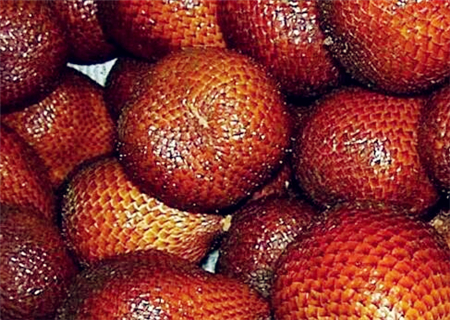
When Does Snake Fruit Ripen
Snake fruit takes about 3 years from planting to harvest.
Snake fruit prefers a tropical humid climate, and high temperature and high humidity are important conditions for its growth and development. The most suitable growing conditions are an average annual temperature above 22°C, an average temperature in the coldest month above 18°C, and relative humidity above 85%.
There are about 14 species worldwide, distributed across tropical Asia from India and Indochina to the Malay Archipelago. Indonesia is the country with the greatest success in snake fruit germplasm resources, cultivation techniques and local market development. In China it is found in western Yunnan Province, and it has been more than 50 years since snake fruit was introduced and planted sporadically across South China.
Cultivation Techniques
Propagation Methods
Raising Seedlings
There are two methods of raising snake fruit seedlings: sucker propagation and seed propagation. In sucker propagation, strong suckers are selected from the many suckers sprouted by the mother plant, a plastic container is slipped down over them from the top and filled with soil or rice husk, and after 2 months, when the suckers have grown more roots, they are cut away and transplanted into bamboo-woven containers to continue growing. At transplanting, half of the sucker's leaves are cut off, the sucker is tied tightly with nylon rope or bamboo strips, and after being placed in the bamboo-woven container it is watered with thin mud and kept under a shade net to continue growing.
In seed propagation, the seeds can either be sown on a sand bed and transplanted into polyethylene containers after they sprout, or sown directly in polyethylene containers and raised into seedlings by conventional seedling methods. Because seed propagation cannot determine the sex of the resulting seedlings, it is mostly used for snake fruit varieties that are monoecious.
Planting
1. Selection of Forest Land
Choosing a new planting site requires consideration of altitude, moisture and light transmittance. Snake fruit can be planted on land at an altitude of 300-600 m, but 400-600 m is most suitable. Snake fruit has a high water requirement and needs moisture year-round. Newly planted stands require shade, so they can be planted under existing stands; there are no restrictions on the tree species composition of the stand, and both conifers and broadleaf trees are acceptable, but the canopy layer needs 20%-30% light transmittance. After 2-3 years of planting, it can tolerate full sunlight.
2. Spacing Between Plants and Rows
There are various spacings between plants and rows, including 1.5 m × 1.5 m, 1.5 m × 2.0 m, 2.0 m × 2.0 m and 2.5 m × 3.0 m.
3. Land Preparation
Full clearing is generally used, and the planting holes are generally 50 cm × 50 cm × 50 cm.
Planting Management
Water and Heat Management
Indonesia has good water and heat conditions, so below an altitude of 600 m irrigation is basically unnecessary, and there is no problem of low-temperature freeze damage.
Nutrient Management
Fertilizer is generally applied twice a year, 1-2 kg per plant each time, in the dry season (March-August) and the rainy season respectively. The fertilizer used is a compound fertilizer of major elements, such as a compound fertilizer with an N:P:K ratio of 1:1:1; no fertilizer of trace elements is applied.
Leaf Number Control
The number of leaves of snake fruit needs to be properly controlled. For the "Pondoh" variety, the number of leaves is generally controlled at 7-8 per plant, and for the "Bali" variety the number of leaves is generally controlled at 14-16 per plant. Whether the leaves are dead or not, they can be cut off, but the leaf below the fruit should be retained to support the fruit. The cut leaves are generally not removed but spread on the ground to reduce soil erosion and increase nutrients.
Ratio of Female to Male Plants
For the "Pondoh" variety, the ratio of female to male plants is 50:1, that is, 1 male plant for every 50 female plants; each inflorescence of the male plant has 4-5 branched inflorescences, and each branched inflorescence is used to pollinate about 10 female plants. There is also a female-to-male ratio of 20:1, that is, 1 male plant for every 20 female plants.
Hand Pollination
For "Pondoh", hand pollination assistance is needed.
Hand-assisted pollination is carried out twice per inflorescence, 3-4 days apart. The male inflorescence is picked, lightly tapped over each open female inflorescence so that its pollen falls onto the female flowers, and then a protective cover is placed over the pollinated female inflorescence to prevent rain from washing the pollen away. The protective cover can be made of plastic film or of snake fruit leaves, but covers made of plastic have a better protective effect.