How to Grow Horse Chestnut Seeds and Its Prospects, and How It Differs from the Bodhi Tree
The horse chestnut is a deciduous tree reaching up to 25 m tall. Its seeds are edible, but eaten raw they taste bitter and astringent; they must be boiled in alkaline water before eating, after which they taste like chestnuts. Starch can also be extracted from them. Do you know what methods there are for growing horse chestnut seeds? What are the prospects? And how does it differ from the bodhi tree? Its wood is fine and dense and can be used to make all kinds of implements, its seeds can be used medicinally, and the oil pressed from them can be used to make soap. The horse chestnut has a graceful tree form, large and beautiful flowers, and oddly shaped fruits; it is a rare tree species for foliage, flowers and fruit alike, and is one of the world's famous ornamental tree species.
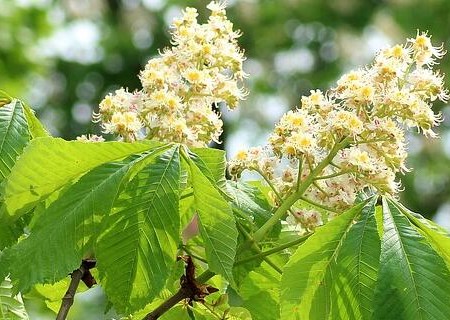
I. How to Grow Horse Chestnut Seeds
1. Cutting Season
Spring is the suitable time for cuttings. Select thick, sturdy branches for cuttings. Before inserting, first soak the base of the cutting in water for 10 minutes or treat it with a rooting agent to promote root growth. Pruning and shaping can be done in winter to keep the tree's form attractive.
2. Planting and Care
The care methods for the bodhi tree are basically the same as those for ordinary flowering plants, with nothing special about them. It requires fertile soil, good aeration and plenty of sunlight. Watering should follow the principle of watering when dry and letting it dry between waterings, giving a thorough soaking each time. In summer, water again after the soil has dried out for two or three days; in winter it can be watered once a week, and potted plants should be repotted once every two years. For the soil, plain field soil mixed with leaf mold or pine needle soil will all do. It likes a warm, humid environment with plenty of sunlight and good ventilation, and prefers fertile, loose, slightly acidic sandy loam. When the winter temperature is below 5°C, there is no frost damage, as it is relatively cold-tolerant.
Cutting propagation is commonly used. Cuttings are best taken from April to June. Select tender apical shoots 20 cm long, keep 2-3 leaves, and remove the lower leaves. The cut should be flat; the cut often exudes a white milky sap, which should be washed off with warm water. After letting it dry slightly, insert the cutting, and it can take root 30 days after insertion.
Place potted seedlings in a semi-shaded spot. When the plant reaches 30 cm tall, it can be placed outdoors for cultivation. Seedlings should be repotted every spring, replenishing with fresh fertile soil and moving to a larger pot. Mature plants are repotted once every 2-3 years. During the growing season, fertilize once every 2 weeks. In midsummer, besides normal watering, more misting is needed; in autumn and winter, gradually reduce watering. For indoor cultivation in winter, plenty of sunlight and ventilation are required.
II. Analysis of the Prospects for Growing Horse Chestnut
1. Landscape Value
The horse chestnut has a graceful tree form and a magnificent posture, with well-spaced branches and foliage and a canopy like a ceremonial parasol; its flowers are large and beautiful and its fruits oddly shaped, making it a rare tree species for foliage, flowers and fruit alike and one of the world's famous ornamental tree species. When in bloom, its huge inflorescences resemble splendid large candelabra, quite spectacular, and for this reason it has long been hailed as one of the world's four great street tree species (plane tree, linden, elm, horse chestnut). This tree is suitable for planting near hills and water; it can be used as a street tree in courtyards or scenic areas, or planted as a solitary specimen at the edge of a large lawn as a landscape tree. The horse chestnut's trunk is tall and straight, its crown large and densely shading, and in early summer it is covered in blossoms, with huge white inflorescences standing among the leaf clusters like splendid candelabra, a magnificent sight. It is an excellent street tree and ornamental garden plant, and can be used as a greening tree species for pedestrian walkways, parks and plazas; it can be planted singly or in front of buildings and among sparse woods, or mixed with evergreen and broadleaf trees. In Europe, the United States and Japan, the horse chestnut is often widely planted as a street tree and shade tree. In North America, horticultural varieties of the horse chestnut with red or pink flowers and double flowers are planted along roadsides, and the scenery is very beautiful when they bloom. In our country, the horse chestnut has deep ties with Buddhism, so many ancient temples and famous monasteries, such as Lingyin Temple in Hangzhou, Wofo Temple and Dajue Temple in Beijing, have horse chestnut trees over a thousand years old. Therefore, the horse chestnut has a wide range of applications in landscape greening.
2. Economic Value
The horse chestnut can be used as food, medicine, timber and more. Its leaf buds can be used as a substitute for tea, its bark and roots can be used to make soap, its leaves and flowers can be used as dyes, and its seeds can be used to extract starch and press oil; they are also edible, with a taste similar to chestnuts, and can be used as medicine, having effects such as calming the nerves, regulating qi and killing insects. Germany produces an ointment made from horse chestnut extract for treating varicose veins and reducing vascular swelling. At present, many toners and skincare products on the market contain horse chestnut ingredients, and their effects on beauty care and pore tightening have been widely hyped, with prices that are not low. The horse chestnut's wood is light in texture and can be used for papermaking, carving, making furniture and handicrafts, etc. Its wood is fine and dense and can be used to make all kinds of implements, its seeds can be used medicinally, and the oil pressed from them can be used to make soap.
3. Medicinal Value
The natural active ingredient extracted from the horse chestnut, aescin, promotes microcirculation and maintains normal cell metabolism by inhibiting enzymes closely related to skin texture and integrity, such as collagenase, thereby helping pores to tighten, becoming clean and nourished, and making the skin delicate and flawless. The seeds of the horse chestnut contain the saponin aescin, a substance that can promote venous circulation. Aescin can restore the venous wall to a normal state, thereby promoting the return of blood to the heart. Topical and oral preparations of horse chestnut extract are very popular in Europe, mainly used to treat chronic venous insufficiency and small areas of varicose veins. Aescin also has anti-inflammatory effects and has been shown to reduce edema caused by trauma, especially after sports injuries, surgery and head injuries. Topical aescin preparations are very popular in Europe for treating acute sprains in sports. The horse chestnut's seeds are edible, but eaten raw they taste bitter and astringent; they must be boiled in alkaline water before eating, after which they taste like chestnuts. Starch can also be extracted from them. The taste is similar to chestnuts, and they can be used as medicine, having effects such as calming the nerves, regulating qi and killing insects.
III. The Difference Between the Horse Chestnut and the Bodhi Tree
There are usually said to be four sacred trees of Buddhism: first, the tree at the place of the Buddha's birth, called the sal tree; second, the tree at the place where the Buddha attained enlightenment, called the bodhi tree; third, the horse chestnut; and fourth, the sala tree. The horse chestnut and the bodhi tree are both Buddhist trees and both living cultural relics, but most people always conflate them, which is quite wrong.
1. Different Family and Genus
Although the horse chestnut and the bodhi tree are both Buddhist trees and both living cultural relics, conflating them is quite wrong. The former is a deciduous tree of the order Sapindales, family Sapindaceae (horse chestnut family), while the latter is a large tree of the tribe Ficeae, genus Ficus.
2. Different Leaves
The horse chestnut has palmately compound leaves made up of 5-7 leaflets, papery in texture, oblong-lanceolate to oblong-oblanceolate, with fine blunt-tipped serrations along the edges. The bodhi tree's leaves are triangular-ovate, leathery, with an abruptly pointed tip that extends into a tail-like point, and are entire or wavy along the edges.