Seed planting method, sowing time and flower language of Gerbera jamesonii (African daisy)
Gerbera jamesonii is a perennial herbaceous plant in the Asteraceae family, genus Gerbera. The flowering period is from November to April of the following year. It prefers a warm, dry environment with plenty of sunlight. Propagation methods include division and sowing, so do you know what the seed planting methods for Gerbera jamesonii are? When to sow? What is the flower language? This species has large, brightly colored flowers and can be used for cut flowers, potted plants and courtyard decoration.
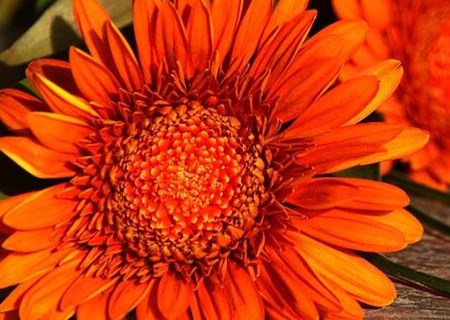
I. Seed planting methods for Gerbera jamesonii
1) Potting soil: Moss rose (Portulaca grandiflora) is not picky about soil and tolerates poor soil, so the soil for moss rose can be relatively flexible. If conditions allow, loose and fertile soil is best.
2) Sowing: Evenly scatter the moss rose seeds on the soil surface, then cover with a thin layer of fine soil. There is no need to bury them deeply. After sowing, if you have a spray bottle, you can gently spray the surface, but be sure not to wash the seeds out. Other methods are also fine; it does not matter, as long as the seeds are not washed out.
3) Covering with film: If the temperature is not very high when sowing, you can put a transparent plastic bag or cling film over the pot. This helps create a high-temperature, high-humidity environment that aids germination.
4) Seedling management: Generally, moss rose germinates in 3-7 days. After germination, do not rush to completely remove the film. At this time, the seedlings have weak resistance, so you can tear a hole at noon for proper ventilation. As the seedlings grow, eventually remove the film completely. Generally, when the seedlings are 3-4 cm tall, the film is no longer needed.
5) Thinning: Sowing inevitably involves thinning. It is not that the more seedlings in a pot the better. We need to pull out the weak seedlings and leave the space for the strong ones. A distance of 3-4 cm between plants is sufficient. Of course, when thinning, if you cannot bear to throw them away, you can dig them up with the roots and transplant them into other pots.
6) Pinching: If you want moss rose to bloom more, branching is essential, and pinching is the best way to promote branching. When the seedlings grow to 3-4 cm tall, just pinch off the tip of the main stem. Of course, pinching is not mandatory, but sometimes we need to intervene manually so that the plant develops in the direction we want.
7) Watering: When they are seedlings, be sure not to let water accumulate in the pot. Just keep the potting soil slightly moist. After they grow up, water in the morning and evening.
II. When to sow Gerbera jamesonii
Generally, sowing can be done in spring, summer and autumn. In most cases, sowing is done in spring. Gardeners in the Jiangsu-Zhejiang-Shanghai region can start sowing around mid-April. Gardeners farther south or north can adjust the time accordingly. Generally, when the average minimum temperature is around 18°C, you can sow.
From sowing to flowering, moss rose takes about 50-60 days.
III. What is the flower language
Symbolizing mystery, mutual respect and love, perseverance, and fearlessness of hardship
Gerbera jamesonii has terminal flower heads, large and beautifully colored, delicate and pleasing to the eye. It does not have the graceful charm of a rose, nor the fresh and refined elegance of a lily, nor the delicate softness of a carnation. However, its beauty is generous, sunny and cheerful, without any concealment or shyness. It simply releases its beauty with all its effort, releasing as much beauty as it has.
Gerbera jamesonii is also known as fringed gerbera (Fulang flower). It symbolizes mutual respect and love, perseverance, and fearlessness of hardship. In some regions, people like to use fringed gerbera to make bouquets for decorating the bridal room during wedding celebrations. Taking its homophonic meaning, it reflects the mutual respect and love of newlyweds. The gerbera flower has a radial shape and is often used as the main body of flower arrangements, often paired with sword fern and asparagus fern. At the same time, it also represents mystery, excitement and perseverance.
The name fringed gerbera makes us wonder whether this flower implies a wife's support for her husband. Speaking of this, there is also a legend. In the early 20th century, Madagascar, located in southern Africa, was a small country rich in tropical flowers and plants. A local girl named Slangyini had loved a wildflower with slightly curved stems and drooping blossoms since childhood. When she got married, she asked for more of them to be placed in the hall to add to the wedding atmosphere. Relatives and friends from both sides sang and danced, toasting frequently. Unexpectedly, the groom, who had a very low tolerance for alcohol, became drunk after only three rounds. He bowed his head and bent his waist, swaying east and west, so the bride had to support him into the bedroom to rest. Everyone saw how similar this supporting posture was to the growth habit of that wildflower. Many girls said in unison: "Oh, this flower really looks like fulang!" From then on, the name fringed gerbera spread far and wide.