Colorful cauliflower is all the rage in Europe and the US: how much does it cost per jin, and what are the growing returns?
Common cauliflower is white with a hint of yellow, crisp and tasty, but have you ever seen purple cauliflower, orange cauliflower or green cauliflower? In fact, colorful cauliflower has long been popular in Europe and the US. As a variant of ordinary cauliflower, besides having a different color, colorful cauliflower beats ordinary cauliflower in both nutritional value and taste and flavor. So how much does colorful cauliflower cost per jin? And what are the growing returns?
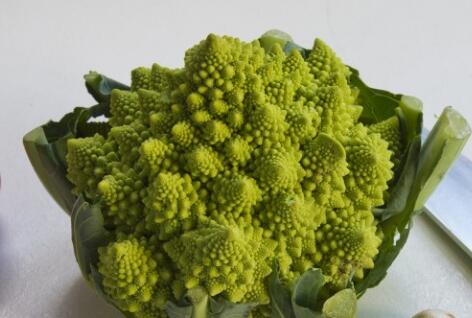
Colorful cauliflower
Colorful cauliflower is a herbaceous plant of the cabbage group in the Brassicaceae family. It includes purple-headed cauliflower, yellow-headed cauliflower, pale green-headed cauliflower and others, and is a type of variety selected from cauliflower. The mature head of cauliflower generally has a horizontal diameter of 20-30 cm and a diameter of 10-20 cm, and is made up of a plump tender main stalk and numerous fleshy flower stalks. Besides being cultivated like ordinary cauliflower and sold as a commodity, colorful cauliflower can also be potted for growing in a small home vegetable garden or for ornamental cultivation, and its prospects look good.
This colorful cauliflower was introduced from abroad and is a new type of cauliflower, a non-GMO vegetable, developed by crossbreeding with ordinary cauliflower. This new type of cauliflower has higher nutrients than ordinary cauliflower and is rich in vitamins, with carotene at 10 times that of ordinary cauliflower.
20 yuan/jin, overturning tradition
Mr. Tang in Jiangxi grows the new type of colorful cauliflower. In 2015, by a chance opportunity, Mr. Tang saw this colorful cauliflower at an agricultural exhibition, found it novel and distinctive, and tried growing it on a small scale. In the first year of growing it, many local hotels ordered colorful cauliflower from him, and it was in a state of demand exceeding supply.
Mr. Tang saw a business opportunity in colorful cauliflower and began large-scale cultivation the second year. Besides the hotels supplied in the first year, another part went to the market, with the first wholesale price at 20 yuan/jin, and that year's income reached as much as several hundred thousand. The returns were three times those of ordinary cauliflower!
Growing returns
As of this year, Mr. Tang has been growing colorful cauliflower for 3 years. Through the experience of these years, Mr. Tang has summed up a set of yield differences for harvests at different seasons:
1. Early-maturing harvest period 45-60 days, yield per mu 4000-5000 jin;
2. Medium-maturing harvest period 65-80 days, yield per mu 4500-6000 jin;
3. Late-maturing varieties have a harvest period of 85-100 days, with an average yield per mu of 6000-7000 jin; overwintering for 100 days gives 6500-8000 jin.
Note: Cauliflower prices fluctuate with market supply, and off-season cultivation easily commands a high price.
Cultivation techniques
Cultivation season
For open-field cultivation in autumn and winter, raise seedlings under shade in July-August, with a seedling age of 30-35 days, transplant in August-September, and market from October to February of the following year. In spring, use hotbed seedling raising, with a seedling age of about 60 days; the curd forms in April-May and is harvested before high temperatures arrive. For large-scale cultivation, refer to ordinary cauliflower growing. For ornamental cultivation, sowing in flower pots can be used.
Transplanting
Spring cauliflower seedlings are transplanted when they have 5-6 leaves, and autumn cauliflower when they have 4-5 leaves. Use ridge or bed planting; in spring, do not transplant too early, as severe frost can cause frost damage to cauliflower, and prolonged low temperatures form small curds. For early-maturing varieties, transplant with a row spacing of 53-60 cm and a plant spacing of 40-45 cm. For medium-maturing varieties, row spacing 60-70 cm and plant spacing 45-50 cm. For late-maturing varieties, row spacing 70-80 cm and plant spacing 50-60 cm. [3]
Pot cultivation
When the plant height is 10-12 cm and there are 5-6 true leaves, transplant into round pots 20-40 cm in diameter. Prepare the potting soil with 4 parts garden soil, 3 parts composted barnyard manure and 3 parts leaf mold, add 5-10 g of compound fertilizer per pot, and water to settle the roots after planting. Arrange 3-5 pots into one bed, with a walkway 60-80 cm wide between beds. In spring, when temperatures are low, they can be placed in a greenhouse; in summer, when temperatures are high, they can be grown for 1-2 months under shade netting in a rain shelter.
Management
After transplanting, cultivate and loosen the soil and weed in time; in autumn the weather is hot, so water promptly. Boron deficiency in the soil can cause the center of the flower stalk to split, and in severe cases the curd turns rust-colored. Apply 0.1 g of borax per square meter of soil as a base fertilizer; where it has not been applied, spray the leaves with a 0.2% boric acid solution during the curd enlargement stage. Cauliflower has heavy pest damage; refer to the control methods for ordinary white cauliflower.
Traditional cauliflower vs colorful cauliflower
Compared with traditional cauliflower, colorful cauliflower has higher nutritional value and market prospects. Besides the domestic market, colorful cauliflower also has extremely high international market value.
Colorful cauliflower and ordinary cauliflower have basically the same habits, both preferring cool climates, and it is relatively easy to cultivate, but compared with growing ordinary cauliflower, colorful cauliflower has better economic returns.