Dichondra (Dichondra repens) Seed Planting Method, How to Grow a Waterfall Effect, and Its Benefits and Uses
Dichondra is a plant in the genus Dichondra, family Convolvulaceae. Note that dichondra must not be confused with the genuine Lysimachia christinae (creeping Jenny / "Guo Lu Huang"). It mostly grows by roadsides, on hillside grasslands or beside ditches, and has already been introduced and cultivated by humans. So do you know what the seed planting methods for dichondra are? How do you grow a waterfall effect? What benefits and uses does it have? Dichondra is a resource-rich Miao folk medicinal herb with excellent value for development and utilization.
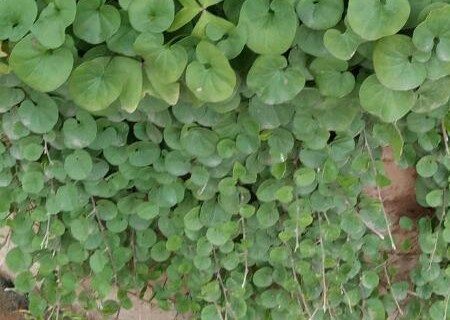
I. Dichondra Seed Planting Method
1. Land preparation
Set up the terrain of the land properly - decide where it should be high and where it should be low, because once the seeds are planted, it is difficult to change the terrain afterward. After determining the terrain, clear all weeds, apply 3 to 5 tons of farm manure per mu, with fermented chicken manure or cow manure being best, then plow all the topsoil once.
2. Sowing
Once the land is prepared, you can sow. Dichondra seeds are quite small, so broadcasting is the main method. On a day with no wind, scatter the seeds evenly, then cover with 1 to 2 cm of soil and press down lightly, then water and cover with plastic film or degradable non-woven fabric. If the temperature is good, they will germinate in about 10 days. After germination, water promptly to speed up seedling growth. Within 2 months of planting dichondra, manual weeding is needed - remember never to use herbicides, as currently no herbicide can be used on dichondra.
Courtyard gardens are small in area, making mechanical plowing difficult, so manual digging or sowing with water spray is generally used. If you cannot dig the soil, just clear the weeds and scatter the seeds directly, but before germination you must water every day to keep the seeds absorbing enough water, right up until about half a month after germination.
II. How to Grow a Waterfall Effect
Light for care
When growing dichondra, light is very important. Dichondra needs an environment with sufficient light; only with sufficient light and good ventilation will dichondra grow well with lush foliage, and only then will hanging-basket dichondra have a waterfall effect. Note that dichondra needs appropriate shading in summer.
Watering and fertilizing
Watering is key to good dichondra growth. Dichondra is a plant with rather fine, dense roots and is not very drought-tolerant, so the soil must be kept moist during cultivation. Generally, when growing dichondra, you need to water reasonably and frequently mist the plants. Be careful not to let it lack water - lack of water causes dichondra to drop leaves and have sparse foliage, affecting its ornamental value. With sufficient moisture, hanging-basket dichondra will have dense foliage.
Fertilizing is also a very important step. Dichondra prefers nitrogen fertilizer; with sufficient fertilizer the foliage grows more luxuriantly, and it is easier to create a waterfall-effect hanging basket of dichondra. When growing dichondra, you can apply nitrogen fertilizer together with watering, but do not contaminate the leaves.
Pruning
To grow a waterfall effect from hanging-basket dichondra, another very important point is pruning. Dichondra grows quite fast, but during cultivation, proper pruning can make its foliage more abundant and dense. Pruning also allows you to promptly cut off leaves that affect the ornamental look and tidy up branches that are growing in a messy way. In this way, you can shape a beautiful waterfall and maintain its good form.
III. Benefits and Uses of Dichondra
The benefits of dichondra:
Dichondra, also called small Lysimachia, has the benefits of clearing heat, promoting diuresis and detoxifying. Other names for dichondra: jaundice herb, pouch herb, meat wonton herb, golden key, spiral herb, wine-cup nest, golden ear-digger, chicken-eye herb, small lampdish herb, small wind-welcoming herb, small bowl herb, small lobelia, Dibula, star herb, small ingot herb, ground-fallen coin, small toad bowl, nine-linked rings, jade-eroded wonton, small half-coin. Dichondra mainly treats jaundice, dysentery, urinary stones, white turbid urine, edema, boils and swellings, traumatic injuries, and venomous snake bites.
Other names: dichondra, jaundice herb, pouch herb, meat wonton herb, golden key, spiral herb, wine-cup nest, golden ear-digger, chicken-eye herb, small lampdish herb, small wind-welcoming herb, small bowl herb, small lobelia, Dibula, star herb, small ingot herb, ground-fallen coin, small toad bowl, nine-linked rings, jade-eroded wonton, small half-coin; people of Xianju call it: small bowl head. The benefits and uses of dichondra.
Nature and flavor: bitter and pungent; cool.
Meridian entry: lung meridian; liver meridian.
Functions: clear heat; promote diuresis; detoxify.
Main indications: jaundice; dysentery; urinary stones; white turbid urine; edema; boils and swellings; traumatic injuries; venomous snake bites.
Dosage and usage: Internal use: decocted in water, 6-15 g, fresh 30-60 g. External use: appropriate amount, pounded and applied.
The uses of dichondra:
1. Dichondra for dysentery: two or three handfuls of fresh spiral herb; wash clean, pound into a mash and squeeze out the juice, add one liang of rock sugar and stew for half an hour, take in two divided doses before meals. ("Fujian Folk Herbs")
2. Dichondra for jaundice: pouch herb and three ge of river snails. Pound together for juice, let it clarify, warm it and take. ("Zhou Yisheng's Family Treasure Formulas")
3. For boils in the eye: meat wonton herb (with roots and leaves) and wine-lees, pound for juice and drink. ("Essential Readings in Ophthalmology")
4. Dichondra for finger whirl boils: one liang of fresh jaundice herb, a little winter honey, pound into a mash and apply to the affected area. Those not yet suppurated will disperse, and those already suppurated will be brought to a head. ("Eastern Fujian Materia Medica")
5. Dichondra for early-stage edema: one large live crucian carp, cut open with a piece of porcelain, remove scales and intestines and blood, wipe clean with paper, do not let it touch water, stuff the belly full with pouch herb, steam hot with sweet white wine, remove the herb and eat the fish. ("Baicao Jing")
6. For blood in the urine: one to two liang of fresh dichondra, five qian of rock sugar. Stew in water and take. ("Fujian Chinese Materia Medica")
7. Dichondra for abdominal distension in children: one liang of fresh jaundice herb, three qian of rock sugar, an appropriate amount of boiling water to scald and stew, take; pound the residue and apply to the navel.
8. Dichondra for common cold: five qian to one liang of dichondra. Decoct and take. ("Common Chinese Materia Medica of Shanghai")
9. Dichondra for heatstroke abdominal pain: two liang of fresh dichondra. Pound for juice, mix with wine or boiling water and take. ("Fujian Chinese Materia Medica")
10. Dichondra for traumatic injuries: five qian of fresh jaundice herb, two slices of ginger, pound together and rub on the injured area; also take two liang of fresh jaundice herb, four liang each of yellow wine and boiling water, stew and take.
11. For tonsillitis in children: pound fresh jaundice herb, soak in rice washing water for about one hour, take the thick juice and gargle frequently. (Formulas from 9 onward are from "Eastern Fujian Materia Medica")
12. Dichondra for breast abscess: pound fresh dichondra and apply externally. ("Common Chinese Materia Medica of Shanghai") 15. For snake bites: chenopodium, inner wonton herb and wild beet, pound the three together and apply. ("Zhou Yisheng's Family Treasure Formulas")
13. Dichondra for lung hemorrhage: one handful of fresh spiral herb, wash clean, pound into a mash and squeeze out the juice, add an appropriate amount of rock sugar and stew for half an hour, take after meals, twice a day. ("Fujian Folk Herbs")
14. For generalized edema (nephritis): pound fresh dichondra and apply to the navel, once a day, seven days as one course of treatment, or decoct five qian to one liang and take. ("Common Chinese Materia Medica of Shanghai")
15. Dichondra for bladder stones and gallstones: small Lysimachia, Gypsophila, large Lysimachia and dandelion. Decoct together and take. ("Sichuan Chinese Materia Medica")