Daisy Seed Planting Methods, Benefits and Meanings
Daisy, also known as mummy flower, life-extending chrysanthemum, spring chrysanthemum, sun chrysanthemum, etc. It is a plant in the Asteraceae family, a perennial herbaceous plant. Around 10 cm tall. It blooms in spring. Do you know the daisy seed planting methods? What are its benefits and effects? What meaning does it represent? In cold regions where it can survive the summer, daisy can be propagated by division. It blooms in early spring, full of vitality, with the grace of a gentleman and a carefree, innocent charm.
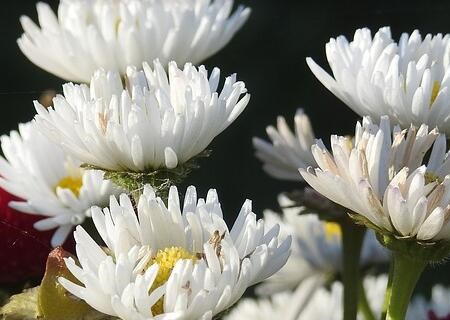
I. Daisy Seed Planting Methods
Daisy Seed Planting
1. Seed Treatment
Daisy seeds can be soaked in water before sowing to let the seeds absorb water and promote germination. When soaking, it is best to use a small cup, then put the seeds in and soak them overnight before taking them out.
2. Soil and Seedling Pot
For daisy seed planting, it is best to first cultivate the seedlings in a seedling pot before transplanting. Because it is soil used for cultivating seeds, ordinary soil will do. And the cultivation pot has no great requirements either, any ordinary container will work.
3. Sowing
August to September is the best time for sowing. Before sowing, first water the soil until moist, then sow. Because daisy seeds are very small, sowing is generally done by direct broadcasting, and it is best to spread them evenly when broadcasting, which can increase the germination rate. After broadcasting the seeds, cover with a thin layer of soil, about 3 mm is enough, then spray the soil until moist.
4. Requirements After Sowing
After sowing, maintain a temperature of 18-20°C and soil humidity of 80-90{bf}. Do not place in an environment with strong sunlight. Generally, germination occurs 5-8 days after sowing.
Management After Germination
1. Watering
During the period when the seedlings have just emerged, continue to keep the pot soil moist, but avoid waterlogging. Then, as the seedlings grow, gradually reduce watering so the seedlings adapt to the environment. This prepares them for planting. After transplanting, follow the principle of not watering when dry, and watering thoroughly when you do. In summer, when the weather is relatively hot and dry, increase the watering frequency.
2. Fertilizing
For newly emerged daisies, you can give a little fertilizer to promote root growth and leaf development, but do not apply fertilizer that is too concentrated or too much, since newly emerged daisy seedlings are still very fragile. In addition, daisy is a flowering plant that loves fertilizer, and relying only on the base fertilizer in its medium cannot meet its growth needs. Therefore, after transplanting, follow the principle of applying dilute fertilizer frequently. When the flowering season (March to June) is approaching, you can appropriately increase the fertilizer.
3. Light
After emergence, once the daisy has grown leaves, you can appropriately let it get some sun. Generally, this is at 6-9 in the morning and 4-5 in the afternoon, because the sunlight during these periods is not so strong and will not scorch the leaves. Daisy is a flower that likes sunlight, so after the daisy grows into a healthy seedling, maintain its sunlight exposure time. In summer, when it is relatively hot, you can provide appropriate shade for the daisy.
4. Transplanting
Generally, when the daisy has grown 2-4 leaves, you can transplant the daisies in the seedling pot to the target flower pot or ground. When digging up the daisy, do not rush; go slowly to avoid damaging the daisy's root system. Also, when digging, it is best to bring along the mother soil and then transplant, which can effectively increase the daisy's survival rate. After transplanting, water a little to settle the roots.
Daisies can be sown directly into a pot or backyard, but daisies sown this way are not easy to manage and can easily die partway through, so it is still recommended that flower lovers first sow daisies in a seedling pot, and transplant once the seedlings are strong enough.
II. What Benefits and Effects Does Daisy Have
Whitening Effect
Daisy is a natural beauty product, and whitening is its most important effect. The flowers of this plant contain a large amount of essential oils and chrysanthemum pigments. After being extracted, they can be made into many cosmetics, with the effect of removing melanin and softening epidermal cells. Regular consumption can make our skin become whiter and more attractive.
Greening the Environment
Daisy is an ideal choice for greening the environment. Its ornamental value is very high. After placing it indoors, it can make the indoor environment fresh and pleasant. Moreover, when daisy undergoes photosynthesis, it can also absorb a large amount of harmful substances from the air and convert them into oxygen beneficial to the human body. Its effect on purifying the environment is obvious.
Medicinal Effects
Daisy is a plant with particularly outstanding medicinal effects. This plant contains a large amount of volatile oil and amino acids, as well as various trace elements. Among them, the content of flavonoids is very high. It has multiple effects such as clearing heat and detoxifying, and reducing inflammation and pain. Regular consumption can also help clear the liver and improve eyesight, and detoxify and beautify the skin.
III. What Meaning Does Daisy Represent
The daisy mostly expresses love hidden in the heart; therefore, daisies are usually flowers given by secret admirers.
Daisy Flower Language:
The first: eternal happiness. Legend says the forest sprite Belldis transformed into a daisy; she is a lively, happy, mischievous sprite.
The second: Do you love me or not? Therefore, daisies are usually flowers given by secret admirers.
The third: parting.
There is also another one: the daisy's flower language also carries the meaning of strength.
Joy, happiness, purity, innocence, peace, hope, beauty.