Violet Seed Planting Methods, Pruning Tips and Variety Introductions
Violet, a biennial or perennial herb in the Brassicaceae family, genus Matthiola. The entire plant is densely covered with grayish-white stalked branched soft hairs. Do you know what the methods for planting violet seeds are? How to prune? What varieties are there? Native to the Mediterranean coast. Widely cultivated in southern China, one of Europe's famous flowers. Often found in major Chinese cities as a species that can be planted in gardens or greenhouses for ornamental purposes.
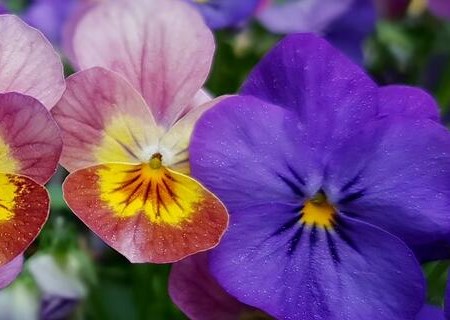
I. Violet Seed Planting Methods
Sowing Time
Violet seeds should be sown promptly after they mature; seedling plants need 2-3 years to bloom.
The planting distance is 45-60cm, and a planting depth of 7-8cm is suitable; forcing culture can also be carried out.
After sowing, cover with a layer of medium-sized vermiculite. The optimal pH for violets is 5.5-5.6. Maintain a certain level of humidity and keep the temperature at around 18-21°C.
Seedling Management
After the violet seeds have fully germinated, move the seedling plug trays to a place with ample light and good ventilation.
In the second and third stages of seedling raising, 27000Lux of light needs to be provided.
A small amount of nitrogen fertilizer needs to be provided; the daytime temperature drops to 21°C, and the nighttime temperature drops to 10°C. This temperature variation rule should be maintained from germination until the fifth true leaf grows out.
Soil and Air Humidity
Keep the EC value of the soil where violet seeds are growing at around 0.7mmhos, supply circulating air, and maintain relative humidity at around 70%.
Transplanting Violets into Pots
When the seedlings have two true leaves, they can be potted and replanted. The initial temperature is 15-18°C, gradually dropping to 10°C after one week, and then dropping to around 5°C after another week. In spring, they can be maintained and managed at natural temperatures, and normal fertilization can also be carried out at this time.
II. How to Prune Violets
Causes of Leggy Growth
Since violets need pruning, it naturally means the leggy growth is quite serious. So everyone should pay attention to two causes of violet leggy growth during cultivation: one is excessive watering, and the other is insufficient light. Therefore, by strictly adhering to these two points in daily care, you will reduce the possibility of leggy growth and avoid unnecessary extra work for yourself.
How to Prune
But then again, since leggy growth has already occurred, measures must be taken to prune them a bit. Maintaining an attractive appearance is what matters most, right? Violets generally do not need pinching. However, if too many true leaves grow, you can remove a few and keep 6-7. At the same time, remove the terminal buds, then keep three or four upper branches on the side shoots and remove all the rest. Also, some violets, because the plant height is too tall, will have weak and feeble stems and leaves after pruning, unable to withstand the wind, so flower lovers should pay attention to staking them in time to prevent the plants from toppling over.
Only by removing all the leggy branches and leaves and keeping the parts that are most beneficial to the plant and most aesthetically pleasing in appearance can you not only help increase the number of blooms but also extend the flowering period. The above are the specific methods for pruning violets. They are very simple and easy to carry out. I hope that after reading this article, flower lovers will be able to prune their own violets and then harvest a beautiful potted plant.
III. What Varieties of Violets Are There
(1) Summer violet: also known as fragrant violet. Annual, with small stems and leaves, early-flowering, growing period 100?150 days, with a strong fragrance. Sown in spring, it blooms from June to August.
(2) Autumn violet: sown in early spring, blooms in autumn. Sown in autumn and cultivated in a greenhouse, the flowering period lasts from winter to spring.
(3) Winter violet: a perennial flower with a relatively large plant. It can be cultivated in the open field in southern China. Sown in autumn, the flowering period lasts from winter to summer.