Camellia Seed Planting Methods, Indoor Cultivation and Uses Explained
Camellia, this product is the flower of the Camellia family plant tea, picked when it blooms in summer and autumn, used fresh or dried in the sun. Its functions and indications are: clearing the lungs and calming the liver. Mainly for nasal sores; high blood pressure. Do you know what camellia seed planting methods there are? Can it be kept indoors? What uses does it have? Native to southern China, it is now widely cultivated throughout the Yangtze River basin and areas to its south.
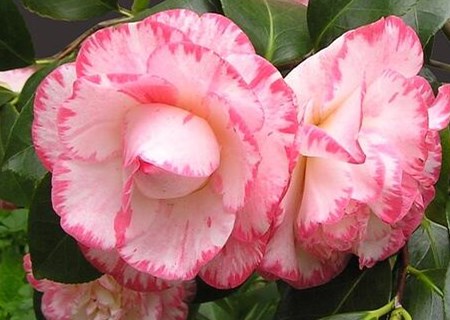
I. Camellia Seed Planting Methods
1. Seed collection and storage
In autumn, collect the fruit immediately when it cracks slightly, place it in a cool, ventilated indoor spot to dry, and take out the seeds after the fruit cracks naturally. After collecting seeds, sow them immediately, or store them by stratification in sand. After washing and disinfecting fine sand with clean water, spread the seeds and fine sand in layers in a suitable container, cover the top with fine sand 5 cm thick, then bury the container in soil, checking frequently to prevent mold and rodent damage.
2. Seed treatment
Seed treatment: Camellia seed coats are hard, and only after treatment can the seeds germinate quickly and uniformly. The following methods can be used: first, score the seed coat with a sharp knife; second, soak the seeds in warm water at 40-50°C for half an hour, then soak them in clean water at 20-25°C for 5-6 days, and take the seeds at the bottom as sowing seeds; third, soak them in a 100μg/g gibberellin solution for a full day and night. (Note: Camellia sowing does not require cracking the shell; cracking the shell damages the protective body of the embryo and is not conducive to germination.)
3. Sowing
Place the seeds with the hilum facing sideways, cover with a layer of fine fertile soil, then cover with a layer of plastic film, and keep the soil moist so the seeds germinate and emerge as early as possible.
4. Management after emergence
When the seeds germinate and emerge from the soil, remove the film on a cloudy day or in the evening. One month after the seedlings emerge, apply some organic fertilizer or chemical fertilizer each month. During seedling growth, loosen the soil in time, and it is better to loosen shallowly rather than deeply, gradually deepening later. When leaf blight or damping-off occurs, spray a 0.8% mass fraction Bordeaux mixture.
5. Moderate light
Camellia needs suitable light, but also fears high temperatures and direct sunlight. In spring and late autumn, move the camellia to a balcony or ground area with more light to receive all-day sunlight, promoting plant growth and development, promoting flower bud differentiation, and making the buds robust. When summer arrives and sunlight is strongest, move the flowerpot to a shaded, well-ventilated environment for care, or move it to a north-facing balcony or the lower inner part of a south-facing balcony for cultivation.
6. Suitable temperature
Temperature is an important condition for the physiological activities of camellia. Camellia likes warmth, and the most suitable temperature for growth is 18°C to 25°C, with relative humidity of 60% to 65%. In camellia growth, spring shoots generally begin to stir in mid-to-late March, buds begin to sprout in April, terminal buds form in mid-to-late May, growth stops, and leaf buds or flower buds gradually differentiate; from flower bud formation to flowering takes 180 days to 240 days.
7. Appropriate nutrients
Camellia is a flowering plant that loves fertilizer, because its tree vigor is robust, it has many leaves, and its flowering period is also long, so it needs a large amount of fertilizer. During fertilization, apply sufficient liquid fertilizer, and combine with repotting to apply sufficient slow-release fertilizer; according to the size of the pot, apply 3 grams to 80 grams of decomposed cake fertilizer powder or dried chicken and duck manure per pot, place it at the bottom of the pot and mix it evenly with the bottom soil. According to the plant's growth stage, apply additional organic fertilizer. Except during the coldest winter and hottest summer, apply decomposed cake water once to twice a month; the fertilization method: scrape open the soil at the edge of the pot by about 2 fen, pour the liquid fertilizer into the trench and immediately cover it with soil to avoid odors.
II. Can Camellia Be Kept Indoors
It can be kept indoors, but it must be ventilated frequently. If potted camellia at home is managed improperly, it is very prone to withering and dying, which gives flower growers a headache. The reasons are mainly caused by two factors: first, poor root ventilation, and second, insufficient humidity on the leaf surface.
Camellia roots lacking oxygen will lead to difficulty in breathing, decline in internal physiological vitality, and over time the root system gradually rots and dies. After the beginning of spring, pay special attention that the drainage holes at the bottom of the pot are not blocked. When planting camellia in large pots and wooden barrels, insert several specially made drainage rods into the pot; that is, when potting, depending on the size of the pot, insert several hard paper cylinders around the pot, fill the cylinders with river sand, then pull out the round paper cylinders to ensure good drainage. For camellia, it is best to choose clay pots, which have good breathability, while porcelain is the worst; for soil, slightly acidic mountain soil is best, while field soil is the worst. If mountain soil plus clay pots is used, it is beneficial to camellia growth and it is less likely to wither and die.
The space where camellia branches and leaves are located lacks humidity, especially under dry air and high heat, camellia is prone to losing water balance within the branches and dying. Therefore, potted camellia should maintain a moist environment as much as possible, with some water tanks or water basins placed around it. When the high-temperature season arrives, frequently spray water on the leaf surfaces of potted camellia and on the ground around the pot surface to increase air humidity in a small area and lower ground temperature. At the same time, when spraying water, it is best to add a little edible vinegar to the water: first, it can clean the leaf surface; second, it can increase the acidity in the pot soil and avoid chlorosis; third, it can kill bacteria and insects on potted camellia.
In addition, if potted camellia is not repotted for a long time, the growing environment deteriorates, which is also one of the reasons camellia does not bloom or withers and dies. Camellia should preferably be repotted once a year, with repotting done after flowering in spring; at least repot and change the soil every other year, and prune the root system. Another harm of not repotting for a long time is that the soil easily becomes compacted, permeability is poor when watering, causing the top to be wet and the bottom dry. Repotting, pruning the root system, removing part of the old soil, and adding new soil are very beneficial to its growth. During the seedling stage of potted camellia, if urea is used as a topdressing fertilizer, be especially cautious; if the concentration is too high (liquid fertilizer generally should be diluted with water 600-1000 times), applying urea will cause leaf drop, plant cell fluid leakage, and can very easily cause the plant to wither and die.
III. What Uses Does Planting Camellia Have
1. Beauty and skin care. Camellia is also used in cosmetics; it can smooth and soften the skin and remove pigmentation. Moreover, as a natural flower, it is non-toxic yet rich in the nutritional value of flowers, and is a gentle protection and careful care for the skin.
2. Pharmacological effects. Camellia has multiple medicinal values. The leaves, stems, and flowers of camellia can all be used as medicine. Camellia contains substances such as camellin and anthocyanin, and has the effects of cooling blood, stopping bleeding, dissipating blood stasis, and reducing swelling; it can treat conditions such as hematemesis, epistaxis, metrorrhagia, bloody dysentery, strangury with blood, fall injuries, and scalds.
5. Greening and environmental protection. According to reports from relevant foreign environmental monitoring departments, camellia plants have a strong ability to absorb carbon dioxide, and have strong resistance to harmful gases such as sulfur dioxide, hydrogen sulfide, chlorine, hydrogen fluoride, and smoke, thus playing a role in protecting the environment and purifying the air.
4. Ornamental value. Camellia is naturally elegant with clear leaves, brightly colored flowers, graceful and varied flower forms, and a refreshing fragrance that delights the heart and mind; appreciating camellia can also be considered a great pleasure. Moreover, camellia is a traditional famous flower of our country, and since ancient times has been praised as a “treasure among flowers,” admired endlessly by flower lovers!
In addition, its flowering period is mostly in winter, blooming in the cold winter when all flowers have withered, and it happens to be within the grand festive atmosphere of New Year's Day and Spring Festival, thus making it even more noble. It is precisely because of these characteristics that camellia has forged its extraordinary ornamental value.
3. Plant oil material. Camellia is an important oil plant. The seeds of camellia are all rich in unsaturated fatty oil; this unsaturated fatty oil, commonly known as tea oil, can be extracted and made into natural plant oil. Moreover, camellia can also extract alkali to make saponin, which is also natural and pollution-free.
4. Nectar source. Camellia is an important nectar-source plant. The camellia distributed in our country is an important nectar-source plant; its flowering period is long, and the nectar is fresh and sweet, so a kind of natural honey is often extracted from it for people's daily consumption, with very good effects. Camellia is non-toxic, and the petals contain rich nutrients such as multiple vitamins, protein, fat, starch, and various trace minerals; after eating, it can strengthen the spleen and appetize, and can also treat conditions such as dysentery. It is a natural food with deep health-care significance.