Planting Methods for Cowherb (Vaccaria hispanica, also known as Wangbuliuxing), the Best Harvest Time, and How It Differs from Baby's Breath
Cowherb (Vaccaria hispanica) is a plant, also known by the names Naimi, Wangbuliuxing, Mailanzi, Jianjinzi and Liuxingzi. It is an annual herbaceous plant with the effects of activating blood and promoting menstruation, and of promoting lactation and reducing abscesses; it can be used to make wine and vinegar. So how do you grow cowherb? When is the best time to harvest it? And how does it differ from baby's breath?
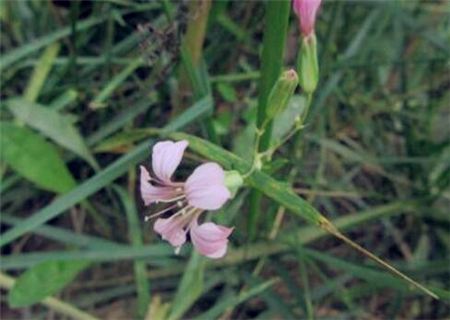
Differences Between Cowherb and Baby's Breath
1. Medicinal value of cowherb:
When it comes to cowherb, many people may think it is just a vegetable that can be stir-fried. It can indeed be used as a dish, but it is even more an important traditional Chinese medicinal herb. Women with irregular menstruation, or those who have just given birth and temporarily have no milk, can take it, and it is of great help in treating many human illnesses, especially for friends who are giving birth. If difficult labour occurs during childbirth, it can be consumed at this time, with good results and no side effects at all. Remember, expectant mothers during pregnancy must not eat it, as it can cause miscarriage.
2. Medicinal value of baby's breath:
It is not only famous as something that can be used as a floral decoration, but also has a certain medicinal value. Its roots and stems can be used as medicine, and can control high fever in the human body, help with urination, and resolve phlegm and relieve cough, etc. Although the taste is somewhat bitter, it has many benefits, and combined with other Chinese medicinal ingredients, it can treat even more illnesses.
Main Production Areas
Liaoning Province, Beijing, Hebei Province, Shanxi Province, Shaanxi Province, Ningxia Autonomous Region, Gansu Province, Qinghai Province, **Autonomous Region, Shandong Province, Jiangsu Province, Anhui Province, Zhejiang Province, Jiangxi Province, Henan Province, Hubei Province, Hunan Province, Guangxi Autonomous Region, Chongqing, Tibet Autonomous Region.
Cultivation Techniques
Wangbuliuxing, also known as Wangbuliuxing and Mailancai, is the dried seed of the plant Vaccaria hispanica of the family Caryophyllaceae. Medicinally it has the functions of activating blood and promoting menstruation, reducing swelling and relieving pain, and promoting childbirth and lactation. Wangbuliuxing mostly grows wild in wasteland and by roadsides, is tolerant of drought and barren soil, can also grow together with wheat, and has extremely strong adaptability. The sowing time for Wangbuliuxing is generally from mid-to-late September to early October after the autumn crops are cleared, or in mid-April in northern regions; it can also be sown in spring and harvested in summer.
Sowing: Dibble on the prepared seedbed, digging holes at a row spacing of 25 cm × 20 cm, with a hole depth of 3-5 cm. Then, at a seeding rate of 1 kg per 667 sq m, mix the seeds evenly with plant ash and human and livestock manure water to make seed ash, sprinkle a small pinch evenly into each hole, and after sowing cover with fine fertile soil 1-2 cm thick. For drilling, open shallow furrows at a row spacing of 25-30 cm, with a furrow depth of about 3 cm, then sprinkle the seed ash evenly into the furrows, and after sowing cover with fine soil 1.5-2 cm deep, using about 2.5 kg of seed per 667 sq m.
Management: 1. Topdressing is generally carried out 2-3 times. The first time, when the seedlings are 7-10 cm tall, after intertillage and weeding, apply 1500 kg of thin human and livestock manure water or 5 kg of urea per 667 sq m. After intertillage and weeding in the spring of the second year, apply 2000 kg of thicker human and livestock manure water and 20 kg of superphosphate per 667 sq m, or apply 0.2% potassium dihydrogen phosphate solution as a foliar topdressing 1-2 times, which helps increase yield.
2. When the Wangbuliuxing seedlings are 7-10 cm tall, carry out the first intertillage and weeding. Loosen the soil shallowly to avoid damaging the roots, and pull up weeds by hand. Along with intertillage and weeding, thin and fill in the seedlings, keeping 4-5 strong seedlings per hole. For drilling, thin the seedlings at a plant spacing of 15 cm. If any plants are missing, use the strong seedlings removed during thinning to fill them in. The second intertillage and weeding is carried out in February-March of the second year in spring, together with final thinning.
Harvesting and Processing: Wangbuliuxing is harvested in April-May of the second year after autumn sowing. Generally, when most of the Wangbuliuxing seeds have turned yellow-brown and a few have turned black, the above-ground part should be cut off level with the ground in good time. After cutting, place it in a ventilated, dry place to after-ripen for 5-7 days. When all the seeds have turned black, sun-dry, thresh, winnow away impurities, and then sun-dry until completely dry before selling as medicine. The yield is about 150 kg per mu. For large-scale sowing, a wheat seeder can be used, and at harvest a wheat combine harvester can be used, which is fast and clean.