How to Plant Ginkgo Tree Seeds? Uses and Prices Explained
Ginkgo is a deciduous tree in the family Ginkgoaceae, genus Ginkgo. Ginkgo is a large deciduous tree with a trunk diameter at breast height reaching up to 4 m. So do you know what methods there are for planting ginkgo tree seeds? What uses does it have? How much does one tree cost? The fruit of the ginkgo tree is commonly known as white fruit, hence ginkgo is also called white fruit tree. Ginkgo trees grow slowly and live extremely long; under natural conditions it takes more than 20 years from planting to bearing ginkgo fruit, and only after 40 years can they bear fruit in large quantities. It is the longevity star among trees, with ornamental, economic and medicinal value.
I. Methods for Planting Ginkgo Tree Seeds
1. Sowing and Raising Seedlings
When propagated by seed and grown naturally, the trunk is very dominant, the crown is tall, and there are few main branches; for artificially planted ginkgo tree seeds, it is best to collect large seeds from mother trees around 80 years old, and the collected seeds should be peeled and dried in the shade. To bear fruit earlier and for ease of management, the trunk can be controlled so it does not grow too tall, and the branches can be made to spread out in all directions. The trunk height is generally 1.0-1.5 m; a shorter trunk helps accelerate crown growth, favors early fruiting and high yield, and also facilitates management and harvesting. In the south, autumn sowing can be used, while in the north spring sowing is preferable. For the seedbed, sandy loam with good water permeability should be chosen.
2. Propagation Stage
Using suckers to propagate seedlings: in February and March, dig out from the root-sucker shoots of mature female mother trees the sprouting branches with roots on one side at the base, and plant them in the nursery; diameters of 1 cm to 4 cm are all acceptable. Before planting, prepare the soil and apply base fertilizer; the depth of planting into the soil must be appropriate, neither too deep nor too shallow; after transplanting, if it is not excessively dry, watering may be omitted. This method roots easily. It takes about 10 years to bloom and bear fruit. If propagated by dividing suckers from the base of the trunk and then grafted, it can bear fruit in 3-4 years, and the fruiting period can last more than 3000 years.
Correct Planting Methods for Ginkgo Trees
3. Grafting Propagation
Use vigorous branches from trees in full fruiting stage as scions, and graft them onto seedlings using the cleft method. When using grafting propagation, different scions used also have different effects on crown development and yield. When grafting, generally 2-3 scions are grafted onto 1 rootstock; after the scions survive, backbone branches first grow from the scions, and the backbone branches growing at the top have stronger growth and can form 1-2 main branches; afterward, these main branches send out more branches, forming multiple branch groups expanding outward, and then continue to send out branches, expanding into a crown. With high-trunk grafting, fewer branches grow from the base and more branches grow at the tip, and fruiting is later; with low-trunk grafting, more branches grow from the base, the crown expands quickly, fruiting is earlier, and yield is also higher. Newly grafted ginkgo trees have relatively large annual growth, reaching more than 1.0 m, and then gradually weaken.
4. Entering the Soil and Rooting
For cutting propagation, from May to June select current-year soft branches or short current-year shoots collected from fruiting trees and cut them into 10 cm to 15 cm lengths, keeping 3 to 4 leaves at the top, cutting the lower end into a horseshoe-shaped slant, soaking the base in water for 2 hours, then inserting them into a vermiculite-sand bed, with intermittent water spraying to ensure the leaves do not dry out; rooting takes about one and a half to two months.
5. Growth Process
Seedling transplanting: Ginkgo is a deep-rooted plant with a very long growth life. For artificial planting, good conditions must be created for it in terms of terrain, topography, soil quality and climate. Choose loam, yellow pine soil or sandy loam that is high and dry, with long sunshine hours, ample sunlight, deep soil layers, good drainage and loose fertility. Seedling transplanting can be carried out in both spring and autumn each year. Among these, acidic and neutral loam produces lush growth, grows well, and forms a forest earlier. Ginkgo with a diameter below 5 cm can be planted bare-rooted; those above 6 cm generally need to be planted with a soil ball. Bare-rooted seedlings have a recovery period in the same year. Seedlings with a soil ball can grow in the same year. After small seedlings are planted in rows, irrigate heavily with water. For planting large trees, it is best to fill the pit with water before planting; after the water in the pit has seeped away, plant the large tree into the pit and tamp it firm, allowing the water in the pit to rise back up and moisten the roots.
6. Seedling Management
① Ginkgo trees like fertilizer, like moisture, and require highly aerated conditions, so after planting ginkgo, soil and fertilizer-water management need to be strengthened. First, persist in deep digging and loosening the soil once every year, and at least keep the area around the tree disk loose; second, apply more fertilizer, especially more organic fertilizer such as barnyard manure and decomposed garbage; third, pay attention to irrigation and drainage, watering appropriately in the dry season and promptly draining accumulated water in the rainy season. Deep digging and loosening of the soil is generally done in autumn and winter. Ginkgo roots develop early; when the ground temperature rises to 6°C, the root system begins activity. South of the Yangtze River, deep digging is best completed before February. Chemical fertilizers can be applied year-round; organic fertilizer is best applied in September-October by digging open the soil surface and shallow-burying it, or combined with deep digging in winter by digging radiating or ring-shaped deep fertilization trenches and burying it.
In ginkgo fruit forests, the spacing between plants is large, making them most suitable for intercropping crops. However, when intercropping, care must be taken to select good crops. Those that absorb too much fertilizer, especially those that attract serious pests and diseases, or whose root secretions hinder ginkgo growth, are best not planted. Some crops, such as corn, absorb a lot of fertilizer, but because they relate to the lives of local farmers, they can also be intercropped, but when intercropping, more fertilizer must be applied. Practice has proved that the root secretions of plants such as tobacco and walnut are extremely unfavorable to ginkgo growth, while crops like potato can greatly induce damage by white grubs, so it is best not to plant them. The growth of ginkgo cannot lack organic fertilizer. When soil organic matter is insufficient, severe nematode damage is often induced. Mountain transport is difficult, making it hard to apply large amounts of organic fertilizer that needs to be transported, so planting green manure between ginkgo forest trees is advocated. However, green manure planting should also mainly ensure the normal growth of ginkgo, and green manure should be pressed into the soil at the flowering stage to give full play to its fertilizer effect.
② The annual growth of ginkgo trees is relatively small; under ordinary management conditions, they only send out new shoots once a year. When fertility is insufficient, the annual growth of branches is often less than 40 cm. Ginkgo flower buds form only on the short shoots commonly known as bell branches. These two basic characteristics determine that ginkgo generally should not be pruned, or should only be lightly pruned. However, because the grafted buds of ginkgo grafted seedlings are often located at the edge of the crown, most grafted plants often have severely lopsided crowns, which will also affect future yield. The way to correct lopsided crowns is to set up supports, properly top and pinch, and at the same time apply more fertilizer. Generally, as long as the terminal bud is cut off, several lateral buds below it can sprout, forming several branches in the same year or the next year after topping. After planting, ginkgo trees have a relatively long recovery period, and their susceptibility to lopsided crowns is related to insufficient endogenous growth hormones. Ginkgo seedlings given more organic fertilizer and with well-developed root systems basically do not have a recovery period, and lopsided crowns can also be well controlled.
③ Artificial pollination of ginkgo trees is a key technique for increasing and steadily raising ginkgo yield. Even for ginkgo fruit forests already equipped with pollinating male trees, artificial pollination is best carried out. There are many methods of artificial pollination; the most practical method is to mix pollen into a water solution and spray-pollinate. The time to collect male flowers is when the stamens turn yellow. After collecting the male flowers, spread them out to dry promptly. After the male flowers shed pollen, the pollen can be sifted out, dried with quicklime or the like, and set aside; such pollen can be stored at room temperature for more than 15 days, and if kept dry and stored in a refrigerator, it can be stored for ] years. If it is to be used for pollination within 10 days, the pollen need not be sifted out; simply spread the flowers in a cool place. When using, add 30 kg of water to 1 kg of male flowers, squeeze and knead, wash out the pollen, filter out the male flowers, and spray it on the ginkgo trees as soon as possible.
II. What Uses Does Planting Ginkgo Trees Have?
Economic Value
The ginkgo trunk is straight, and the wood is a high-grade material for making musical instruments and furniture. Ginkgo wood is of high quality and expensive, and has long been known as “silver fragrant wood” or “silver wood.” Ginkgo wood is glossy, with straight grain, fine structure, easy processing, no warping or cracking, strong decay resistance, easy to paint, low nail-holding power, and has a special medicinal fragrance and strong insect resistance. Ginkgo wood can be used not only to make carved plaques and wooden fish and other handicrafts, but also to make high-grade furniture such as standing cabinets and writing desks. Ginkgo wood has resonance, sound conductivity and elasticity, making it an ideal material for making musical instruments. It can be used to make surveying and mapping instruments, pen holders and other cultural supplies, and is also a superior wood for making chessboards, chess pieces, sports equipment, seals and small handicrafts. In industrial production, silver wood is most suitable for making X-ray machine filter grids, textile printing and dyeing rollers, machine molds and wooden molds for bodiless lacquerware, plywood, cutting boards, wooden telephones, etc. The outer seed coat of ginkgo can be used to extract tannin extract. The seeds contain hydrocyanic acid, histidine, protein, etc. The seed kernel is edible, but eating too much causes poisoning; in traditional Chinese medicine, the seeds and leaves can be used as medicine.
Landscape Value
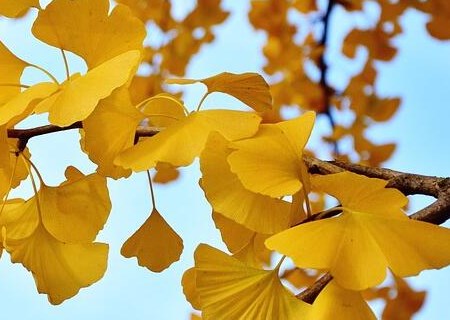
Ginkgo trees are tall and upright, with fan-shaped leaves. The crown is large and shade-giving, with a cooling effect. The leaf shape is ancient and elegant, and the lifespan is long. It has no pests or diseases and does not pollute the environment; the trunk is smooth and clean, making it a famous pollution-free tree species, conducive to ginkgo propagation and enhancing the scenery. It has strong adaptability, and ginkgo has very broad requirements for climate and soil. It resists smoke and dust, fire, and toxic gases. The ginkgo tree is tall, with a straight trunk and beautiful posture; it is emerald green in spring and summer and golden in late autumn, making it an ideal tree species for landscaping and street trees. It can be used as an ideal planting tree species for landscaping, streets, highways, field forest networks, and windbreak belts. It is listed among China's four major longevity ornamental tree species (pine, cypress, pagoda tree, ginkgo).
Ecological Value
The ecological benefits of ginkgo are mainly reflected in the fact that ginkgo is both a fruit tree——nut tree and also a timber tree species, protective tree species, pest- and disease-resistant tree species, long-lived tree species and pollution-tolerant tree species. Ginkgo has strong adaptability and is an ideal tree species for fast-growing high-yield forests, farmland shelterbelts, roadside protection forests, bank protection forests, beach protection forests, village protection forests, forest-grain intercropping and “four-side” greening
Medicinal Value
The medicinal use of ginkgo is mainly reflected in three aspects: medicine, pesticides and veterinary drugs. In the Ming Dynasty, Li Shizhen once said: “It enters the lung meridian, benefits the spleen qi, relieves wheezing and cough, and reduces urination.” In the Qing Dynasty, Zhang Lulu's Bencao Fengyuan recorded that white fruit has the functions of reducing phlegm, clearing toxins and killing insects, and can treat “sores, scabies, carbuncles and tumors, ulcerated breast abscess, dental caries, diarrhea in children, leukorrhea, chronic strangury and turbidity, spermatorrhea and enuresis, etc.” In the Ming Dynasty, Jiangsu, Sichuan and other places produced Chinese patent medicines prepared from white fruit for clinical use.
III. How Much Does One Ginkgo Tree Cost?
Ginkgo seedlings 0.5-1.5 m tall quoted price: 0.5-2 yuan each
3 cm ginkgo tree: 8 yuan/tree
8 cm ginkgo tree: 120 yuan
10 cm ginkgo tree: 160 yuan/tree
15 cm ginkgo tree: 350-600 yuan
18 cm ginkgo tree: 500-1000 yuan
20 cm ginkgo tree: 800-1500 yuan
25 cm ginkgo tree: 2600-8000 yuan
30 cm ginkgo tree: 7000-22000 yuan
40 cm ginkgo tree: 50000 yuan
45 cm ginkgo tree: 24000-26000 yuan
50 cm ginkgo tree: 28000-32000 yuan
Grafted Ginkgo Tree Price List
8 cm grafted ginkgo tree: 75 yuan
10 cm grafted ginkgo tree: 150 yuan
15 cm grafted ginkgo tree: 350-650 yuan
18 cm grafted ginkgo tree: 650-700 yuan
20 cm grafted ginkgo tree: 800-1800 yuan
25 cm grafted ginkgo tree: 2000-4500 yuan
30 cm grafted ginkgo tree: 4500-8800 yuan
40 cm grafted ginkgo tree: 4000-4500 yuan
45 cm grafted ginkgo tree: 5000-5500 yuan
50 cm grafted ginkgo tree: 6000-7000 yuan