Why doesn't the Phalaenopsis orchid bloom? Key points on planting, propagation and toxicity
The Phalaenopsis orchid originates from tropical rainforest regions and is naturally fond of warmth and averse to cold. Its optimum growing temperature is 15-20°C; in winter it stops growing below 10°C and easily dies below 5°C. It is a perennial herbaceous plant. Do you know why the Phalaenopsis orchid doesn't bloom? What do you need to pay attention to when planting it? How do you propagate it? Is it toxic?
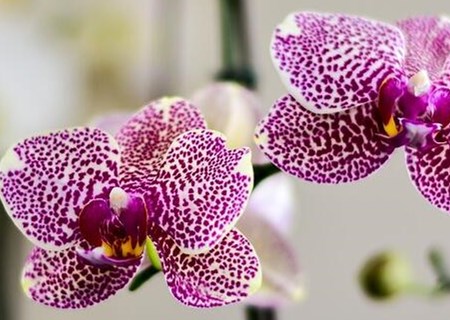
I. Why the Phalaenopsis orchid doesn't bloom
Main reasons and analysis
1. Dry air in the growing environment
Excessive strong light exposure and an insufficient water supply will both cause the leaves to wilt and turn yellow, which is unfavorable for flower bud differentiation and blooming.
2. Improper control of temperature levels
Poor temperature control will also hinder the normal development of the plant, obstruct the initiation of flower buds and prevent blooming. The Phalaenopsis orchid is best cultivated in a high-temperature environment. Even if flower buds emerge, if the indoor temperature is too low, the buds will turn yellow and drop early, failing to meet the requirements for blooming.
3. Imbalanced fertilizer ratio
Applying too much nitrogen fertilizer while lacking phosphorus and potassium fertilizer will also inhibit flower bud differentiation, resulting in no blooming or few flowers. If the fertilizer concentration is too high, especially when a strong fertilizer is applied after the buds have formed, the buds easily wither and drop. If alkaline water and fertilizer are applied over the long term, it will hinder the roots' absorption of water and nutrients, making it difficult for the Phalaenopsis orchid to bloom.
4. Careless watering
If, when watering, water splashes into the flower heart at the base of the leaves, the accumulated water will cause the leaf base to rot, causing abnormal plant growth and affecting blooming. Therefore, when spraying water you can mist the leaf surface to prevent accidentally spraying the growing point. Once the flower buds have formed, stop spraying water on the flowers to avoid bud drop.
5. Poor air circulation
During the flowering period, pay special attention to providing proper ventilation. If air circulation is poor, the tip of the flower stem easily turns yellow and withers, and bud drop may also occur.
II. What to pay attention to when planting
1. The Phalaenopsis orchid likes high temperatures and high humidity, and has relatively high temperature requirements during the seedling growth period: the indoor minimum temperature should be kept above 15°C, and it is best to keep it above 18°C at night (which helps it fix CO2 at night); summer temperatures are high, so pay attention to cooling, and the room must be kept ventilated. If the temperature is above 32°C, the Phalaenopsis orchid will enter a dormant state, so be sure to observe carefully and adjust in good time; at the transitions between autumn and winter and between winter and spring, keep track of temperature changes, but do not place the flowers next to a radiator, and try to ensure the indoor air is fresh and circulating. The suitable temperature during the flowering period should be around 15°C; if the temperature is too high the flowering period easily shortens. Some people have experimentally proven that 10°C can also fully guarantee the flowering period, but if this orchid has been taken out of a relatively warm place, the temperature must not be lowered all at once; give it a transitional acclimation period.
2. The Phalaenopsis orchid is an epiphytic orchid with aerial roots that are often exposed outside the nutrient pot. This is required by its growth characteristics, as it needs to absorb water from the humid air and maintain the humidity needed for growth. The Phalaenopsis orchid uses sphagnum moss as its substrate and is grown without soil, so it must not be watered too much; otherwise aeration will decrease, the roots will rot and the leaves will turn dark. The principle for watering is to water thoroughly once the substrate is dry, and it is most appropriate for the water temperature to be close to the indoor temperature. When the indoor air is dry, you can spray directly onto the leaf surface (4-6 times a day); during the flowering period, watering should be controlled to slow down the metabolic rate and prolong the flowering period.
3. The Phalaenopsis orchid relatively prefers shade. In summer, never expose it to direct sunlight and do not place it on a windowsill, to avoid damaging the plant; during the flowering period, place it on an indoor flower stand or in the living room. During the seedling growth period, it should generally be placed in a spot with diffused light indoors.
4. During the growth period, apply a special orchid fertilizer; if you don't have any, an ordinary compound fertilizer will also do. The principle for fertilizing is "small meals, more often." During the peak growth period, fertilize the seedlings with a 1000-2000 times dilution, once a week or three times every two weeks; another method is a 3000-4000 times dilution, fertilizing daily along with watering.
5. The flowering period of the Phalaenopsis orchid generally lasts 2-3 months. When the flowers wither, it is best to cut the flower stem off at the base to let the plant rest and readjust; on the other hand, when the substrate ages, replace it in good time, otherwise poor aeration will cause root rot. Also note that after repotting, do not water or fertilize immediately; instead, first spray a fungicide, at a slightly higher dose, and after about a week return to normal care. After the flower spike is cut off, during the plant's readjustment stage, you can apply some nutrient fertilizer, with a relatively moderate nitrogen-phosphorus-potassium ratio of about 19-19-19 to 21-21-21 (nitrogen, phosphorus and potassium each accounting for 19%-21% of the total); pay attention to the combination of trace elements. After a period of rest, you can force flowering. First, calculate the date for forcing bloom based on the desired flowering date. Under normal growth conditions, it takes four months from the emergence of the flower spike to the opening of the first flower, and at least another month or even longer to fully open. Phalaenopsis blooming is caused by low-temperature stimulation. When forcing bloom, the day-night temperature difference needs to be about 10°C, and the light intensity should also be relatively increased, but it must not be direct light. Begin applying bloom-forcing fertilizer about 35-40 days before forcing bloom. The bloom-forcing fertilizer requires high phosphorus and high potassium, but nitrogen fertilizer must not be omitted; the general reference ratio is about 10-30-20. When forcing bloom, the low-temperature treatment must be ensured for more than one month; in the north, this standard can basically be met starting from September or October.
6. During the flowering period, watch out for gray leaf spot, mainly caused by not paying attention to water droplets on the petals, or other diseases, which detracts from the ornamental value of the flowers. Therefore, never spray fertilizer water onto the petals.
III. How to propagate the Phalaenopsis orchid
Flower stalk bud-forcing propagation method
First cut off the part of the flower stalk that has finished blooming, then carefully use a blade to remove the bracts between the first and third nodes at the upper end of the flower stalk, exposing the bud points in the internodes;
Use a cotton swab to evenly apply a bud-forcing agent or a hormone such as indolebutyric acid to the exposed internode bud points;
After applying, place the plant in a semi-shaded spot and maintain a cultivation temperature of 25-28°C. Generally after 2-3 weeks the bud body can grow leaves, and after 3 months it can grow into a small Phalaenopsis seedling with 3-4 leaves and aerial roots;
Finally, cut off the small seedling and pot it up, and you will have a new plant.
Heart-cutting bud-forcing propagation method
First pull out the highest heart leaf at the top of the stem, taking care to destroy the growing point at the stem tip so that it can no longer continue growing upward;
After the wound dries, apply a fungicide to sterilize and disinfect it. After a period of time, 2-3 new buds will sprout on the stem nodes near the base;
When the new buds have grown larger and roots have emerged from the base, you can cut them off and plant them separately, and you will have a new plant.
Stem-cutting propagation method
The stem-cutting propagation method works on a principle similar to the second method, likewise using the method of destroying the stem-tip growing point to induce the growth of dormant buds;
After the plant has grown until the stem nodes are relatively long, use a sterilized blade or scissors to cut off the upper part of the plant that has roots, and transplant it into a new pot to continue growing. Give the lower part, which retains the rhizome, an appropriate amount of water, and soon 1-3 new buds will sprout (the number depends on the plant's characteristics and the care method);
If the plant's stem is relatively long, you can consider cutting it into multiple segments, each with 2-3 internodes, or segments longer than 2-3 cm and bearing more than one root, which may develop into a new plant;
If the plant's rhizome has already died, this method will not work.
III. Is the Phalaenopsis orchid toxic?
Since the Phalaenopsis orchid is not toxic, then there is no problem placing it indoors either!
However, the editor would like to remind everyone of one thing: whether or not it is a Phalaenopsis orchid, we all know that during the day plants carry out photosynthesis and release oxygen, but at night plants respire oxygen and release carbon dioxide, so it is best not to place plants in the bedroom!