Epiphytic Phalaenopsis Seed Planting Method, Flowering Time, and Post-Bloom Care
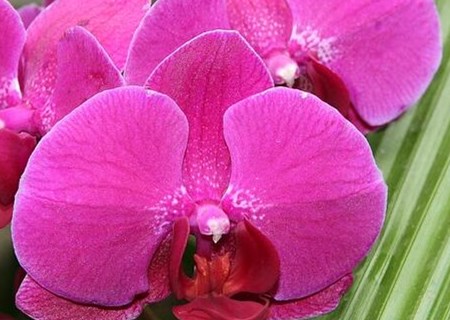
Phalaenopsis belongs to the genus Phalaenopsis in the orchid family (Orchidaceae) and is an epiphytic orchid. The thick white aerial roots of Phalaenopsis are exposed around the leaves; besides absorbing nutrients from the air, they also carry out growth and photosynthesis. Do you know what seed planting methods exist for Phalaenopsis? When does it bloom? How should it be handled after the flowering period? During the Chinese New Year season, the Phalaenopsis plant sends out long flower stalks from the leaf axils and produces flowers shaped like dancing butterflies, which are deeply favored by flower enthusiasts and have long been known as the “Queen of Orchids”.
I. Phalaenopsis Seed Planting Methods
1. Preparation Before Sowing
Determine whether the seed pod is empty; if it is empty, no seedlings can possibly emerge.
Determine the viability of the seeds; generally speaking, Phalaenopsis seeds have a viability of less than ten percent.
2. Sowing Methods
Natural sowing method:
Sow the already split seeds into the pot of the parent plant. The growing medium of the parent plant contains the symbiotic bacteria necessary for Phalaenopsis seed germination, but whether the presence of this symbiotic bacteria can actually allow the seeds to germinate is also a matter of luck!
The natural sowing method is very simple and suitable for home Phalaenopsis cultivation. However, the success rate of this method is extremely low, and the editor does not recommend using this method to propagate Phalaenopsis.
Aseptic sowing method:
First, wash the unopened, mature seed capsules and set them aside.
Place them in a prepared 75%-90% ethanol or chloroform solution and soak for 2-3 seconds only, not too long and not too short.
After this step is completed, we can use a 5%-10% bleaching powder solution, or 3% hydrogen peroxide, and soak for 5-20 minutes.
Remove the seeds and soak them again in the same disinfectant solution for 5-20 minutes.
Afterward, we can use a filtration method with a professional filter to remove the solution used for soaking, then take out the seeds, and finally spread the removed seeds evenly on the surface of the prepared culture medium; remember to use a fine needle, since Phalaenopsis seeds are very small.
Culture conditions: light intensity: 2000-3000 lux. Light duration: 10-18 hours, temperature: 20-26°C.
After 9-10 months, when the seedlings have grown 2-3 leaves, they can be removed from the flask and planted in pots.
This method is very rigorous and scientific, and is generally carried out in a laboratory; there are rarely suitable propagation conditions for it in the home.
II. When Does Phalaenopsis Bloom
Phalaenopsis blooms once or twice a year, with the flowering period generally around the Chinese New Year, and the ornamental period can last as long as 2 to 3 months.
When the flowers wilt, the faded flowers must be cut off as early as possible, as this can reduce nutrient consumption.
Cut the flower stalk at the point 4 to 5 nodes from the base, and it can bloom again after 2 to 3 months.
However, in a home cultivation environment, it often can only bloom once a year.
III. How to Handle It After the Flowering Period
When the flowers wilt, the faded flowers must be cut off as early as possible, as this can reduce nutrient consumption. If the flower stalk is cut at the point 4 to 5 nodes from the base, it can bloom again after 2 to 3 months. But this consumes too much of the plant's nutrients and is not conducive to growth in the coming year. If you want it to bloom well again the following year, it is best to cut the flower stalk from the base; when the growing medium ages, it should be replaced in a timely manner, otherwise air permeability will worsen, causing root rot and weakening the plant's growth or even death.