How much does a ginkgo sapling cost now and an introduction to its planting methods
Ginkgo is a deciduous tree in the Ginkgo family, genus Ginkgo. The ginkgo tree grows relatively slowly and has an extremely long lifespan. Under natural conditions, it takes more than twenty years from planting to producing ginkgo nuts, and only after forty years can it bear fruit in large quantities. Therefore, some people also call it the "Gongsun tree," meaning "the grandfather plants it and the grandson eats the fruit." It is the long-lived elder among trees and has ornamental, economic, medicinal and other values. Ginkgo trees are widely planted in cities, so roughly how much does a ginkgo sapling cost now? How do you plant it?
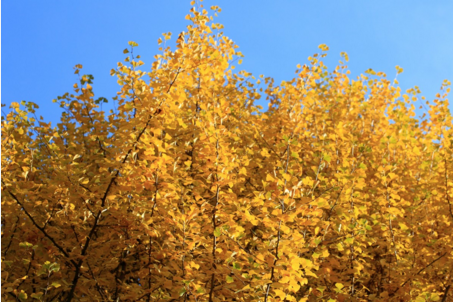
I. How much does a ginkgo sapling cost? (2018 price summary)
(1) Prices of seedling-grown ginkgo trees
Price of 0.5-1.5 m ginkgo trees: 0.5-2 yuan/tree
Price of 3 cm ginkgo trees: 8 yuan/tree
Price of 8 cm ginkgo trees: 120 yuan/tree
Price of 10 cm ginkgo trees: 160 yuan/tree
Price of 15 cm ginkgo trees: 350-600 yuan/tree
Price of 18 cm ginkgo trees: 500-1000 yuan/tree
Price of 20 cm ginkgo trees: 800-1500 yuan/tree
Price of 25 cm ginkgo trees: 2600-8000 yuan/tree
Price of 30 cm ginkgo trees: 7000-22000 yuan/tree
Price of 40 cm ginkgo trees: 50000 yuan/tree
Price of 50 cm ginkgo trees: 28000-32000 yuan/tree
(2) Prices of grafted ginkgo trees
Price of 2 cm grafted ginkgo trees: 4 yuan
Price of 3 cm grafted ginkgo trees: 6 yuan
Price of 8 cm grafted ginkgo trees: 75 yuan
Price of 10 cm grafted ginkgo trees: 150 yuan
Price of 15 cm grafted ginkgo trees: 350-650 yuan
Price of 18 cm grafted ginkgo trees: 650-700 yuan
Price of 20 cm grafted ginkgo trees: 800-1800 yuan
Price of 25 cm grafted ginkgo trees: 2000-4500 yuan
Price of 30 cm grafted ginkgo trees: 4500-8800 yuan
Price of 40 cm grafted ginkgo trees: 4000-4500 yuan
Price of 50 cm grafted ginkgo trees: 6000-7000 yuan
II. Ginkgo planting techniques
Ginkgo planting techniques. There are mainly 3 methods for raising ginkgo seedlings: sowing, cuttings and grafting.
(1) Raising seedlings from seed
1. Seed collection
Select mother trees that grow fast, are vigorous, well pollinated, have large seeds, plump kernels, strong productivity and stress resistance, and that bear fruit under natural conditions at 30-100 years of age as seed collection mother trees. Harvest when the outer seed coat of the ginkgo changes from green to pale yellow or orange-yellow. The ginkgo wholesale seeds harvested from the trees have not completed embryo development and require more than 60 days of stratification or after-ripening to reach physiological maturity. Sand storage method: mix 1 part seeds with 2 parts river sand evenly, then pile them indoors. The water content of the sand should generally be 50% of saturated water content. Spread to a thickness of 60 cm and turn once every 20 days. As moisture evaporates, sprinkle water appropriately to replenish it.
2. Seed processing
Procedure: pile and ferment → soften and decompose the outer seed coat → mash the outer seed coat and rub → rinse with water to remove impurities → dry in the shade and then grade.
3. Germination promotion
In order to achieve uniform, fast, even, complete and strong seedling emergence, give the seedlings a longer growth period, and improve seedling yield and quality, germination must be promoted before sowing.
4. Sowing
(1) Nursery site selection
According to the biological characteristics of ginkgo, the nursery site should be chosen as level ground, sheltered from wind and facing the sun, with deep and fertile loam or sandy loam soil, and good irrigation and drainage. Soil that is too clayey, prone to waterlogging, or saline-alkali soil cannot be used.
(2) Land preparation
The nursery site should be deeply plowed all over in late autumn or early winter, with a depth of 40 cm being suitable. Apply 10,000 kg of miscellaneous manure or 200 kg-250 kg of fully decomposed cake fertilizer and 75 kg-100 kg of superphosphate per 666.67 sq m. After winter freezing and soil weathering, pests and diseases will be noticeably reduced the following year. Carry out a second plowing in late February of the next year, then harrow finely and make beds. In Jiangsu, ginkgo seedbeds are 120 cm wide, 30 cm-35 cm high, with 35 cm wide ditches, and then the seedlings are sorted.
(3) Seedbed disinfection
After leveling, disinfection is needed. Use 2 kg of 30% ferrous sulfate aqueous solution per sq m, or 50 ml of formalin plus 6 L-12 L of water, and pour it evenly on the bed surface 7 days before sowing. Where underground pests are severe, apply 5 kg of phoxim or carbofuran per 666.67 sq m when making the beds.
(4) Sowing
Seeds that have been promoted to germinate can be sown in mid-to-late March. The sowing method uses horizontal trenching and spot sowing, with a trench depth of 3 cm-4 cm, row spacing of 20 cm-30 cm, and plant spacing of 10 cm-15 cm. Place the seeds flat with the radicle facing down, cover with 2.0 cm-3.0 cm of soil, then cover with clean rice straw, and keep the bed surface moist afterward. The sowing rate depends on seed size. Generally, the seedling output per 666.67 sq m is 15,000-20,000 plants, using an average of about 50 kg of seed.
(2) Grafting of ginkgo seedlings
Ginkgo wholesale grafting can maintain the excellent traits of the mother tree. Through grafting, excellent varieties can be preserved and propagated, the tree body can be dwarfed, dense planting is facilitated, the cultivation range of varieties can be expanded, and flowering and fruiting can be advanced. The key to grafting ginkgo seedlings is the collection of scions and the selection of grafting methods for different periods.
1. Scion collection
For spring scion collection, generally within 10-20 days before Qingming Festival. If the grafting task is large, collection can be done earlier. Scions should be collected from adult mother trees of excellent individual plants or from a scion orchard.
2. Grafting period
In principle, ginkgo trees can be grafted all year round, and the methods used differ for different grafting periods. For spring grafting, cleft grafting, bark grafting, budding with wood, double tongue grafting, bag grafting, side grafting, etc. are suitable. The grafting time from 5 days before bud break to leaf expansion gives the highest survival rate. That is, grafting within 15 days before Qingming Festival to 5 days after Qingming Festival. Square budding and square short-branch grafting can be carried out during the growing season. Autumn grafting is best in late August, with main methods including square budding, budding with wood, cleft grafting, bark grafting, side-branch grafting, side cleft grafting, etc. Based on the production practices of major ginkgo production areas, grafting methods suited to local conditions are generally chosen.
In Xing'an County and Lingchuan County of Guangxi Autonomous Region, taking advantage of the local ginkgo's longer growth period (generally 1 month longer than that of ginkgo in the provinces of the Yangtze River basin), the short-scion budding method based on softwood grafting was chosen. With this grafting method, sowing is done in the same year, grafting in September of the same year, surviving bud pieces overwinter, and the next year, after the ginkgo sheds its leaves, the seedlings can be lifted and planted out. It takes only 2 years to cultivate grafted ginkgo seedlings, which is fast, but the grafting position is low (generally 10 cm from the root collar of the seedling), belonging to the short-trunk type, prone to uneven crown, and not easy to form an ideal fruiting tree shape. It bears fruit in large quantities only 3-5 years after grafting.
In Taixing and other places in Jiangsu, the high-trunk cleft grafting method with large seedlings is used. The time to cultivate grafted seedlings is longer, generally requiring 4-6 years, and the investment in raising seedlings is greater. The grafting position is 1.5 m-2 m from the root collar of the seedling. After grafting, fruiting is faster, high yield is easy to form, and fruit, timber and leaves are all harvested. Tancheng in Shandong, Pizhou in Jiangsu, and Anlu and Dawu in Hubei all use both the grafting methods of Xing'an, Guangxi and Taixing, Jiangsu.