Pennywort, also known as Chinese marshweed (Hydrocotyle sibthorpioides), seed planting method, benefits, and differences from Lysimachia christinae
Pennywort, also known as Chinese marshweed (Hydrocotyle sibthorpioides), is used whole as medicine; it relieves pain, clears heat, and drains dampness, and treats abdominal pain, difficult urination, eczema and other conditions. It prefers warm, humid conditions and grows best in loose, well-draining potting soil, and can also be grown hydroponically. So do you know what the seed planting methods for pennywort are? What benefits and effects does it have? And how is it different from Lysimachia christinae?
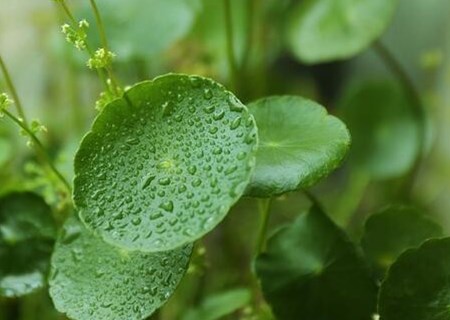
I. Pennywort seed planting method
1. To obtain seeds, you can buy them from reputable online stores or flower markets, or receive them as shares from fellow gardeners.
2. The seeds need contact with air. If you put in expanded clay pebbles and stones too early during hydroponic growing, the seeds will more or less fall under the stones, making it very hard for them to sprout. So it is generally recommended to first find a bottle cap (a drink bottle cap will do), then prepare some sun-exposed tap water, cling film and a small rubber band, and everything is OK~.
3. If you bought them from an online store or flower market, after opening the seed package you will find the seeds are wrapped in a green powder coating; do not crush it blindly, as that really is not the seed shell. Pour the seeds into the bottle cap, but do not pour them all out at once, to prevent failure and keep a backup for next time. Pour in a small amount of water, just enough to dissolve the green coating, then cover with cling film.
4. Put the prepared bottle cap in a dark place, and after 2~4 days you can see that some seeds have already broken their shells, and some even show white roots. Every night remove the cling film to let the seeds breathe, which prevents root rot.
5. When the white roots are 4~6 mm long, they can be exposed to the sun, but it is best to do so at 8~9 o'clock to avoid sunburn; if they are not exposed to the sun, the leaves will not easily grow out.
6. When the seeds sprout to the point of being about to shed their shells, they can be potted up. Put expanded clay pebbles or stones into a cup, place the small sprouts in, gently fix the roots with the expanded clay pebbles or stones, add water, and it is best to pour the water along the edge of the cup, otherwise the fixed seedlings will be washed away; pour water until it just touches the roots.
7. Expose them to sunlight every day, do not let them catch strong wind, add water in good time, and add a little hydroponic nutrient solution when necessary, and the seedlings will grow vigorously.
II. What benefits and effects does pennywort have?
This Chinese medicinal herb pennywort contains abundant fatty acids. It is sweet in taste and neutral in nature, can enter the liver meridian, and has multiple effects such as invigorating blood and detoxifying, and dispelling wind and dampness. It can usually be used to treat traumatic injuries, rheumatic bone pain, excessive phlegm and inflammation, and many other diseases, with excellent therapeutic effects.
1. Pennywort can relieve cough and calm asthma
Pennywort contains various trace components that, after entering the human body, can dilute phlegm, dilate the trachea, and also relieve lung heat, so that coughing and asthma symptoms caused by lung heat and excessive phlegm improve quickly. For routine treatment, take an appropriate amount of pennywort, decoct it with clear water, remove the dregs after decocting, and take it directly.
2. Pennywort can treat fractures
Pennywort is also a Chinese medicinal herb that can treat human fractures. When people suffer accidental fractures, they experience unbearable swelling and pain. At this time, an appropriate amount of pennywort can be used for treatment. The specific method is to set the broken bone, then pound the pennywort into a paste and apply it externally directly to the injured area, then fix the broken bone area with a wooden board, changing the medicine once a day. This can quickly reduce the swelling and pain caused by the fracture, and also promote regeneration of the broken bone.
III. What is the difference between pennywort and Lysimachia christinae?
1. Appearance
Although the leaves of Lysimachia christinae are quite similar to those of pennywort, both being round, there are still some subtle differences between the two. Pennywort, just like its name, closely resembles a copper coin. Moreover, the flowers of Lysimachia christinae are yellow, while the flowers of pennywort are white. During the flowering period, using this characteristic, you can probably distinguish these two plants fairly easily.
2. Growing environment
You can also distinguish them by the different growing places of the two plants. Lysimachia christinae grows in places with suitable soil moisture, but it will not grow by the water. Pennywort is exactly the opposite: pennywort likes water, and what you find by the water is definitely pennywort. Therefore, planting Lysimachia christinae requires soil, while pennywort can even grow directly in water without soil.