When does purple loosestrife bloom and when should it be sown? Growing methods included
Purple loosestrife grows on riverbanks, lakeshores, beside streams and ditches, and in moist grasslands. It loves strong light, is highly cold-tolerant, loves moisture, and is not demanding about soil, growing even better in deep soil rich in humus. So when does purple loosestrife bloom? When is the best time to sow it? The growing methods are organised below:
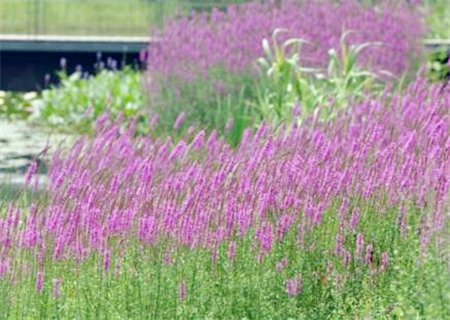
When does purple loosestrife bloom
The flowers of purple loosestrife grow in clusters, with relatively short pedicels; the small flowers gather together and look like a large flower spike. The flowers are mainly red-purple or light purple, and very showy.
Purple loosestrife is a flower with a very long blooming period; it usually blooms from July to September, with an ornamental period of 2 to 3 months, giving people beautiful visual enjoyment.
When to sow purple loosestrife
Seed propagation: sow in spring in March-April. Before sowing, mix the seeds evenly with fine soil, then broadcast them on the bed, cover with 25px of soil, and finally cover with grass and water. Seedlings emerge 10-15 days after sowing; remove the grass immediately. Transplant when the seedlings are about 250px tall. Open holes at a row spacing of 750px and a plant spacing of 500px, planting 3 plants per hole.
Cutting propagation: in spring, select vigorous branches, cut them into lengths of about 300px, remove the leaves, insert them obliquely into the soil to a depth of 1/2 the cutting, press firmly, water to keep moist, and transplant after they have rooted and grown leaves. Division propagation: in spring from April to May, dig up the root clumps, cut them into clumps of several buds each, and plant them in moist ground with sufficient base fertiliser.
How to grow purple loosestrife
Cultivation points:
(1) It is not demanding about soil, is cold-tolerant, loves light and loves moisture. Fertile soil is best for cultivation.
(2) It can be propagated by sowing, cuttings, division and other methods. Sowing must be done in moist ground; cuttings are taken from June to July, cutting off new shoots and inserting them into muddy water, where they root within a month; division is done in spring, digging up the old plants, cutting them into several parts, and planting them separately.
(3) It can be planted once and harvested for many years.
Field management: from after planting until the rows close, cultivate and weed 3-4 times each year. Apply nitrogen fertiliser or compound fertiliser once each in spring and summer, and apply compost or barnyard manure once after autumn. Keeping the soil moist at all times is the most critical measure for growing purple loosestrife well.
Efficacy and effects of purple loosestrife
The whole plant is used as medicine, to treat enteritis, dysentery and blood in the stool; externally for traumatic bleeding.
[Properties] Bitter, cold. Enters the large intestine meridian. Clears heat, cools the blood, astringes, and stops diarrhoea.
[Applications] Treats dysentery, abnormal uterine bleeding, haematemesis, traumatic bleeding, ulcerated sores, etc.
① To treat diarrhoea, dysentery, blood in the stool and uterine bleeding. Decoction for oral use: 6-12 grams.
② To treat traumatic bleeding, grind into powder and apply externally. This product contains loosestrife glycoside, gallic acid tannin, choline, lythranine, lythranidine, lythramine and various other alkaloids. The flowers also contain vitexin, etc. The decoction can inhibit Staphylococcus, Salmonella typhi and others in vitro, and is especially sensitive to Shigella dysenteriae. It has an antispasmodic effect on isolated intestinal segments. The root decoction is used for chronic dysentery as an astringent or palliative.
Traditional Chinese medicine holds that the whole plant of purple loosestrife is bitter in taste and cold in nature. It has functions such as clearing heat and cooling the blood. It can treat dysentery, ulcers, uterine bleeding and other conditions. It has antibacterial and other functions.
Animal experiments have shown that purple loosestrife has a blood sugar-lowering effect. The extract can also lower serum TG content and raise FFA levels.