Mulberry Market Price, Planting Profit Prospects and Cultivation Techniques for Mulberry Plants of the Moraceae Family
Mulberry, also known as mulberry fruit or mulberry seed, is the fruit of the mulberry tree. It generally ripens and comes to market from April to June. Because it is sweet and juicy and has benefits such as nourishing the eyes and liver and improving immunity, it is deeply loved by people. So how much does mulberry cost per jin on the market? Is it profitable to grow it now? What are the market prospects? How do you grow it?
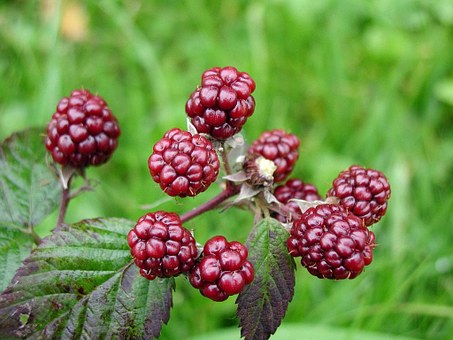
I. Market price:
Generally speaking, mulberries that can come to market in March and April are in the south, 1.5 cm long, large-grained, purple-black, and about 10 yuan/500 grams. When shipped to the north, the retail price is generally above 20-30 yuan, and the wholesale price is 8-10 yuan.
In fact, apart from having a rough floating range, the price of fruit is also affected by the weather and yield at the time. Fresh-keeping and transportation costs are also important factors. Therefore, eating seasonal fruit in season is the most affordable and healthy choice.
II. Is it profitable?
1. Mulberry is a kind of fruit with rich nutrition and high development value. At present, there are two main ways for mulberry to circulate in the market. One is through making foods, such as dried mulberry and mulberry paste.
2. The other is for medicinal use, although relatively little mulberry is used medicinally, mainly for food. It can be said that people's development and utilization of mulberry is still in a starting stage. At present, the better-developed one is Sichuan mulberry, and last year, due to weather effects, Sichuan mulberry production decreased. At the same time, plus relatively chaotic market supervision and many cases of passing off inferior goods as superior, the operation of Sichuan mulberry was also relatively difficult.
Therefore, it is not impossible to do well with mulberry in 2018, but first you must form your own brand awareness, create your own brand advantage, and form a difference from other mulberries. In addition, you must have the awareness and ability to guard against natural disasters and market risks. Only in this way can you truly use mulberry to make money.
III. Market prospect analysis:
1. Mulberry is a delicious fruit with relatively high medicinal value and multiple physiological health functions for the human body. Besides being eaten fresh, it also has relatively great processing and utilization value. It can not only be made into products that combine deliciousness and nutrition, such as canned mulberry, mulberry yogurt, mulberry original juice, mulberry liqueur, mulberry jam, and mulberry plum fruit vinegar, but mulberry red pigment can also be extracted and used as a natural food additive.
2. The development and utilization of mulberry can both drive the economic development of mountainous areas and improve the comprehensive benefits of sericulture, and its development prospects are broad. China is rich in sericulture resources. With the development of mulberry varieties mainly for fruit production and for both fruit and leaf use, mulberry output has also increased year by year. Mulberry is widely distributed in China and the resources are rich. However, it has not yet been well developed and utilized. The fruit mulberry market has broad development prospects, and most areas of China can plant it. This variety has an open tree shape, slender branches, extremely many flowers and fruits, relatively large fruit, and a cylindrical shape, with the largest fruit weighing 10.5 grams. After the fruit matures, it goes from purplish red to purple-black. The fruit surface is highly glossy, brightly colored, shiny and beautiful, like a black pearl. The taste is suitably sweet and sour.
3. The leaves can be used to raise silkworms or be stir-fried as tea, and the fruit can be processed into cans, juice, wine, and tea, and can also be added to yogurt. It has wide applications, and quick-frozen fruit and processed products have broad export prospects.
4. This tree species has wide adaptability, strong resistance, fast growth, early fruiting, good benefits, beautiful fruit, and a long picking period. It is the first-choice variety for building ecological picking orchards at present, and is most suitable for development in mountainous and hilly areas.
IV. Cultivation techniques:
1. Planting time: The planting time of greenhouse mulberry is divided into spring and summer. Spring is from late March to early April, and summer is in early June. When planting in spring, choose large seedlings with a thickness of more than 1 cm and a height of more than 1.2 m for field planting. When planting in summer, use two-year-old or three-year-old large seedlings for field planting.
2. Seedling planting: Plant seedlings in the greenhouse in a north-south direction, with a row spacing of 2 m, a plant spacing of 1.5 m, and 222 plants planted per mu. Before planting, dig planting trenches 50 cm deep and 80 cm wide along the rows, or dig planting holes 60 cm square. Apply fully decomposed organic fertilizer into the planting trench, 3000 kg per mu, mix it evenly with the soil, fill it level, and irrigate to settle it. After planting, firm the soil, then water 2-3 times. When the seedlings sprout, apply 20 kg of urea per mu as topdressing. After growing through summer and autumn, the greenhouse can be covered in winter.
3. Reasonable tree shape: Generally, newly planted seedlings should be cut back and the trunk determined at 30 cm above the ground. In the same year, each plant generally sprouts 5-6 new shoots. When the new shoots grow to 20 cm, pinch off the growing tips. After the mulberries mature and are harvested in the 2nd year, combined with shaping, carry out summer pruning. All fruiting mother branches can be heavily cut back, leaving 2-3 buds, to promote the sprouting of new shoots and cultivate them into fruiting mother branches for the next year. The cutting-back time should be early rather than late, to ensure that the new shoots have enough growth time to accumulate nutrients for flower bud differentiation.
4. Reasonable pruning: The pruning methods for mulberry trees are the same every year, so that a low-trunk tree shape is gradually formed. Pruning of greenhouse-grown fruit mulberry should follow the principle of “remove the weak and keep the strong, remove the inferior and keep the superior”, so that the branches and trunk are reasonably distributed and the group advantage is brought into play. During winter pruning, remove slender weak branches and rotten or insect-infested branches from the base, and cut back the retained fruiting mother branches, generally cutting off about 30 cm from the tips.
5. Fertilization and irrigation: During the dormant period, open a fertilization trench 30 cm deep and 40 cm wide in the middle of the planting row, apply 3000 kg of decomposed high-quality farmyard manure per mu, and mix in 25 kg of compound fertilizer. After the fruit is picked, combined with heavy pruning, apply 20 kg of urea per mu. After sprouting, foliar fertilizer can be sprayed 5-7 times with 250-fold urea or 350-fold potassium dihydrogen phosphate, and combined with spraying 1000-fold Aimiting 1-2 times, to promote fruit set, enlarge the fruit, promote early maturity, and improve quality. After fertilization, watering should be carried out in time. During the sprouting stage and young fruit growth period, fruit mulberry is sensitive to water demand and must have sufficient water supply.