Nasturtium (Indian cress) seed planting methods, flowering period and heat-clearing and fire-reducing benefits
Nasturtium is a plant of the family Tropaeolaceae and the genus Tropaeolum. In southern China it can be grown as a perennial, cultivated indoors in pots, with a fragrant scent and brilliant colors, winning people's affection. So do you know what the seed planting methods for nasturtium are? Is its heat-clearing and fire-reducing effect good? When does it bloom? From surveys at flower markets we learned that under suitable environmental conditions, nasturtium can bloom all year round, a single flower can last 8-9 days, and the whole plant can open dozens of flowers at the same time.
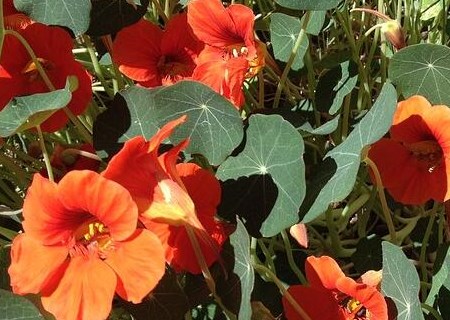
Nasturtium seed planting methods
1. Season selection
The usual sowing period for nasturtium: March to June, called spring sowing. Flowering period August to December.
But sowing artificially in late August or early September of autumn is also possible, called autumn sowing. This way nasturtium will bloom around New Year's Day and during the Spring Festival. Welcoming the new spring, with flowers covering the plant, makes people feel joyful.
2. Seed treatment
The outer coat of nasturtium seeds is fairly tough; if left to grow naturally, the sprouting time will be longer.
So generally before sowing, soak the seeds in warm water at 40-45°C for 1-2 days to soften the outer shell.
3. Potting soil
For the growing medium, it is best to use a loam mixed from 4 parts leaf mold, 4 parts garden soil, 1 part compost soil and 1 part sandy soil. With this mix, the soil has good air permeability and strong drainage.
It is best to keep soil moisture at around 50%.
A medium-sized flower pot can be chosen, and it is best to plant 3-5 seeds.
4. Covering with soil
The seeds do not need to be buried very deep; cover with soil slightly thin, not too thick, just a covering of fine soil.
After the seedlings emerge, you can add some more soil to the pot to protect the roots of the young seedlings.
5. Seedling care
15 days after the seedlings emerge, apply chicken or duck manure water once to provide nutrients. Water once every 3-4 days, with a small amount of water, and do not let water accumulate.
Young seedlings need sufficient light, otherwise they tend to grow leggy.
After the stems of the young seedlings grow long, insert wooden sticks or guide the vines, giving the nasturtium something to climb on, otherwise it tends to fall over.
Is nasturtium's heat-clearing and fire-reducing effect good
Nature, flavor and meridian entry: pungent, cool.
Functions and indications: clearing heat and detoxifying. Used for conjunctivitis, carbuncles, boils and swellings.
Nasturtium is golden and brilliant, with a refreshing taste, and has the effects of clearing heat and detoxifying, nourishing yin and reducing fire, nourishing yin and clearing heat, and reducing fire and killing bacteria. Long-term drinking can clear the throat and moisten the voice, making it clear and bright. It has anti-inflammatory, preventive and therapeutic effects especially for chronic pharyngitis, laryngitis, tonsillitis and hoarseness. For people in voice-related professions such as broadcasting, vocal music, education and communications, it has a special health-care and therapeutic effect. An appropriate amount of white sugar, goji berries, licorice, Solomon's seal and the like can be added to drink together for a better effect.
Clearing heat and detoxifying
Take 5 grams of dried nasturtium, put the nasturtium into a cup, brew with boiling water, and drink as tea, 1-2 doses per day. It can clear heat and detoxify, and at the same time treat upper respiratory tract infections, tonsillitis and pharyngitis. It is mainly used for sore and swollen throat, chronic tonsillitis, carbuncle swelling and sores, mouth sores, red eyes and other symptoms. In acute cases the amount can be increased, but do not increase the amount for long-term drinking; long-term drinking will harm the kidneys.